

Release the hounds
Their days on the racetrack done, greyhounds find homes with loving Winnipeg owners

Advertisement
Read this article for free:
or
Already have an account? Log in here »
To continue reading, please subscribe:
Monthly Digital Subscription
$1 per week for 24 weeks*
- Enjoy unlimited reading on winnipegfreepress.com
- Read the E-Edition, our digital replica newspaper
- Access News Break, our award-winning app
- Play interactive puzzles
*Billed as $4.00 plus GST every four weeks. After 24 weeks, price increases to the regular rate of $19.95 plus GST every four weeks. Offer available to new and qualified returning subscribers only. Cancel any time.
Monthly Digital Subscription
$4.99/week*
- Enjoy unlimited reading on winnipegfreepress.com
- Read the E-Edition, our digital replica newspaper
- Access News Break, our award-winning app
- Play interactive puzzles
*Billed as $19.95 plus GST every four weeks. Cancel any time.
To continue reading, please subscribe:
Add Free Press access to your Brandon Sun subscription for only an additional
$1 for the first 4 weeks*
*Your next subscription payment will increase by $1.00 and you will be charged $16.99 plus GST for four weeks. After four weeks, your payment will increase to $23.99 plus GST every four weeks.
Read unlimited articles for free today:
or
Already have an account? Log in here »
Hey there, time traveller!
This article was published 31/03/2019 (2582 days ago), so information in it may no longer be current.
Jordy, Jessie, and Jazz were trained to rip around U.S. dog tracks at speeds exceeding 60 km/h. These days, though, they spend most of their time comfortably idling in Susan Lohse’s St. James living room.
The trio of retired racing greyhounds are among about 30 former working dogs placed by Northern Sky Greyhounds — a non-profit that takes the dogs from U.S. breeding facilities and finds new homes for them across Western Canada — living in Winnipeg.
Greyhounds are bred almost exclusively for commercial racing. Watching them explode out of the box and reach high speeds in just a few strides — and wagering which one will win — is still a legal activity in a handful of countries around the world, including the U.S. and United Kingdom.
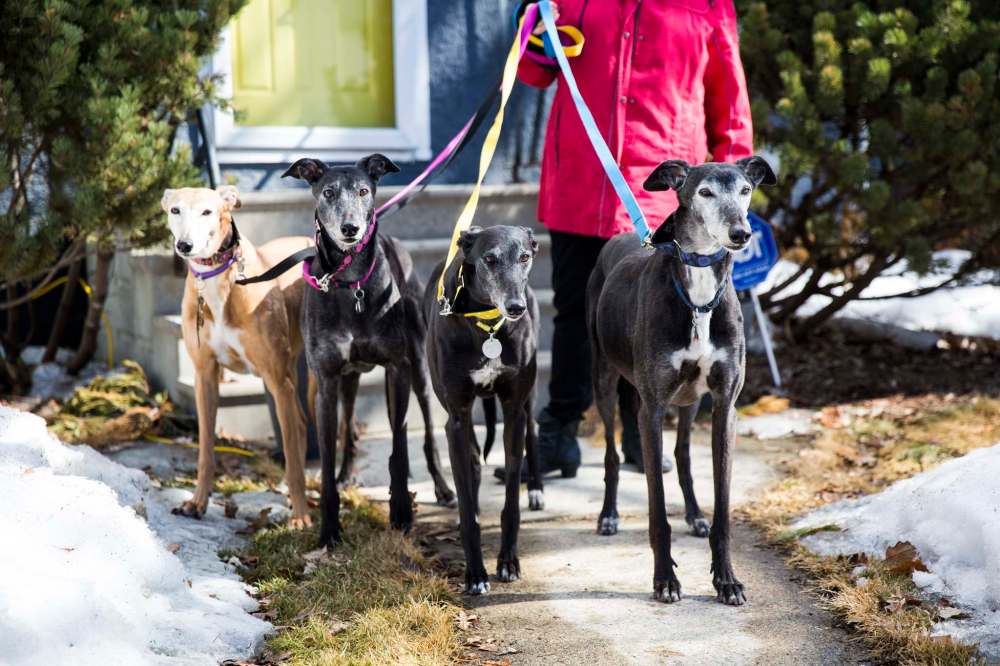
Tall and slender, but powerful and athletic, greyhounds may seem exotic and odd to those who have never had the chance to interact with one. However, they have become more common as pets — including here in Winnipeg — over the past number of years as adoption agencies have burgeoned.
There are many reasons greyhounds make “greyt” pets according to Lohse, Northern Sky’s vice president. On the sunny first full day of spring, grey-snouted Jordy relaxes on the couch with his head in her lap while Jessie and Jazz veg on beds by Lohse’s feet.
“They are so incredibly well-socialized,” Lohse says of the dogs who greeted a reporter at the door. “They’re gentle, wonderful dogs… It’s the life they’ve lived that make them great pets, actually. They’re handled by a million different people and they’re such well-socialized dogs for the most part. They just transition into being pets so easily.”
“They’re not a barky breed by nature,” Lohse continues, before qualifying her statement. “Although, they bark! If you’ve ever been to a racing kennel, I’m surprised those people can still hear.”
Many think greyhounds are high-strung because they’re high-speed, but Lohse says that’s not true.
‘They are so incredibly well-socialized. They’re gentle, wonderful dogs… It’s the life they’ve lived that make them great pets, actually. They’re handled by a million different people and they’re such well-socialized dogs for the most part. They just transition into being pets so easily’– Susan Lohse, Northern Sky’s vice president
“They make great small space dogs because they are not frenetic dogs,” she explains from her modestly-sized bungalow. “They’re sprinters, so they’re not busy all the time… they’ll forgive you if you need some off days.”
While they’re often referred to as “forty-mile-per-hour couch potatoes,” greyhounds aren’t just lazy louts, Lohse says.
“These are high performance athletes,” she says. “They’ll do anything with you that you want to do, but they don’t need to do a lot of activity in order to keep them mentally healthy.”
They love to run, of course, but a few minutes of dashing around is usually all they need before they’re ready for an extended snooze in a soft spot.
Lohse says it’s a misconception that greyhounds are horribly mistreated and abused during their racing careers.
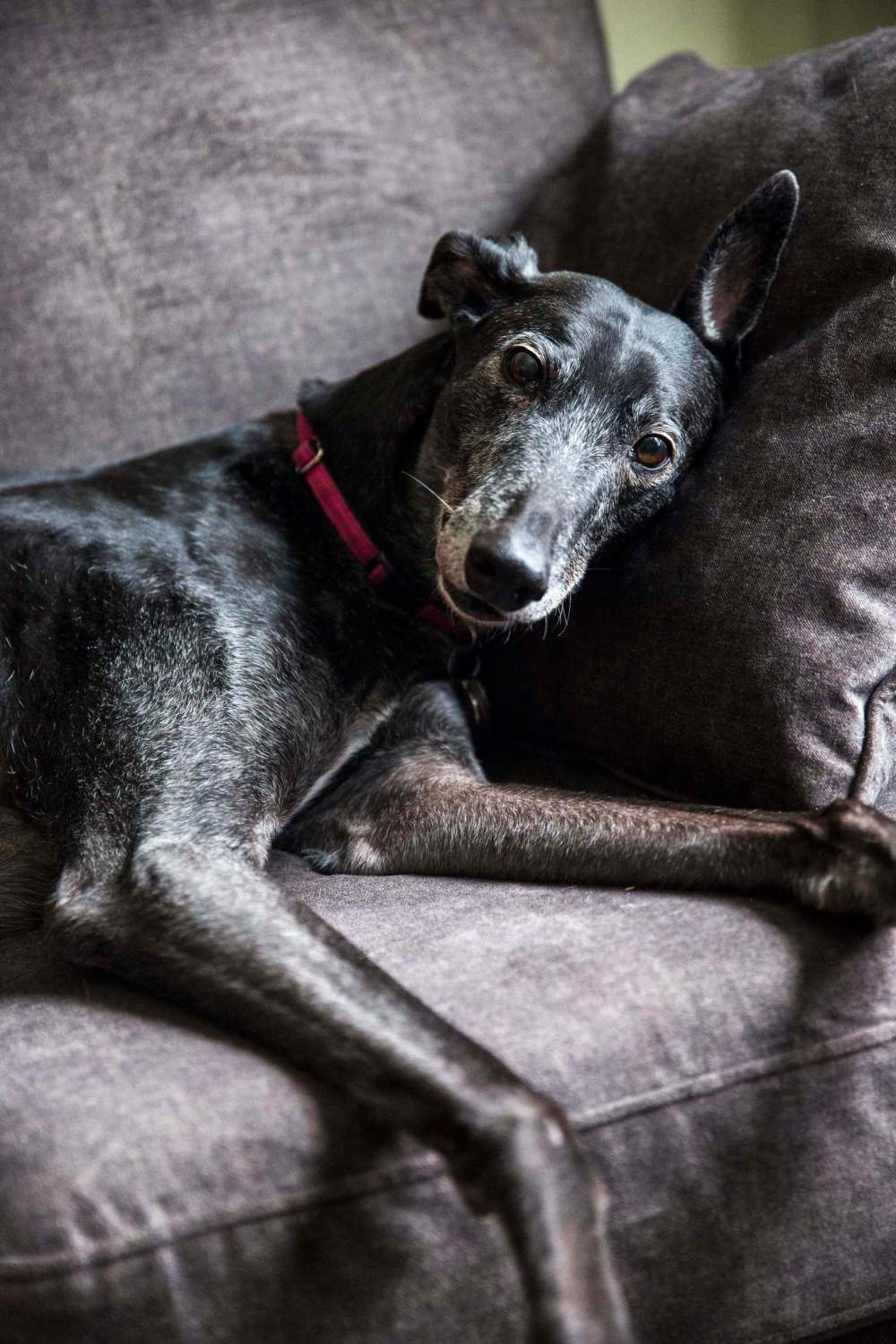
While there was a time, decades ago, when they weren’t treated well and many were disposed of due to the sheer number of dogs and lack of adoption agencies, Lohse says, that isn’t the case anymore. Lohse calls the current set up, in which breeders and adoption agencies work in lockstep, “a planned life cycle.”
“They’re bred, they’re schooled, they’re raced, and they’re retired into homes,” she says.
“I always say to people, ‘greyhounds have staff.’ They have people doing things for them. They spend their lives being trained. They’re fed, they’re groomed, they’re massaged, they get whirlpools, they get handled, they get to run… these are happy, well-kept, excited dogs. And they’re beautiful.”
“When I’ve gone down to get dogs to bring back, we’ve had trainers come to the adoption kennel to say goodbye to their dogs and they cry. They love them.”
Greyhound breeders track lineage, bloodlines, race names and records meticulously, just like horse breeders do. Most breeders pass off that information to adoption agencies so new owners know their pup’s past.
Jordy — the first-ever Northern Sky dog — raced in Florida as “Halsolacre” and Jazz raced in Iowa as “Mama’s Sunny Sky.” Jessie never raced due to an injury in training, but her name was “Rico Runaway Bride.”
Commercial racing and live betting exists in nine U.S. states — Alabama, Arkansas, Connecticut, Florida, Iowa, Kansas, Oregon Wisconsin, and West Virginia. Simulcast betting is legal in 14 more.
However, in Florida —home to seven of 15 active tracks — greyhound racing will soon reach its finish line. Last November, Florida Amendment 13, a ban on wagering on dog races, was approved in the state. Commercial dog racing will be phased out by the end of 2020.
Greyhounds begin racing twice a week by the time they are 18 months old. If a dog doesn’t show promise, they may race for just a few months and be retired before their second birthday.
Dogs more adept at winning may race until they are four or five years old. Most are done as working dogs less than halfway into their 12- to 13-year lifespan.

While greyhounds generally transition easily from the track to domestic life, it can still take time for a former racer to adapt to their new role.
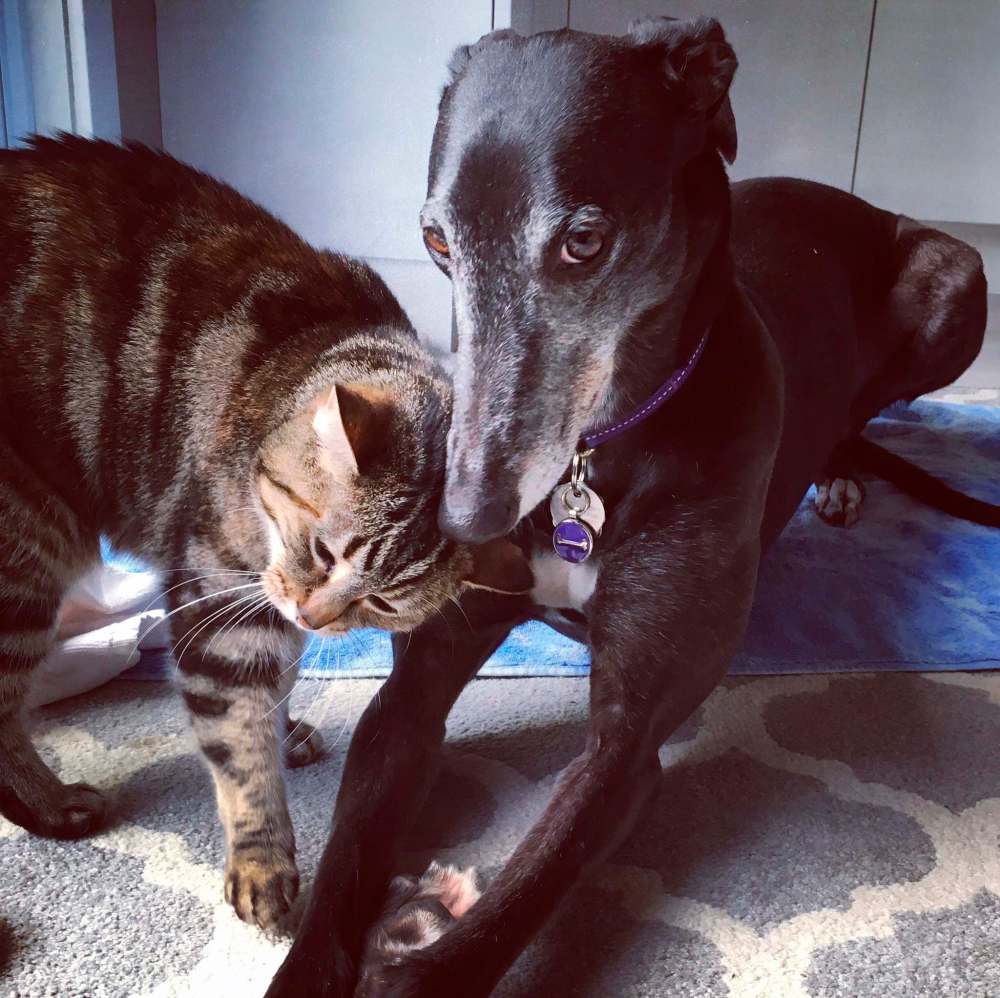
A flight of stairs, for example, can prove a steep, scary challenge for a long-legged, lanky hound. Many have never traversed a hardwood floor, come across a cat, or ever been alone.
In their racing life, greyhounds are with their own kind constantly and love being together. That’s why many owners have multiple animals, and also one of the reasons why owners have developed a tight-knit community.
“Because of the transition from their working life to their pet life, people need support. People tend to want to stay in touch…” Lohse says.
Through staying in touch, lifelong friendships form, and not just between the dogs.

“You’re caught in the cult!” Lohse laughs.
One couple “caught in the cult” is Carrie and Kris Hasinoff. Carrie is Northern Sky’s Winnipeg events co-ordinator and plans greyhound get-togethers.
Hasinoff and Kris own Stormy, an eight-year-old greyhound they’ve had since she was three. Their older hound, 12-year-old Silver, passed away from cancer last October.
“I really liked how gentle they were,” Carrie says, recalling what first attracted her to the breed. “They’re really sensitive dogs. They’re docile and calm and just sweet, gentle animals.”
“The first time I saw one, I said ‘what is that? I need one.’”
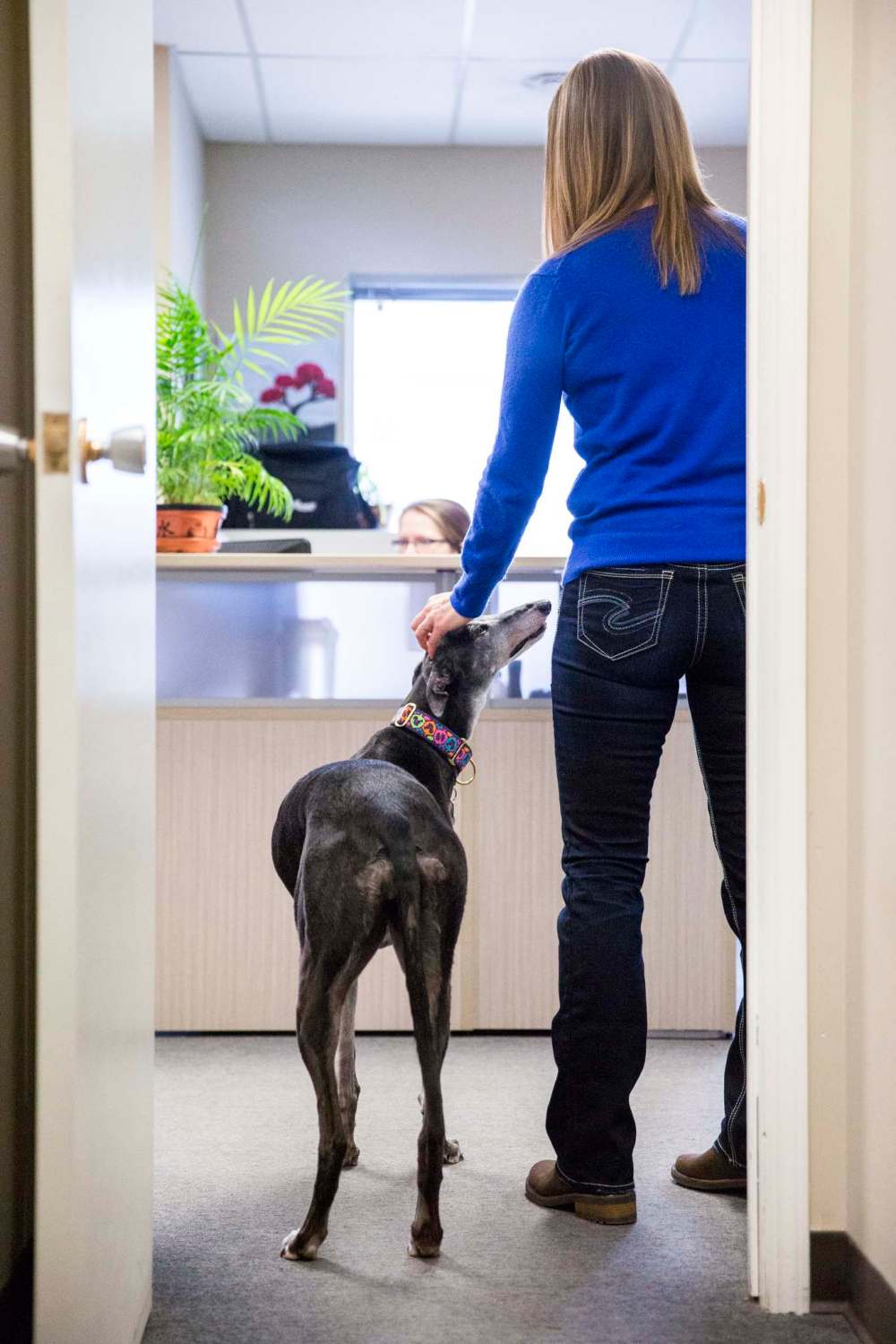
The Hasinoffs own a small business. One of the reasons they opted to adopt greyhounds was to have dogs they could bring to the office.
Stormy’s a fixture every day between 9 a.m. and lunch time. She’s so quiet many people don’t even know she’s there, Carrie says.
Stormy and Silver also debunk the myth that greyhounds have such a high prey drive that they can’t live with cats. While not all greyhounds are cat-safe, many are.
“Stormy loves our cats,” Hasinoff says of Stormy’s relationship with her feline housemates, Monkey and Squeak.
“We’ve had Monkey for longer than we’ve had greyhounds. We were concerned when we got our first greyhound (Lily), that he looked so much like a bunny — and greyhounds are trained to chase rabbit-like lures — that Monkey was going to be a live lure.”

Their concerns were unfounded.

Everyone co-exists peacefully in the Hasinoff house. Stormy just watches the cats zip around the house from the comfort of her bed, even when Squeak “bolts all over the house at record speeds,” Carrie says.
The get-togethers Hasinoff plans include meet-and-greets to promote adoption efforts, walking clubs, and “fun runs.”
Greyhounds have poor recall skills and can’t be let off-leash in open areas or dog parks, but the group has still found a way to let their dogs run untethered. The owners unleash their hounds in enclosed outdoor rinks in the summer and doggy daycare centres in the winter so they can run and play together.
“It’s nice to stand around and chat about your weird greyhound with other greyhound owners,” Hasinoff says. “Some of my best friends now are people I’ve met through the greyhound group.”
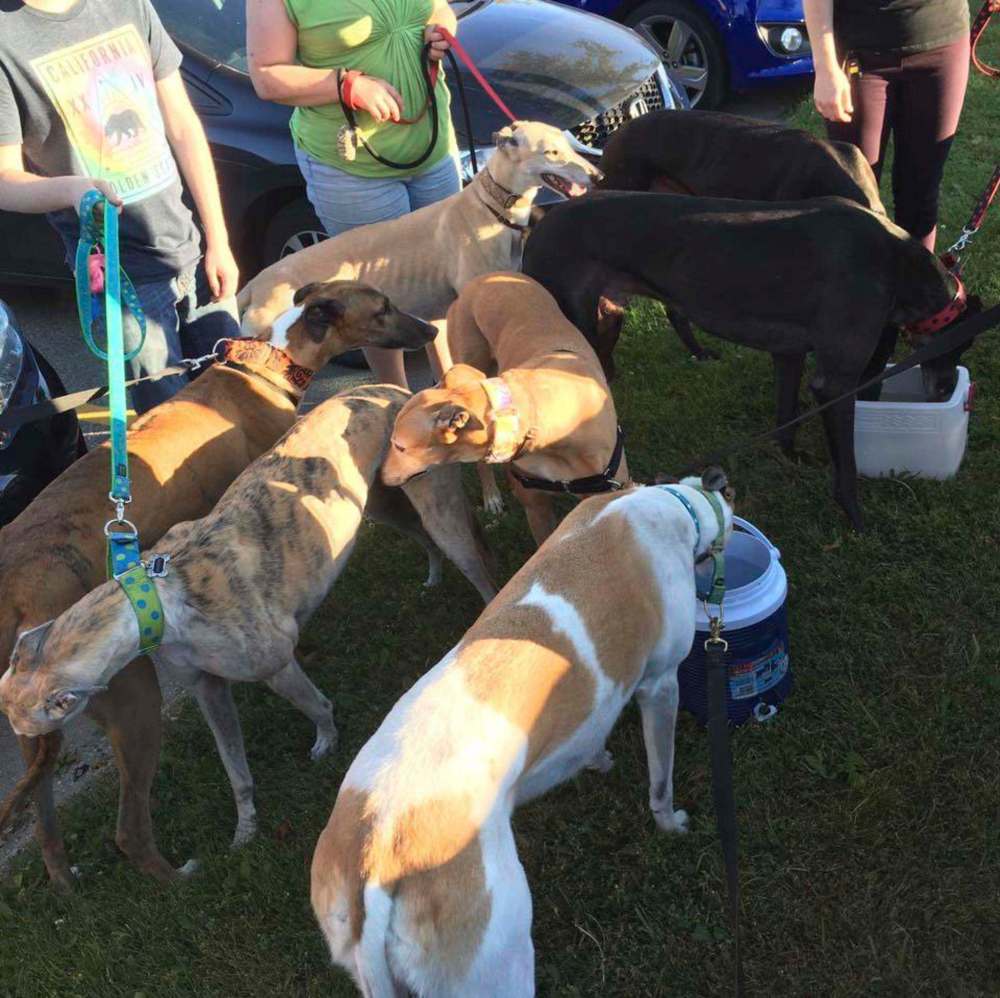
“Everyone’s always patting and hugging each other’s dogs,” she continues. “It’s just a nice community… they know your dog’s name and care about you and your dog. It’s just a low-stress group of friends.”
Our newsroom depends on a growing audience of readers to power our journalism. If you are not a paid reader, please consider becoming a subscriber.
Our newsroom depends on its audience of readers to power our journalism. Thank you for your support.
Our newsroom depends on a growing audience of readers to power our journalism. If you are not a paid reader, please consider becoming a subscriber.
Our newsroom depends on its audience of readers to power our journalism. Thank you for your support.
Advertisement Advertise With Us
Advertisement Advertise With Us