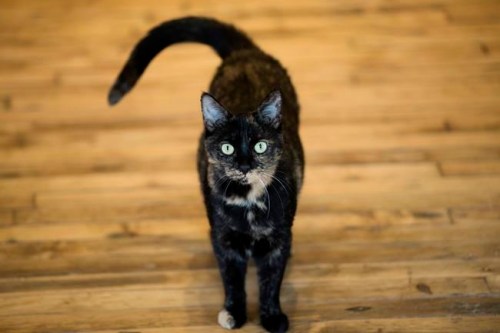
Meow hear this: Study says cats react to sound of their name
Advertisement
Read this article for free:
or
Already have an account? Log in here »
To continue reading, please subscribe:

Digital Subscription
One year of digital access for only $205*
- Enjoy unlimited reading on winnipegfreepress.com
- Read the E-Edition, our digital replica newspaper
- Access News Break, our award-winning app
- Play interactive puzzles
*First annual payment billed as $205.00 + GST for one year. This annual subscription will automatically renew at $233.00 + GST every 52 weeks (10% off the regular annual price of $259.35). Offer available to new and qualified returning subscribers only. Cancel any time.
To continue reading, please subscribe:
Add Free Press access to your Brandon Sun subscription for only an additional
$1 for the first 4 weeks*
- Enjoy unlimited reading on winnipegfreepress.com
- Read the E-Edition, our digital replica newspaper
- Access News Break, our award-winning app
- Play interactive puzzles
*Your next Brandon Sun subscription payment will increase by $1.00 and you will be charged $17.95 plus GST for four weeks. After four weeks, your payment will increase to $24.95 plus GST every four weeks.
Read unlimited articles for free today:
or
Already have an account? Log in here »
Hey there, time traveller!
This article was published 04/04/2019 (2671 days ago), so information in it may no longer be current.
NEW YORK – Hey Kitty! Yes, you. A new study suggests household cats can respond to the sound of their own names.
No surprise to you or most cat owners, right? But Japanese scientists said Thursday that they’ve provided the first experimental evidence that cats can distinguish between words that we people say.
So you’re kind of like dogs, whose communication with people has been studied a lot more, and who’ve been shown to recognize hundreds of words if they’re highly trained. Sorry if the comparison offends you, Kitty.
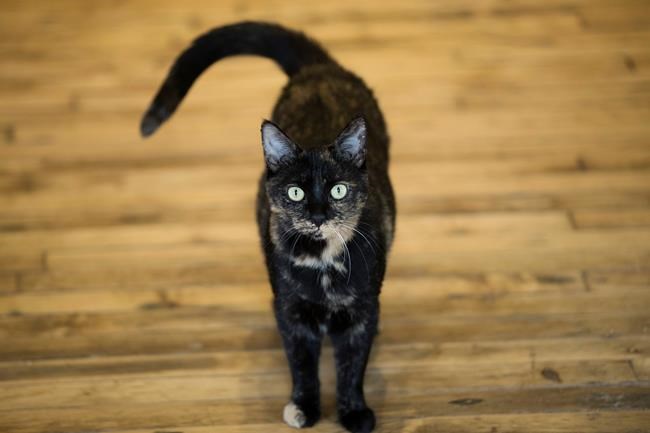
Atsuko Saito of Sophia University in Tokyo says there’s no evidence cats actually attach meaning to our words, not even their own names. Instead, they’ve learned that when they hear their names they often get rewards like food or play, or something bad like a trip to the vet. And they hear their names a lot. So the sound of it becomes special, even if they don’t really understand it refers to their identity.
Saito and colleagues describe the results of their research in the journal Scientific Reports. In four experiments with 16 to 34 animals, each cat heard a recording of its owner’s voice, or another person’s voice, that slowly recited a list of four nouns or other cat’s names, followed by the cat’s own name.
Many cats initially reacted — such as by moving their heads, ears or tails — but gradually lost interest as the words were read. The crucial question was whether they’d respond more to their name.
Sure enough, on average, these cats perked up when they heard their own name.
Kristyn Vitale, who studies cat behaviour and the cat-human bond at Oregon State University in Corvallis but didn’t participate in the new work, said the results “make complete sense to me.”
Vitale, who said she has trained cats to respond to verbal commands, agreed that the new results don’t mean that cats assign a sense of self to their names. It’s more like being trained to recognize a sound, she said.
Monique Udell, who also studies animal behaviour at Oregon State, said the study shows “cats are paying attention to you, what you say and what you do, and they’re learning from it.”
___
The Associated Press Health & Science Department receives support from the Howard Hughes Medical Institute’s Department of Science Education. The AP is solely responsible for all content.