For plenty of delicious fruit, be sure to prune fruit trees

Advertisement

Advertise with us

If there's one group of plants that cries out for regular and careful pruning, it's fruit trees.

Read this article for free:

or

Already have an account? Log in here »

To continue reading, please subscribe:

Subscribe and receive a limited-edition Free Press branded hat or tote.

Digital Subscription

One year of digital access for only $205*

  • Enjoy unlimited reading on winnipegfreepress.com
  • Read the E-Edition, our digital replica newspaper
  • Access News Break, our award-winning app
  • Play interactive puzzles

*First annual payment billed as $205.00 + GST for one year. This annual subscription will automatically renew at $233.00 + GST every 52 weeks (10% off the regular annual price of $259.35). Offer available to new and qualified returning subscribers only. Cancel any time.

To continue reading, please subscribe:

Add Free Press access to your Brandon Sun subscription for only an additional

$1 for the first 4 weeks*

  • Enjoy unlimited reading on winnipegfreepress.com
  • Read the E-Edition, our digital replica newspaper
  • Access News Break, our award-winning app
  • Play interactive puzzles
Start now

*Your next Brandon Sun subscription payment will increase by $1.00 and you will be charged $17.95 plus GST for four weeks. After four weeks, your payment will increase to $24.95 plus GST every four weeks.

Hey there, time traveller!
This article was published 08/04/2019 (2673 days ago), so information in it may no longer be current.

If there’s one group of plants that cries out for regular and careful pruning, it’s fruit trees.

Taste the sweetness of a perfectly ripe pear: That sweetness represents energy, and that energy comes from sunlight. With proper pruning, all the limbs of a fruit tree bask in sunshine.

Pruning also helps these trees strike a balance between shoot growth and fruit production, so important in making sure they bear large, luscious fruits year after year. Those shoots are needed for energy-producing leaves and for places on which fruits hang.
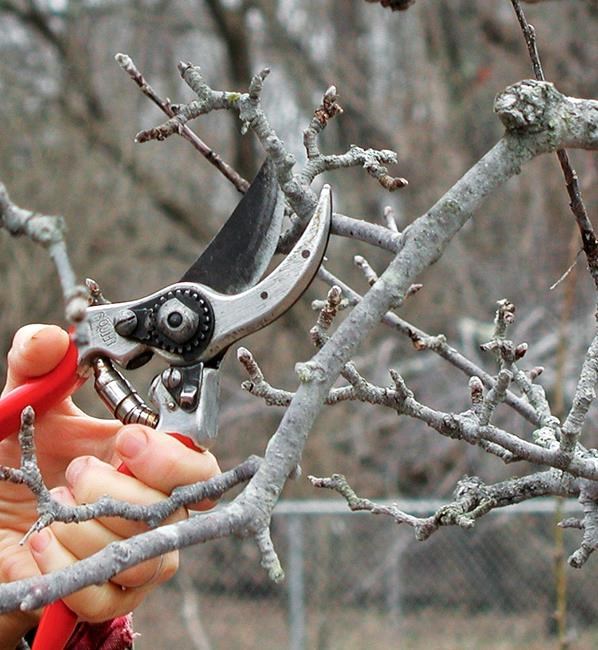
This undated photo shows part of an apple branch being pruned in New Paltz, N.Y. Apples bear fruits on long-lived, stubby spurs, but even these must be pruned eventually to stimulate younger, new spurs and keep them from overcrowding. (Lee Reich via AP)

THE YOUNG TREE

The first years are important to a fruit tree’s future performance. These are the years to help your tree lay down a permanent framework of branches that can support loads of fruit and not shade each other.

Centuries of fruit growing have spawned many different forms for trees, but three predominate: the central-leader, the open-centre, and the modified-central-leader.

The central-leader tree is shaped much like a Christmas tree, with a single leader — the trunk — flanked by shorter and shorter side branches moving up the tree. The open-centre tree is vase-shaped, with three or four main limbs growing outward and upward. The modified-central-leader tree is a hybrid that starts as a central-leader then becomes open-centre.

All these forms allow a tree to “harvest” enough sunlight. The ideal form for a particular tree depends not only on your whims, but also on the plant’s natural growth habit.

GET YOUR TREE IN SHAPE

Begin pruning any new tree by cutting back broken stems and dead or diseased wood to healthy tissue. If your new tree is but a single stem (called a “whip” by nurseries), shorten it by one-third to promote branching. If it is already branched (the “feathered tree” of nurseries), save well-placed stems and completely cut away all others.

The ideal branching arrangement starts about 2 feet from the ground and continues in a spiral arrangement up the trunk with about 8 inches between branches. In the case of the open-centre tree, lop off the central stem just above the third branch.

In the case of the central-leader and modified-central-leader trees, induce the main stem to keep making new branches by cutting off about a third of the previous season’s growth each year while the plant is dormant. The top bud grows to become an upright shoot, a continuation of the leader, and lower buds become side branches. Select new side branches that are well-spaced along the leader.

THE MATURE, BEARING TREE

Once a fruit tree is mature and beyond the training stage, then pruning it well means striking a balance between shoot growth and fruit production. How to achieve this balance depends on how — or really where — a particular tree bears its flowers and how big its fruits are.

Especially with large fruits, such as apple and peach, individual fruits tend to be undersize and less sweet with too heavy a crop. Pruning also removes some potential fruits so the plant can pump more energy into those that remain.

Once a tree matures to start bearing fruit, each year prune some stems and remove others completely. Shorten stems where you want regrowth and increased branching. Completely remove stems where you do not want such regrowth, such as where stems are overcrowded. Complete removal is also the way to deal with those vigorous, upright shoots called watersprouts, which are not fruitful and tend to shade lower portions of the plant.

The kind of tree you are pruning dictates the overall amount of pruning needed. The younger the stems on which fruits are borne, the more stems need to be shortened.

At one extreme are peach and nectarine. They bear fruit only on stems that grew the previous season, so need fairly severe annual pruning to stimulate an annual flush of vigorous, new shoots for the following year’s crop. Prune enough so that a bird could fly right through the branches.

Apple and pear trees, at the other extreme, bear fruit on long-lived, very short, knobby branches, called spurs, so need little such annual stimulus. Eventually, though, even spurs need pruning for rejuvenation and elbow room.

Most other fruit trees lie between the extremes of apples and peaches in bearing habit and severity of annual pruning needed. Again, completely remove some stems and shorten others to achieve a good balance of fruiting wood and stem growth.

___

http://www.leereich.com/blog

http://leereich.com
Report Error Submit a Tip

More Stories

For plenty of delicious fruit, be sure to prune fruit trees

Lee Reich, The Associated Press 4 minute read Preview

For plenty of delicious fruit, be sure to prune fruit trees

Lee Reich, The Associated Press 4 minute read Monday, Apr. 8, 2019

If there's one group of plants that cries out for regular and careful pruning, it's fruit trees.

Taste the sweetness of a perfectly ripe pear: That sweetness represents energy, and that energy comes from sunlight. With proper pruning, all the limbs of a fruit tree bask in sunshine.

Pruning also helps these trees strike a balance between shoot growth and fruit production, so important in making sure they bear large, luscious fruits year after year. Those shoots are needed for energy-producing leaves and for places on which fruits hang.

THE YOUNG TREE

Read
Monday, Apr. 8, 2019

Kreviazuk, in her own voice

Eva Wasney 7 minute read Preview

Kreviazuk, in her own voice

Eva Wasney 7 minute read Friday, Jul. 31, 2026

Chantal Kreviazuk is in the midst of a very busy year.

In May, the Winnipeg-born singer-songwriter released her 11th studio album, In My Own Voice — a project that reclaims and reimagines a selection of hit songs she’s written for some of the world’s biggest artists.

The 12-track album features Kreviazuk performing ethereal covers of Pitbull’s Feel This Moment, Drake’s Over My Dead Body and Gwen Stefani’s Rich Girl, among others.

But she didn’t stop there.

Read
Friday, Jul. 31, 2026

Giant Tiger decision creates giant void for desperate population

Niigaan Sinclair 5 minute read Preview

Giant Tiger decision creates giant void for desperate population

Niigaan Sinclair 5 minute read Friday, Jul. 31, 2026

A lot of Winnipeggers may shrug, but the end of Giant Tiger’s downtown store is a giant problem for many of the people living in the centre of the city.

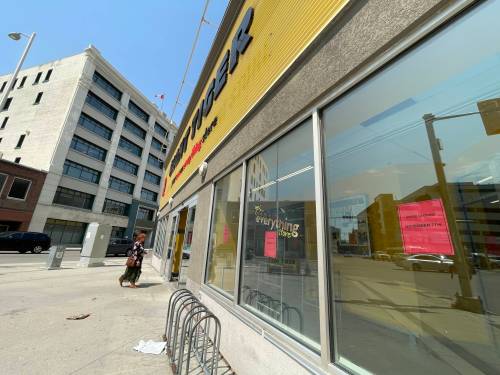
It would have been difficult for anyone going into or passing by the Canadian discount chain’s Donald Street and Ellice Avenue location Thursday to miss the red notices posted on the store’s windows advising it will close on Nov. 7.

According to a 2024 Downtown Winnipeg BIZ report, about 18,000 people live in Winnipeg’s downtown.

More than 60,000 people work there, and some days — when there’s a big concert or the Jets play at Canada Life Centre, for example — the number of people spending time in the area increases significantly.

Read
Friday, Jul. 31, 2026

Domestic-duty distribution must suit you both

Maureen Scurfield 5 minute read Yesterday at 2:00 AM CDT

DEAR MISS LONELYHEARTS: I fear I’m going to end up with prolonged indigestion! My husband — a pretty boring cook — has decided it’s his turn to be the house parent again, and that I should go back to my profession, as he has come to hate his job.

I couldn’t be happier! He knows I love my work and I know he’s bored stiff by his accounting career. (He sometimes even has nightmares about numbers!)

The trouble is he’s a lousy housekeeper and cook. He’s patient and fun with our three kids, but I know that once he gets them off to school this fall, he’ll be on the couch watching TV until they get home.

I’m not looking forward to this. The place is always a wreck when he’s on home duty. Also, as soon as the kids come through the door, he makes them adult-sized sandwiches and store-bought snacks. So when I get home from work, they’re not hungry for a healthy dinner and my man certainly won’t be busy cooking up something nice for the two of us.

Excited Goldeyes fans buzz over Manitoba Mosquitoes’ name change

Grace Penner 4 minute read Preview

Excited Goldeyes fans buzz over Manitoba Mosquitoes’ name change

Grace Penner 4 minute read Friday, Jul. 31, 2026

BITE club has entered the ball park for a single game, filling the stands with mosquitoes — just not in the way you may think.

The Fish are participating an alternate identity takeover, one that many other teams in the minor baseball leagues have been having some fun with. The Winnipeg Goldeyes re-branded to pay homage to the province’s beloved summer creatures, the Manitoba Mosquitoes.

The Fargo-Moorhead RedHawks had some fun with its alternative identity, doing a five-game name change to the Woodchippers, a fun reference to the 1996 film Fargo.

Other honourable mentions are the Chicago Dogs, who switched over to the Chicago Wieners, the Sioux Fall Canaries transformed into the Minnehaha Martians, Milwaukee Milkmen became the Franklin Benjamins, and the Lake Country Dockhounds swapped to the Wisconsin Dive Bars.

Read
Friday, Jul. 31, 2026

On eve of Folklorama, Ghana pavilion scrambles to replace stolen outfits

Chris Kitching 4 minute read Preview

On eve of Folklorama, Ghana pavilion scrambles to replace stolen outfits

Chris Kitching 4 minute read Friday, Jul. 31, 2026

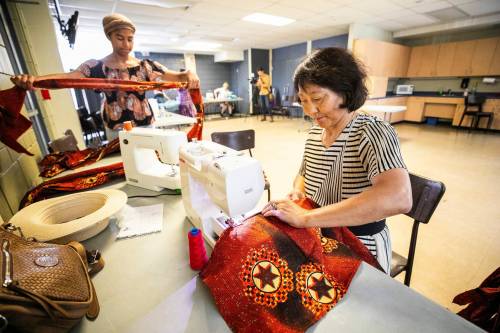
Volunteers from Folklorama’s Ghana pavilion scrambled to replace cultural costumes for about 40 young dancers after the outfits were stolen in Winnipeg days before the annual festival begins.

Two plastic storage bins containing the costumes, to be worn by children and teenagers, were taken from the trunk of a parked car on Banning Street, near Notre Dame Avenue in the West End, likely late Wednesday or early Thursday.

“I felt sad that this has happened. I felt completely devastated for the mother who had them in her car,” said pavilion co-ordinator Abigail Larson. “The initial feeling of sadness changed to, ‘OK, how do we make this a positive?’”

The costumes belong to the Ghana Union of Manitoba Dancers, whose members have rehearsed for months for Folklorama, which begins Sunday.

Read
Friday, Jul. 31, 2026