WEATHER ALERT

Brain scans may reveal concussion damage in living athletes

Advertisement

Advertise with us

Researchers may be closing in on a way to check athletes while they're alive for signs of a degenerative brain disease that's been linked to frequent head blows. Experimental scans found higher levels of an abnormal protein tied to the disease in a study of former National Football League players who were having mood and thinking problems.

Read this article for free:

or

Already have an account? Log in here »

To continue reading, please subscribe:

Subscribe and receive a limited-edition Free Press branded hat or tote.

Digital Subscription

One year of digital access for only $205*

  • Enjoy unlimited reading on winnipegfreepress.com
  • Read the E-Edition, our digital replica newspaper
  • Access News Break, our award-winning app
  • Play interactive puzzles

*First annual payment billed as $205.00 + GST for one year. This annual subscription will automatically renew at $233.00 + GST every 52 weeks (10% off the regular annual price of $259.35). Offer available to new and qualified returning subscribers only. Cancel any time.

To continue reading, please subscribe:

Add Free Press access to your Brandon Sun subscription for only an additional

$1 for the first 4 weeks*

  • Enjoy unlimited reading on winnipegfreepress.com
  • Read the E-Edition, our digital replica newspaper
  • Access News Break, our award-winning app
  • Play interactive puzzles
Start now

*Your next Brandon Sun subscription payment will increase by $1.00 and you will be charged $17.95 plus GST for four weeks. After four weeks, your payment will increase to $24.95 plus GST every four weeks.

Hey there, time traveller!
This article was published 10/04/2019 (2666 days ago), so information in it may no longer be current.

Researchers may be closing in on a way to check athletes while they’re alive for signs of a degenerative brain disease that’s been linked to frequent head blows. Experimental scans found higher levels of an abnormal protein tied to the disease in a study of former National Football League players who were having mood and thinking problems.

It’s the first time a major study has tested these scans for detecting chronic traumatic encephalopathy, or CTE, which is only diagnosed now after death, with brain autopsies.

Doctors are searching for a way to tell when players, veterans or others with concussions or other head injuries are at risk for permanent damage. It’s too soon to know if the scans will enable that — so far they only show that these athletes are different as a group; they can’t be used to say a particular player does or does not have CTE.
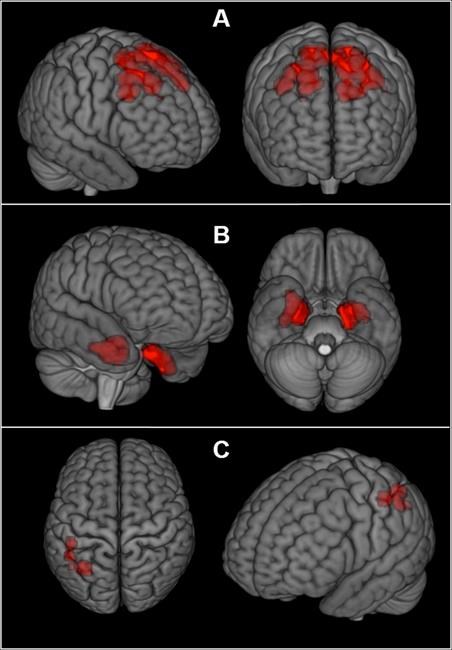
This image provided by The New England Journal of Medicine in April 2019 shows an illustration based on brain scans from former NFL players. As a group, they were found to have higher levels of an abnormal protein than a comparison group of healthy men, indicated by red patches. The protein is a hallmark of a degenerative brain disease that's been linked to repeated head blows. (The New England Journal of Medicine via AP)

“We’re not there yet,” said Boston University neuroscientist Robert Stern. “It is not ready to be used for individual diagnosis in the clinic.”

He led the study, published Wednesday by the New England Journal of Medicine.

“It’s an encouraging advance. It looks like they have detected CTE in living players,” said Dr. Gil Rabinovici, a neurologist and imaging expert at the University of California, San Francisco, who is doing other research using the scans.

“It’s hugely important to be able to detect the disease in living people” to know how common it is and to research treatments, he said.

The study was done in Massachusetts and Arizona and involved 26 former NFL players with thinking, mood or behaviour problems, and 31 similarly aged men without these symptoms or head injuries.

They were given positron emission tomography, or PET scans, in which a radioactive tracer is injected that binds to various substances and makes them visible on the scans. Several of these tracers are used now to look for a protein called beta amyloid in the brains of people with Alzheimer’s disease. An experimental tracer that doctors are testing binds to another protein, tau, which is the key one that’s been implicated in CTE.

Men in the study had both types of tracers. Tau levels were higher in the players compared to the others, but their amyloid levels were similar, confirming that CTE is a different disease than Alzheimer’s.

Researchers also saw a relationship to years of play.

“The more years of play in tackle football across all levels, the greater the amount of tau detected,” Stern said.

However, there was no relationship between tau levels and the severity of mood and thinking symptoms. Researchers think the study may have been too small to detect a difference or that tau may not be the only factor involved.

“There’s a lot more work to be done to develop a diagnostic” tool using these scans, said Dr. Michael Weiner an imaging expert at UCSF who is involved in other CTE research.

Government grants and Avid Radiopharmaceuticals, which makes the tracers, funded the study. Some authors work or consult for the company.

FILE - In this Thursday, Jan. 25, 2018 file photo, former Chicago Bears running back Mike Adamle stands in support of the Dave Duerson Act to Prevent CTE as Illinois state Rep. Carol Sente, left, and Tregg Duerson, listen during a news conference in Chicago. The Dave Duerson Act would ban tackle football for Illinois children younger than 12 years old. Last year, Adamle said he was diagnosed with dementia, and that his doctor saw signs of chronic traumatic encephalopathy. He believes this and the past 19 years of epileptic seizures resulted from his concussions in football. (AP Photo/Charles Rex Arbogast)

A larger study of former NFL and college football players is underway; first results are expected early next year.

Mike Adamle, a former running back for the Chicago Bears and sports announcer, has been told he has symptoms consistent with CTE, and has been evaluated by Stern at the Boston research centre though he was not part of the current study.

“I had more than a few” concussions, Adamle said. “If you were running, everybody kind of led with their head. Back then, it was a test of your macho man stuff.”

The illness has been devastating, said his wife, Kim. “He couldn’t remember his lunch or he couldn’t remember his lines on the air,” and lost multiple jobs, she said.

If a test could have shown he was at risk and given him a chance to consider quitting play, “I would have definitely taken note,” Mike Adamle said.

___

Marilynn Marchione can be followed on Twitter: @MMarchioneAP

___

The Associated Press Health and Science Department receives support from the Howard Hughes Medical Institute’s Department of Science Education. The AP is solely responsible for all content.
Report Error Submit a Tip

More Stories

Visitors from across Canada make Somerset restaurant’s social media challenge a success

Zoe Pierce 3 minute read Preview

Visitors from across Canada make Somerset restaurant’s social media challenge a success

Zoe Pierce 3 minute read Saturday, Jul. 25, 2026

There may not be another restaurant in Manitoba that can say it has welcomed visitors from as many communities across the province and beyond as the Somerset Food Bar & Lounge has this summer.

In just over a two week span, visitors from more than 100 towns have come out to the family-owned restaurant tucked away in Somerset, a community of roughly 450 people in the Pembina Valley 130 kilometres southwest of Winnipeg.

It started as a challenge, “60 Towns in 60 Days,” where the restaurant wanted to document how many different places they could reach, as it often sees people travelling across Canada stop at the restaurant. The goal was also to encourage people to make a drive they normally wouldn’t.

“The more we started sharing, the more people really started getting behind it, and it turned into this really big thing fairly quickly,” said Jay Friesen, restaurant manager.

Read
Saturday, Jul. 25, 2026

Cash injection will help women’s centre grow

Malak Abas 5 minute read Preview

Cash injection will help women’s centre grow

Malak Abas 5 minute read Yesterday at 5:22 PM CDT

Janice Lavellee grew up in a large family rife with substance abuse and domestic violence. She ran away from home at age 14.

When she found the North End Women’s Centre, it was a godsend.

“I never knew the North End Women’s Centre was there, because I never knew where to get help,” she said.

After having a child at 16, Lavellee said the centre gave her a job on the weekends. It was a stepping stone to finishing high school, and she later returned to the centre to work as a receptionist for 27 years before recently retiring.

Read
Yesterday at 5:22 PM CDT

Vacant Bay store on road to redevelopment, St. Vital Centre owner says

Gabrielle Piche 6 minute read Preview

Vacant Bay store on road to redevelopment, St. Vital Centre owner says

Gabrielle Piche 6 minute read Friday, Jul. 24, 2026

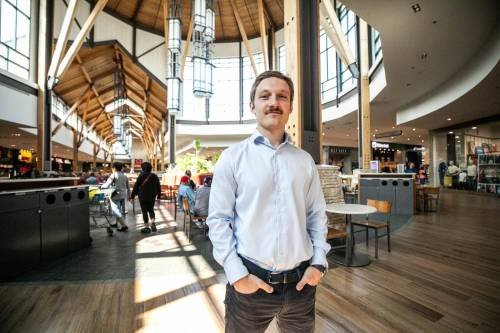
Entertainment attractions are coming to fill the former Hudson’s Bay space in St. Vital Centre.

Montreal-based real estate firm Leyad, the south Winnipeg mall’s owner, says it is finalizing an agreement for the vacant property. Further details should appear in the next couple months, said president Henry Zavriyev.

“We’re looking at what other types of experiences we can bring to the mall that aren’t just typical retail,” he said during a visit to Winnipeg this week.

“We want to create an experience where you can just come to the mall, hang out here for hours, no matter if you’re a kid, an adult, a retiree.”

Read
Friday, Jul. 24, 2026

New women’s senior champ to be crowned

Mike McIntyre 6 minute read Preview

New women’s senior champ to be crowned

Mike McIntyre 6 minute read Yesterday at 9:13 PM CDT

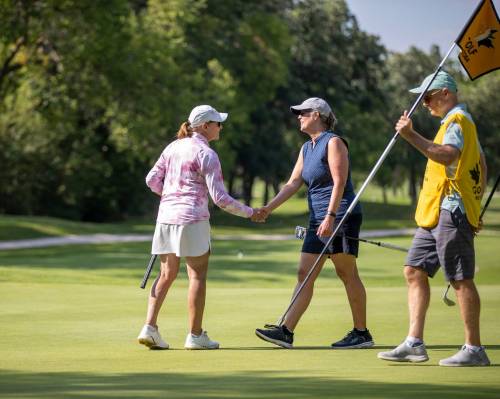
They may as well re-name the Manitoba Women’s Senior Championship the “Rhonda Orr Open” at this point, given the way she has dominated the annual event.

The 64-year-old, who plays out of Southwood Golf & Country Club, has won 10 straight titles — and 12 of the past 13 — to etch her name in local sports history.

Unfortunately, Orr’s incredible streak is coming to a screeching halt this week. Rather than teeing it up on Monday at Breezy Bend for the start of the 54-hole event, she was home recovering from a recent medical procedure which quickly put everything into perspective.

“Very disappointing that I wasn’t able to recover enough to play. That was my goal, but it didn’t work out. I definitely had a few tears over it,” Orr told the Free Press.

Read
Yesterday at 9:13 PM CDT

CMHR ‘fans flames of antisemitism,’ Asper says, ending support from family that led effort to create it

Carol Sanders 7 minute read Preview

CMHR ‘fans flames of antisemitism,’ Asper says, ending support from family that led effort to create it

Carol Sanders 7 minute read Updated: Yesterday at 8:49 PM CDT

The Winnipeg family that led the effort to build the Canadian Museum for Human Rights will not provide support going forward, philanthropist and honorary board member Gail Asper says.

Read
Updated: Yesterday at 8:49 PM CDT

Cultural consultation gives Indigenous stories strength in Netflix’s new Little House on the Prairie

Jen Zoratti 13 minute read Preview

Cultural consultation gives Indigenous stories strength in Netflix’s new Little House on the Prairie

Jen Zoratti 13 minute read Yesterday at 5:49 PM CDT

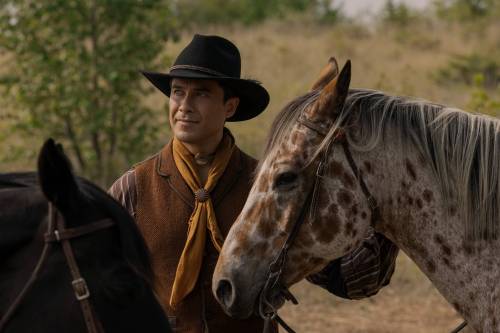
Through her work as an Indigenous consultant for film and TV, Julie O’Keefe, a citizen of the Osage Nation, has brought accuracy and authenticity to works such as Martin Scorsese’s 2023 crime drama Killers of the Flower Moon, the 2025 western miniseries American Primeval and, most recently, Rebecca Sonnenshine’s new adaptation of Little House on the Prairie.

But she doesn’t work solo.

“One of the things that I always say is, in any of these jobs that I do — whether it’s Shoshone and Paiute and Ute or Osage — I never come alone to this,” says O’Keefe, who grew up in Pawhuska, Okla., the heart of the Osage Nation, and is now based in Santa Fe, N.M. “I engage because those stories are so much richer with our voices added to it, and we know that.

“I’m sitting down with brilliant directors, brilliant writers, and I’m handing over pieces of history that they’re like, ‘How come nobody knows this?’ And the great part is, this is the time in history … people are really starting to get on top of wanting this for their stories, because it really wasn’t of any importance before.”

Read
Yesterday at 5:49 PM CDT