WEATHER ALERT

Doctors use HIV in gene therapy to fix ‘bubble boy’ disease

Advertisement

Advertise with us

They were born without a working germ-fighting system, every infection a threat to their lives. Now eight babies with "bubble boy disease" have had it fixed by a gene therapy made from one of the immune system's worst enemies — HIV, the virus that causes AIDS.

Read this article for free:

or

Already have an account? Log in here »

To continue reading, please subscribe:

Subscribe and receive a limited-edition Free Press branded hat or tote.

Digital Subscription

One year of digital access for only $205*

  • Enjoy unlimited reading on winnipegfreepress.com
  • Read the E-Edition, our digital replica newspaper
  • Access News Break, our award-winning app
  • Play interactive puzzles

*First annual payment billed as $205.00 + GST for one year. This annual subscription will automatically renew at $233.00 + GST every 52 weeks (10% off the regular annual price of $259.35). Offer available to new and qualified returning subscribers only. Cancel any time.

To continue reading, please subscribe:

Add Free Press access to your Brandon Sun subscription for only an additional

$1 for the first 4 weeks*

  • Enjoy unlimited reading on winnipegfreepress.com
  • Read the E-Edition, our digital replica newspaper
  • Access News Break, our award-winning app
  • Play interactive puzzles
Start now

*Your next Brandon Sun subscription payment will increase by $1.00 and you will be charged $17.95 plus GST for four weeks. After four weeks, your payment will increase to $24.95 plus GST every four weeks.

Hey there, time traveller!
This article was published 17/04/2019 (2660 days ago), so information in it may no longer be current.

They were born without a working germ-fighting system, every infection a threat to their lives. Now eight babies with “bubble boy disease” have had it fixed by a gene therapy made from one of the immune system’s worst enemies — HIV, the virus that causes AIDS.

A study out Wednesday details how scientists turned this enemy virus into a saviour, altering it so it couldn’t cause disease and then using it to deliver a gene the boys lacked.

“This therapy has cured the patients,” although it will take more time to see if it’s a permanent fix, said Dr. Ewelina Mamcarz, one of the study leaders at St. Jude Children’s Research Hospital in Memphis.
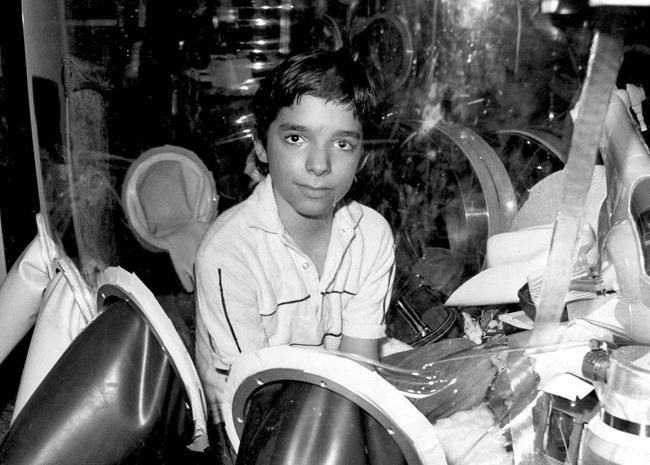
FILE - This Sept. 11, 1982 file photo shows David Vetter, born with an inherited disorder which leaves him no natural immunities against disease, in his protective enclosure in Texas. In 1984, Vetter died from complications from an experimental bone marrow transplant, thought to be his only chance at survival outside the
FILE - This Sept. 11, 1982 file photo shows David Vetter, born with an inherited disorder which leaves him no natural immunities against disease, in his protective enclosure in Texas. In 1984, Vetter died from complications from an experimental bone marrow transplant, thought to be his only chance at survival outside the "bubble." (AP Photo)

Omarion Jordan, who turns 1 later this month, had the therapy in December to treat severe combined immunodeficiency syndrome, or SCID.

“For a long time we didn’t know what was wrong with him. He just kept getting these infections,” said his mother, Kristin Simpson. Learning that he had SCID “was just heartbreaking … I didn’t know what was going to happen to him.”

Omarion now has a normal immune system. “He’s like a normal, healthy baby,” Simpson said. “I think it’s amazing.”

Study results were published by the New England Journal of Medicine. The treatment was pioneered by a St. Jude doctor who recently died, Brian Sorrentino.

SCID is caused by a genetic flaw that keeps the bone marrow from making effective versions of blood cells that comprise the immune system. It affects 1 in 200,000 newborns, almost exclusively males. Without treatment, it often kills in the first year or two of life.

“A simple infection like the common cold could be fatal,” Mamcarz said.

The nickname “bubble boy disease” comes from a famous case in the 1970s — a Texas boy who lived for 12 years in a protective plastic bubble to isolate him from germs. A bone marrow transplant from a genetically matched sibling can cure SCID, but most people lack a suitable donor. Transplants also are medically risky — the Texas boy died after one.

Doctors think gene therapy could be a solution. It involves removing some of a patient’s blood cells, using the modified HIV to insert the missing gene, and returning the cells through an IV. Before getting their cells back, patients are given a drug to destroy some of their marrow so the modified cells have more room to grow.

When doctors first tried it 20 years ago, the treatment had unintended effects on other genes, and some patients later developed leukemia. The new therapy has safeguards to lower that risk.

A small study of older children suggested it was safe. The new study tried it in infants, and doctors are reporting on the first eight who were treated at St. Jude and at UCSF Benioff Children’s Hospital San Francisco.

Within a few months, normal levels of healthy immune system cells developed in seven boys. The eighth needed a second dose of gene therapy but now is well, too. Six to 24 months after treatment, all eight are making all the cell types needed to fight infections, and some have successfully received vaccines to further boost their immunity to disease.
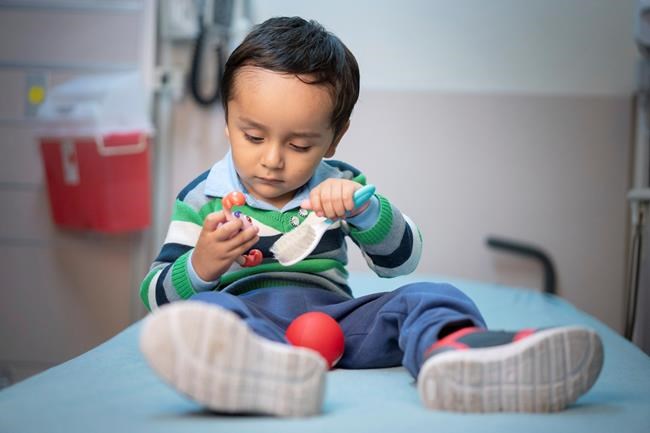
In this April 2019 photo provided by the St. Jude Children's Research Hospital, 2-year old Gael Jesus Pino Alva plays with toys at the hospital in Memphis. Gael was one of eight babies with
In this April 2019 photo provided by the St. Jude Children's Research Hospital, 2-year old Gael Jesus Pino Alva plays with toys at the hospital in Memphis. Gael was one of eight babies with "bubble boy disease" who have had it corrected by gene therapy that ironically was made from one of the immune system's worst enemies _ HIV, the virus that causes AIDS. (Peter Barta/St. Jude Children's Research Hospital via AP)

No serious or lasting side effects occurred.

Omarion is the 10th boy treated in the study, which is ongoing. It’s sponsored by the American Lebanese Syrian Associated Charities, the California Institute of Regenerative Medicine, the Assisi Foundation of Memphis and the federal government.

“So far it really looks good,” but patients will have to be studied to see if the results last, said Dr. Anthony Fauci, head of the National Institute of Allergy and Infectious Diseases, which helped develop the treatment. “To me, this looks promising.”

Rights to it have been licensed by St. Jude to Mustang Bio. Doctors say they have no estimate on what it might cost if it does become an approved treatment. They say they also hope to try it for more common problems such as sickle cell disease.

___

Marilynn Marchione can be followed at http://twitter.com/MMarchioneAP

___

The Associated Press Health and Science Department receives support from the Howard Hughes Medical Institute’s Department of Science Education. The AP is solely responsible for all content.

Report Error Submit a Tip

More Stories

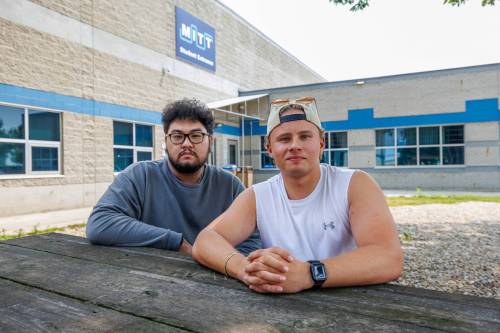
Students continue to criticize handling of MITT’s closure

Morgan Modjeski 5 minute read Preview

Students continue to criticize handling of MITT’s closure

Morgan Modjeski 5 minute read Monday, Jul. 27, 2026

Students at a Manitoba trade college say their education has been hampered as a result of its impending closure and they blame government for a poor transition.

The provincial government announced in January it would close the Manitoba Institute of Trades and Technology because it was no longer financially viable following the federal government’s decision to cut the number of international students allowed to study in Canada.

Officials have said students would remain the top priority as 19 programs from MITT are set to be absorbed by Red River College Polytech.

Kieran Smith, an electrical applications student at MITT, said it feels like those in charge “don’t really care.”

Read
Monday, Jul. 27, 2026

Qualico celebrating 75 years of growth, success since its first development of 13 bungalows in River Heights

Aaron Epp 6 minute read Preview

Qualico celebrating 75 years of growth, success since its first development of 13 bungalows in River Heights

Aaron Epp 6 minute read Monday, Jul. 27, 2026

The first things staff and visitors see after ascending to the third floor of Qualico’s head office in Winnipeg are two statues — one each for company founders David and Katherine Friesen.

Flanking the doors to the integrated real estate company’s C-suite offices, the bronze sculptures are monuments to the couple and the vision, strength and integrity (as the plaques attached to the wooden pedestals attest) it took to start Qualico in 1951.

But imagine for a moment what it would be like if the sculptures were less reverent and more whimsical. Picture them outfitted with the kind of pull-string voice boxes one finds in a child’s toy. What might they say?

It’s possible one of David Friesen’s phrases would be: “No margin, no mission.”

Read
Monday, Jul. 27, 2026

‘Eight credible threats’ against Hydro employees: CEO

Chris Kitching 6 minute read Preview

‘Eight credible threats’ against Hydro employees: CEO

Chris Kitching 6 minute read Monday, Jul. 27, 2026

Manitoba Hydro president and CEO Allan Danroth took aim at critics and revealed he and staff members have been threatened while defending the Crown corporation’s plan for three new combustion turbines Monday.

Without identifying individuals, Danroth said “constant, uninformed criticism” of Hydro and misinformation has eroded public trust and contributed to hostilities and an unsafe workplace for employees.

“Manitoba Hydro is currently managing eight credible threats against our employees, five of them directed at me personally,” Danroth told a Public Utilities Board hearing in Winnipeg.

“More troubling is these threats are increasingly affecting our front-line workforce. In the last year, my employees have been threatened with weapons, including guns, while performing their duties, and in one recent incident a homeowner directed his dogs to attack one of our meter readers.”

Read
Monday, Jul. 27, 2026

Landlord asks city to work with him over homeless camp after appeal option turfed

Scott Billeck 4 minute read Preview

Landlord asks city to work with him over homeless camp after appeal option turfed

Scott Billeck 4 minute read Monday, Jul. 27, 2026

A West Broadway landlord says the City of Winnipeg has rejected his attempt to appeal an order that requires him to clear a homeless encampment from his riverfront property.

Marvin Sharp, CEO of Astroid Management Ltd., which operates the Pen-Eve Apartments at 35 Balmoral St., said Monday the decision is absurd since his firm was given almost no time to respond to the order.

The city denied his request for an appeal hearing because he failed to respond before the July 18 compliance deadline.

Sharp contends that was impossible because the compliance order, dated July 10, did not arrive at his office until July 17, leaving him just one day to file an appeal. The city clerk’s office is closed on weekends.

Read
Monday, Jul. 27, 2026

Lawsuit targets pontoon boat operator, Sea-Doo driver, owner in fatal Whitemud River crash

Tyler Searle 4 minute read Preview

Lawsuit targets pontoon boat operator, Sea-Doo driver, owner in fatal Whitemud River crash

Tyler Searle 4 minute read Monday, Jul. 27, 2026

The father of a 39-year-old Portage la Prairie woman killed in a boat crash on the Whitemud River is suing the men who were operating the involved watercraft, claiming they were negligent when navigating the winding waterway.

Read
Monday, Jul. 27, 2026

Real-life heroes commended for bravery

Morgan Modjeski 4 minute read Preview

Real-life heroes commended for bravery

Morgan Modjeski 4 minute read Yesterday at 7:47 PM CDT

In a situation where other people might freeze, Preston Houle took action.

He recalls being at Delta Beach on July 18, 2025 when he heard a cry for help from a mom in distress, her two-year-old son in the water unresponsive after going under while playing with friends.

“I leaped into action,” Houle said. “I grabbed the young man, took him back to the shore, performed CPR until he kind of came back, and waited until EMS got there.”

Houle’s wife, too shy to speak, agreed that her husband was the kind of man you could rely on.

Read
Yesterday at 7:47 PM CDT