PBS film tackles Mexican Americans’ role in winemaking
Advertisement
Read this article for free:
or
Already have an account? Log in here »
To continue reading, please subscribe:

Digital Subscription
One year of digital access for only $205*
- Enjoy unlimited reading on winnipegfreepress.com
- Read the E-Edition, our digital replica newspaper
- Access News Break, our award-winning app
- Play interactive puzzles
*First annual payment billed as $205.00 + GST for one year. This annual subscription will automatically renew at $233.00 + GST every 52 weeks (10% off the regular annual price of $259.35). Offer available to new and qualified returning subscribers only. Cancel any time.
To continue reading, please subscribe:
Add Free Press access to your Brandon Sun subscription for only an additional
$1 for the first 4 weeks*
- Enjoy unlimited reading on winnipegfreepress.com
- Read the E-Edition, our digital replica newspaper
- Access News Break, our award-winning app
- Play interactive puzzles
*Your next Brandon Sun subscription payment will increase by $1.00 and you will be charged $17.95 plus GST for four weeks. After four weeks, your payment will increase to $24.95 plus GST every four weeks.
Read unlimited articles for free today:
or
Already have an account? Log in here »
Hey there, time traveller!
This article was published 11/05/2019 (2653 days ago), so information in it may no longer be current.
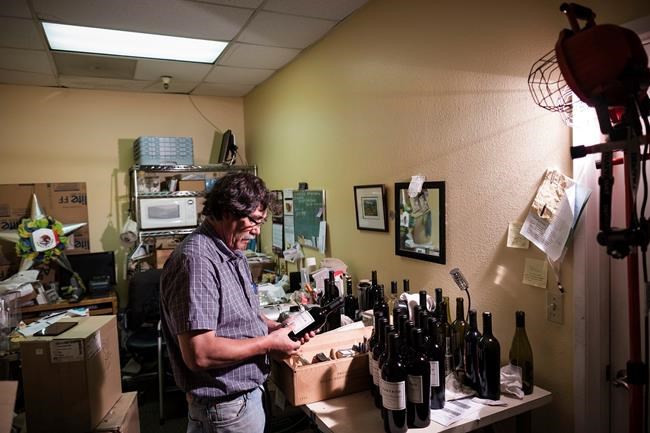
ALBUQUERQUE, N.M. – For generations, Mexican-born Gustavo Brambila’s family has worked in the wine industry of California’s Napa Valley in some form. He went to college on a baseball scholarship but the passion of flowery aromas and crisp peach flavour remained in his soul and he eventually got a degree in fermentation sciences.
His dream: His own vineyard.
Brambila’s story and others are the focus of “Harvest Season,” a new PBS documentary examining the contributions of Mexican Americans in the wine industry of California’s Napa Valley.
The film, scheduled to begin airing Monday on most PBS stations as part of the Independent Lens series, shows how the Mexican Americans have shaped the industry as farmworkers and later vineyard owners in one of the richest wine regions in the world.
Through the eyes of winemaker Gustavo Brambila, Mexican migrant worker Rene Reyes and wine entrepreneur Vanessa Robledo, the documentary shows how the California wine industry’s most silent figures battle weather, climate change and wildfires. They speak of their families’ deep roots with vineyards and how it shapes their dreams for the future.
Director Bernardo Ruiz said he wanted his project to show that people of Mexican descent have been a part of U.S. history since its founding and winemaker is just one industry where this is evident.
“From the outside, winemaking is very glamorous and it’s very romanticized,” Ruiz said. “What really drives it is really hard work.”
In California, those workers tend to be immigrants and Mexican Americans, he said.
To be sure, Mexican Americans has played vital roles in the creation and development of vineyards in California, New Mexico and Arizona. But Lilia Soto, an American Studies professor at the University of Wyoming, who grew up in Napa, California, said Mexican Americans especially have been instrumental in the played formation of the Napa Valley as a tourist site by providing the labour and its family connections that go back generations.
Those connections help tell the story of the U.S., Ruiz said.
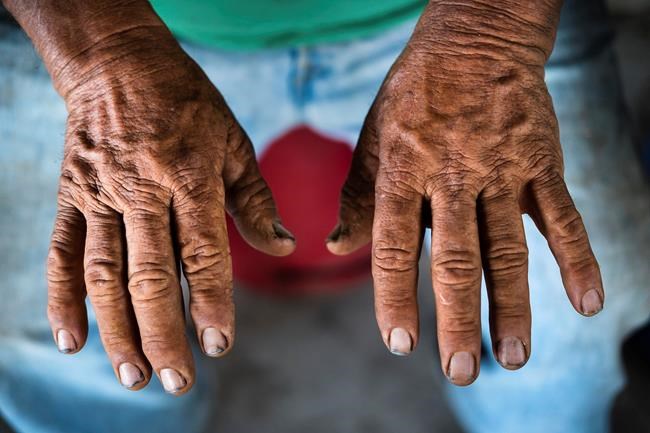
More where this is evident is with Vanessa Robledo. She’s the granddaughter of a Mexican migrant worker who came to the U.S. through the Bracero Program — a World War II-era program that sought to give temporary guest contracts to work in the fields. Her grandfather and father ended up in the vineyards.

“My dad would always tell us, ‘This is how our family will survive and it’s our future,'” Robledo said.
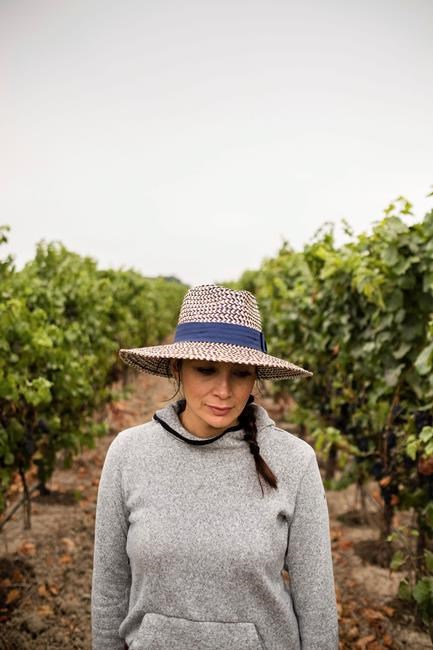
In the documentary, Robledo talks about being pushed out of the family vineyard business because she was female, then finding her own path in the industry. She guides workers harvesting grapes in the cool of night and walking through the vineyard during the day with a stunning background of rolling hills and distant mountains.
Soto, who went to high school with Robledo, said such stories captured the essence of Mexican Napa as opposed to the tourism mecca Napa. “The film highlights a Napa that is often invisible to most visitors,” Soto said. “These invisible people have always been here.”
___
Russell Contreras is a member of The Associated Press’ race and ethnicity team. Follow him on Twitter at http://twitter.com/russcontreras