Respect the soil in your garden: Don’t add plastic to it

Advertisement

Advertise with us

Before it's too late, I must address one of my pet peeves: deliberately putting plastic in soil.

Read this article for free:

or

Already have an account? Log in here »

To continue reading, please subscribe:

Subscribe and receive a limited-edition Free Press branded hat or tote.

Digital Subscription

One year of digital access for only $205*

  • Enjoy unlimited reading on winnipegfreepress.com
  • Read the E-Edition, our digital replica newspaper
  • Access News Break, our award-winning app
  • Play interactive puzzles

*First annual payment billed as $205.00 + GST for one year. This annual subscription will automatically renew at $233.00 + GST every 52 weeks (10% off the regular annual price of $259.35). Offer available to new and qualified returning subscribers only. Cancel any time.

To continue reading, please subscribe:

Add Free Press access to your Brandon Sun subscription for only an additional

$1 for the first 4 weeks*

  • Enjoy unlimited reading on winnipegfreepress.com
  • Read the E-Edition, our digital replica newspaper
  • Access News Break, our award-winning app
  • Play interactive puzzles
Start now

*Your next Brandon Sun subscription payment will increase by $1.00 and you will be charged $17.95 plus GST for four weeks. After four weeks, your payment will increase to $24.95 plus GST every four weeks.

Hey there, time traveller!
This article was published 21/05/2019 (2633 days ago), so information in it may no longer be current.

Before it’s too late, I must address one of my pet peeves: deliberately putting plastic in soil.

Take, for instance, black plastic sheeting sold as mulch. This stuff appears at first to be a cure-all for weed problems. Lay it on the ground, cut holes only where you will set plants, and weeds will die from lack of light, presumably ending all your weed problems for years to come.

But other problems arise. An impermeable sheet of plastic over the ground can leave plant roots and soil microorganisms gasping for air. Roots set in the openings might develop even greater breathing problems when all the water falling on the plastic floods those holes.
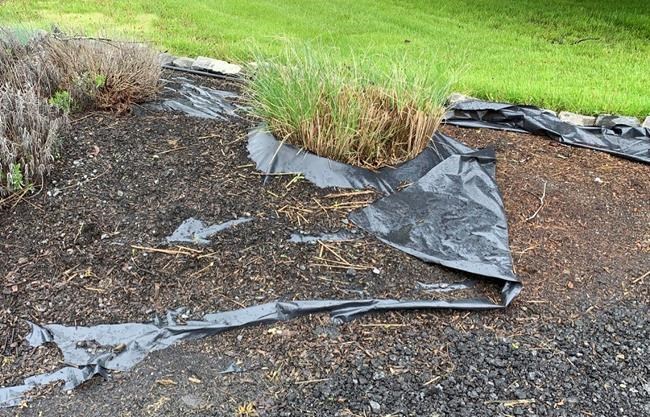
This undated photo shows a mulched planting bed in New Paltz, N.Y. Even if black plastic were as effective, long-term, at controlling weeds as hoped, it often falls short in its appearance in the landscape as shown here. (Lee Reich via AP)

And the plastic eventually starts to tear and break apart, which creates a general mess.

GEOTEXTILES?

Geotextiles, introduced more recently, are offered as an alternative to solid black plastic sheeting. These are woven or spun plastic fabrics that resist tearing and have many small holes to allow passage of air and water.

Both black plastic and geotextiles are widely used by farmers, gardeners and landscapers. If you don’t like the way these synthetic mulches look — surely the case when they are used in landscaping — you cover them. Wood chips look natural and are widely used for this purpose. And anyway, geotextiles need a thin cover of something to shade out the minimal light that makes its way through the tiny holes.

But problems arise again. Over time, plenty of weeds eventually sneak in to grow in the wood chips covering the plastic. Over time, the chips or other coverings also slide around to expose the plastic or geotextile beneath — not a pretty sight!

Furthermore, even if black plastic or geotextiles don’t do their jobs forever, they’ll be in the soil that long, or almost. Try to make over the landscape in the future and you will be wrestling with and cutting geotextiles or collecting scraps of black plastic.

PLASTIC PEANUTS, NO

Another, fortunately less frequently suggested use of plastic in the soil is plastic “peanuts.”

Mixed into the soil, the reasoning goes, they should increase aeration. While they would undoubtedly make a soil lighter, and thus seemingly better aerated, all that extra air is pretty much locked up in the peanuts.

It has also been suggested that a layer of plastic peanuts be put in the bottoms of flowerpots to enhance drainage, as layers of gravel have been used. In this case, that layer of peanuts is worse than useless, just as the traditional layer of gravel was. The effect in both cases is to create a “perched” water table inside the pot, giving the roots less depth of well-aerated soil.

Also, spent potting soil can be spread on the ground or added to a compost pile, but do you want the peanuts there also?

ENVIRONMENTALLY FRIENDLY ALTERNATIVES

Enough plastic makes its way into our soils inadvertently, from misplaced plant tags to those stickers now ubiquitous on fruit skins to pieces of old plastic pots.

Deliberately embedding a permanent, synthetic blanket in the ground or mixing plastic peanuts into the soil brings no benefits that could not be had in a more nature-friendly way. Paper mulch, for instance, biodegrades and can stave off weeds for a season. Perlite or vermiculite are two minerals that can lighten a soil more effectively than styrofoam peanuts.

Removing plastic put on or in the soil becomes difficult or well-nigh impossible.

Deliberately putting plastic in the ground is disrespectful of the skin — that is, soil — that covers our planet and sustains much of the life here.

___

http://www.leereich.com/blog

http://leereich.com
Report Error Submit a Tip

More Stories

Ticked off by Trump’s tantrums

Scott Forbes 5 minute read Preview

Ticked off by Trump’s tantrums

Scott Forbes 5 minute read Yesterday at 2:01 AM CDT

If Mr. Trump isn’t prepared to step up and better manage his ticks, he’s just blowing smoke.

Read
Yesterday at 2:01 AM CDT

‘Catastrophic’ ending to eventful Manitoba Derby

Mike McIntyre 6 minute read Preview

‘Catastrophic’ ending to eventful Manitoba Derby

Mike McIntyre 6 minute read Yesterday at 5:56 PM CDT

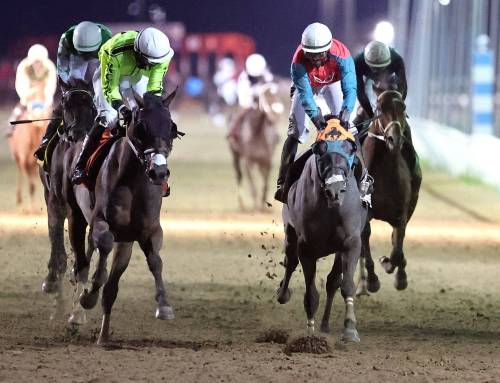
It had everything you could have wanted for the signature racing event of the season, including plenty of drama and excitement in front of a packed crowd at Assiniboia Downs.

Unfortunately, Monday night’s Manitoba Derby also served up another painful reminder of the potential perils of “The Sport of Kings” and what can occasionally happen when these magnificent animals are pushed to their limits.

Forty Twenty, a three-year-old bay colt who was one of the morning line favourites, looked to be in great shape as he approached the final turn and was near the lead in the nine-horse race.

But disaster struck as he approached the final turn and suddenly pulled up as the rest of the packed passed him.

Read
Yesterday at 5:56 PM CDT

Concordia doctor denies responsibility for Calgary man’s permanent disability

Erik Pindera 4 minute read Preview

Concordia doctor denies responsibility for Calgary man’s permanent disability

Erik Pindera 4 minute read Yesterday at 3:52 PM CDT

A Concordia Hospital doctor accused in a negligence lawsuit after a Calgary man was left permanently disabled when he was given a massive overdose of a powerful sedative has denied she ordered he be given the drug.

Zachary Hoogerdyk’s father, Edward Hoogerdyk, and the Alberta government filed their statement of claim earlier this year in Court of King’s Bench naming the Winnipeg Regional Health Authority, provincial health agency Shared Health, Concordia Hospital, Dr. Anna Ziomek and two other hospital staff as defendants.

Hoogerdyk, who was 23 at the time, went to Concordia’s urgent-care centre with flu-like symptoms and worsening breathing difficulties on March 25, 2024 while he was in Winnipeg on business and to visit family, the lawsuit says.

The claim alleges Ziomek diagnosed Hoogerdyk with low levels of oxygen in his blood and a strain of the flu, before ordering him to be intubated.

Read
Yesterday at 3:52 PM CDT

Goldeyes pitcher Boyd making most out of his visit to Winnipeg

Taylor Allen 5 minute read Preview

Goldeyes pitcher Boyd making most out of his visit to Winnipeg

Taylor Allen 5 minute read Yesterday at 10:36 PM CDT

Not that long ago it seemed very unlikely that Luke Boyd was going to turn into one of the American Association’s best pitchers.

He began the 2025 campaign with the Cleburne Railroaders but was released two weeks into the year after getting torched for nine runs in less than seven innings of work.

The Baylor University product was unsure if he would have a future in pro ball after that, but then, his old pal Logan Watkins — the manager of the Winnipeg Goldeyes — threw him a lifeline.

Watkins managed Boyd in Cleburne in 2023 before taking the job in Winnipeg.

Read
Yesterday at 10:36 PM CDT

Puzzles Palace

1 minute read Monday, Jul. 27, 2026

To solve our puzzles, please subscribe with this special offer: |

Building bridges for the next generation

Zoe Pierce 8 minute read Preview

Building bridges for the next generation

Zoe Pierce 8 minute read Yesterday at 6:00 AM CDT

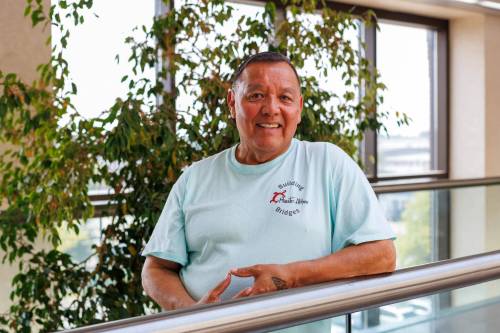
Change has been the motivation behind Clayton Sandy’s work for decades.

A member of Sioux Valley Dakota First Nation, Sandy is an Indigenous knowledge keeper, cultural advisor and community advocate. His work has taken him into newcomer organizations, schools, hospitals and workplaces across Manitoba, where he teaches Indigenous history, mentors youth and helps build relationships between communities.

Sitting down for an interview with the Free Press, Sandy arrived with a busy calendar in hand, a reflection of the many projects and initiatives that continue to fill his days as he works to create change for future generations.

“I have two boys and I have five grandchildren. The racism I put up with was really bad,” Sandy said. “And I don’t want my grandchildren to put up with that garbage.”

Read
Yesterday at 6:00 AM CDT