Companies report progress on blood tests to detect cancer
Advertisement
Read this article for free:
or
Already have an account? Log in here »
To continue reading, please subscribe:

Digital Subscription
One year of digital access for only $205*
- Enjoy unlimited reading on winnipegfreepress.com
- Read the E-Edition, our digital replica newspaper
- Access News Break, our award-winning app
- Play interactive puzzles
*First annual payment billed as $205.00 + GST for one year. This annual subscription will automatically renew at $233.00 + GST every 52 weeks (10% off the regular annual price of $259.35). Offer available to new and qualified returning subscribers only. Cancel any time.
To continue reading, please subscribe:
Add Free Press access to your Brandon Sun subscription for only an additional
$1 for the first 4 weeks*
- Enjoy unlimited reading on winnipegfreepress.com
- Read the E-Edition, our digital replica newspaper
- Access News Break, our award-winning app
- Play interactive puzzles
*Your next Brandon Sun subscription payment will increase by $1.00 and you will be charged $17.95 plus GST for four weeks. After four weeks, your payment will increase to $24.95 plus GST every four weeks.
Read unlimited articles for free today:
or
Already have an account? Log in here »
Hey there, time traveller!
This article was published 31/05/2019 (2627 days ago), so information in it may no longer be current.
A California company says its experimental blood test was able to detect many types of cancer at an early stage and gave very few false alarms in a study that included people with and without the disease.
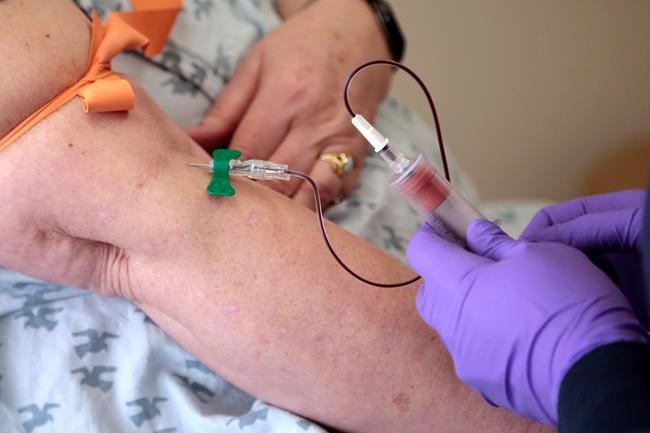
Many companies are trying to develop early detection “liquid biopsy” tests that capture bits of DNA that cancer cells shed into blood.

Grail’s new results are from 2,300 people. The test detected 55% of known cancers and gave false alarms for 1%. It also accurately suggested where the cancer may be about 90% of the time.
The company gave results in news release Friday and will report them Saturday at a conference in Chicago. They have not been published or reviewed by other scientists.