

Everest dangerously overcrowded
Advertisement
Read this article for free:
or
Already have an account? Log in here »
To continue reading, please subscribe:
Monthly Digital Subscription
$1 per week for 24 weeks*
- Enjoy unlimited reading on winnipegfreepress.com
- Read the E-Edition, our digital replica newspaper
- Access News Break, our award-winning app
- Play interactive puzzles
*Billed as $4.00 plus GST every four weeks. After 24 weeks, price increases to the regular rate of $19.95 plus GST every four weeks. Offer available to new and qualified returning subscribers only. Cancel any time.
Monthly Digital Subscription
$4.99/week*
- Enjoy unlimited reading on winnipegfreepress.com
- Read the E-Edition, our digital replica newspaper
- Access News Break, our award-winning app
- Play interactive puzzles
*Billed as $19.95 plus GST every four weeks. Cancel any time.
To continue reading, please subscribe:
Add Free Press access to your Brandon Sun subscription for only an additional
$1 for the first 4 weeks*
*Your next subscription payment will increase by $1.00 and you will be charged $16.99 plus GST for four weeks. After four weeks, your payment will increase to $23.99 plus GST every four weeks.
Read unlimited articles for free today:
or
Already have an account? Log in here »
Hey there, time traveller!
This article was published 04/06/2019 (2519 days ago), so information in it may no longer be current.
There will be two things people remember about the 2019 spring climbing season on Mount Everest. The first is the death toll. As of this week, it was 11.
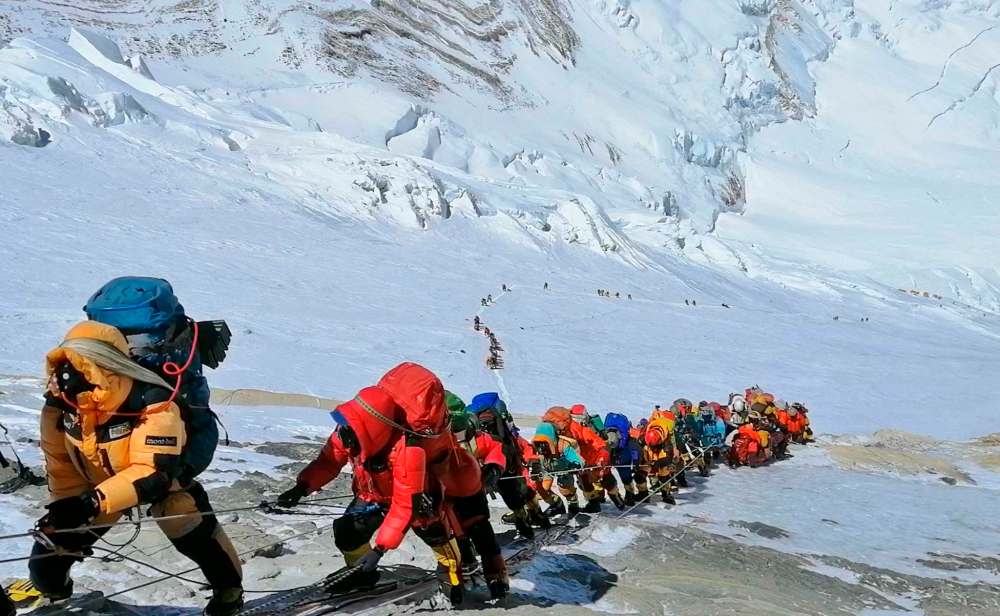
The second is a now-iconic image taken near the summit on May 22. In it, dozens of climbers are lined up on a ridge just below the peak, awaiting their chance to stand atop the world’s highest mountain. It’d be comical, except that the traffic jam occurred at a deadly, low-oxygen altitude.
The tragedy is that none of this is new. For years, overcrowding on Everest has been well documented. It’s a problem compounded by the fact that the mountain is a major source of revenue for Nepal, the base for most ascents. Reforms that restrict the numbers of paying climbers and trekkers are unlikely to make much progress against the economic incentives to increase traffic. Instead, Nepal should seek to invite the private sector to help manage Everest and other peaks. More commercialization, not less, is the best route to promoting safety.
The potential profits are rich. Nepal, a landlocked developing country, earned US$643 million from tourism in the 2017-18 fiscal year, or roughly 3.5 per cent of its GDP. Its export sector accounted for US$721 million during the same period, but tourism grew faster. Meanwhile, the industry directly employed 452,500 Nepalese in 2016. Understandably, the government would like to increase the business — and quickly. It’s targeting two million arrivals in 2020, up from one million in 2017.
Everest is crucial to meeting that goal. A safe and uncrowded Everest is good marketing; accounts that depict the mountain and its environs as overrun by climbers and other tourists will dissuade visitors. For example, overall tourist arrivals slipped following the 2012 climbing season, during which 12 Everest climbers perished (the most since 1996), due in part to congestion at the highest altitudes. It wasn’t the only problem: in 2014, Nepalese tourist-oriented businesses cited inadequate promotion, regulations and infrastructure for the decline in customers. Inevitably, these problems were heightened in the high-altitude danger zone.
In the 1990s, the Nepalese government began increasing the numbers of permits to climb Everest. For two decades, expensive, highly experienced western expedition companies accounted for most of these. Among their employees were equally experienced Nepalis and Sherpas who, in the middle of this decade, began to compete for clients on price. What might have cost an aspiring climber US$70,000 was now available for one-third of that. As prices fell and competition increased, ambitious but unqualified guides multiplied, as did traffic from unqualified climbers lured by cheap prices.
The Nepalese government has taken few tangible steps to protect either party (or Everest’s environment) from their own worst instincts, while its capacity and willingness to enforce regulations in the Himalayas have long been in doubt.
It doesn’t need to be that way. In 2014, the government considered a plan to lease out unclimbed Himalayan peaks to private entities that would manage them and collect fees from mountaineers. The idea was to lure climbers away from Everest, boost tourism in other areas, and shift the management burden to operators with a financial incentive to keep the environment safe, clean and friendly. Nothing came of the idea, despite support from Nepal’s mountaineering industry. That shouldn’t be the end of it. Nepal should revive the proposal and expand it to Everest and other popular peaks.
There are several ways to accomplish this. The most straightforward would be to establish concessions whereby a select group of qualified operators are offered exclusive rights to guide expeditions. A reduced number of well-qualified operators would boost climbing fees and local-government revenues while lowering numbers and boosting safety. It’s a model that has a track record of success around the world, including in the U.S., where the National Park Service leases multi-year concessions on some of its signature peaks, including Denali and Mount Rainier.

A more ambitious approach would be to establish private concessions for entire mountains or — more practically, in the case of Everest — base camps. For example, the Nepali government could lease out Everest Base Camp to a private operator for a royalty that’s recouped via trekking and climbing fees (permit fees for a trek to Everest Base Camp are currently less than US$100, while an organized trek can cost in the thousands of dollars). In return, the private operators would be expected to meet safety, sustainability and marketing goals.
Those goals are already being pursued on the Tibetan side of Everest. In recent years, China has restricted climber numbers, boosted fees, improved infrastructure and enhanced requirements for expedition companies. At least some guides now believe the Tibetan side is safer. Long term, that’ll benefit China’s aspiration to transform Everest into a money-making tourist attraction that draws more than just climbers and trekkers. If Nepal can’t improve its reputation for managing Everest, it will inevitably lose out to the competition. Leasing Everest and other peaks to the most qualified bidder is the quickest route to that.
Adam Minter is the author of Junkyard Planet: Travels in the Billion-Dollar Trash Trade and the forthcoming Secondhand: Travels in the New Global Garage Sale.
— Bloomberg