More residents being moved out of Pikangikum as crews fight forest fire
Advertisement
Read this article for free:
or
Already have an account? Log in here »
To continue reading, please subscribe:

Digital Subscription
One year of digital access for only $205*
- Enjoy unlimited reading on winnipegfreepress.com
- Read the E-Edition, our digital replica newspaper
- Access News Break, our award-winning app
- Play interactive puzzles
*First annual payment billed as $205.00 + GST for one year. This annual subscription will automatically renew at $233.00 + GST every 52 weeks (10% off the regular annual price of $259.35). Offer available to new and qualified returning subscribers only. Cancel any time.
To continue reading, please subscribe:
Add Free Press access to your Brandon Sun subscription for only an additional
$1 for the first 4 weeks*
- Enjoy unlimited reading on winnipegfreepress.com
- Read the E-Edition, our digital replica newspaper
- Access News Break, our award-winning app
- Play interactive puzzles
*Your next Brandon Sun subscription payment will increase by $1.00 and you will be charged $17.95 plus GST for four weeks. After four weeks, your payment will increase to $24.95 plus GST every four weeks.
Read unlimited articles for free today:
or
Already have an account? Log in here »
Hey there, time traveller!
This article was published 09/07/2019 (2608 days ago), so information in it may no longer be current.
Residents of a First Nation threatened by a forest fire in northwestern Ontario used air, land and water routes to leave their homes Tuesday as authorities worked to find communities that could host them.
The full evacuation of Pikangikum began Monday — some residents were being flown out on military flights while others made their own way out of the community using a combination of boats and buses, authorities said.
Alvin Fiddler, the grand chief of the Nishnawbe Aski Nation — which represents 49 First Nations across Northern Ontario — said one of the biggest challenges so far had been finding places for Pikangikum’s 3,800 residents to stay once they leave.
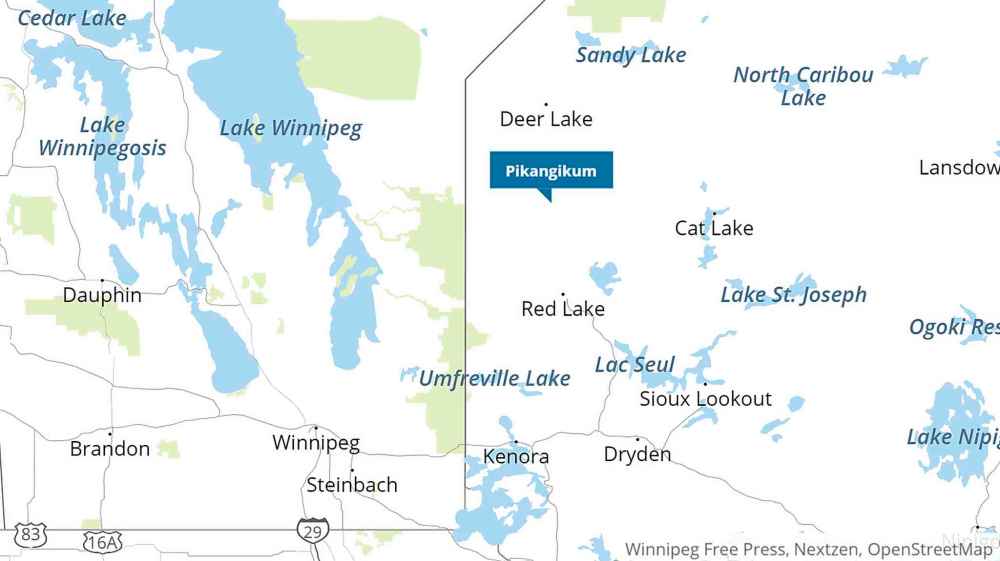
“We’re desperately looking for any available space anywhere in the province,” he said. “There are other communities that have been evacuated … so we have limited space in this part of the province on the northwest or even on the northeast part of the province.”Fiddler said officials are looking for accommodations for evacuees in southern Ontario, in Belleville, Cornwall, the Greater Toronto area and even the City of Toronto.
The province’s Ministry of the Solicitor General said it was in talks with other communities to find spots for the evacuees.
“There is an urgent need for host communities to provide a safe haven for evacuees during this difficult time,” said spokesman Brent Ross. “We are working with municipalities to find sufficient space to safely house those in need over the coming days and weeks.”
Some evacuees have been flown to the northern Ontario communities of Hearst, Smooth Rock Falls, and Kapuskasing, the ministry said. Others who are leaving by themselves via land and water routes will get temporary accommodations in Thunder Bay, Dryden and Red Lake before being taken on to other host communities, Ross said.
The forest fire near Pikangikum — dubbed Red Fire Number 39 — is currently about six kilometres southwest from the community, on the opposite side of Pikangikum Lake, and is about 404 square kilometres in size, according to the Ministry of Natural Resources.Firefighters are trying to direct the blaze to natural boundaries like lakes, said spokeswoman Jolanta Kowalski, and crews have installed sprinklers around the southwest part of the community in an attempt to stop the fire from spreading into the First Nation.At least 52 firefighters were working on the blaze, Kowalski said, with more expected to join the effort.
A spokeswoman for the Canadian Armed Forces said around 300 people had already been airlifted out of the community on military planes so far, with two more flights scheduled for Tuesday. A tally of those who were self-evacuating was not immediately available.
The forest fire has led to heavy smoke wafting over the community. The smoke has also led to the closure of Nungesser Road, a key route in the area, police said.
Environment Canada said smoke from the forest fire had led to high levels of air pollution.
“Air quality may deteriorate if the smoke descends to ground level,” the agency said. “Individuals may experience symptoms such as increased coughing, throat irritation, headaches or shortness of breath.”
There are currently 20 active fires in northwestern Ontario, according to the Ministry of Natural Resources, with five that are not under control.