

Quebec delays sprinkler requirement for private seniors’ homes to 2022
Advertisement
Read this article for free:
or
Already have an account? Log in here »
To continue reading, please subscribe:

Digital Subscription
One year of digital access for only $205*
- Enjoy unlimited reading on winnipegfreepress.com
- Read the E-Edition, our digital replica newspaper
- Access News Break, our award-winning app
- Play interactive puzzles
*First annual payment billed as $205.00 + GST for one year. This annual subscription will automatically renew at $233.00 + GST every 52 weeks (10% off the regular annual price of $259.35). Offer available to new and qualified returning subscribers only. Cancel any time.
To continue reading, please subscribe:
Add Free Press access to your Brandon Sun subscription for only an additional
$1 for the first 4 weeks*
- Enjoy unlimited reading on winnipegfreepress.com
- Read the E-Edition, our digital replica newspaper
- Access News Break, our award-winning app
- Play interactive puzzles
*Your next Brandon Sun subscription payment will increase by $1.00 and you will be charged $17.95 plus GST for four weeks. After four weeks, your payment will increase to $24.95 plus GST every four weeks.
Read unlimited articles for free today:
or
Already have an account? Log in here »
Hey there, time traveller!
This article was published 10/07/2019 (2594 days ago), so information in it may no longer be current.
QUEBEC – The Quebec government is giving owners of privately owned retirement homes an extra two years to retrofit their residences with sprinkler systems.
Such systems were made mandatory four years ago in the wake of a tragic seniors’ home fire in eastern Quebec that claimed 32 lives, with a December 2020 deadline.
But the Coalition Avenir Quebec government said the 2015 program has failed, given less than half of residences have been retrofitted with sprinklers so far.
Just 799 of 1,791 private residences in Quebec are equipped with sprinklers, and just 57 have been able to access government funding.
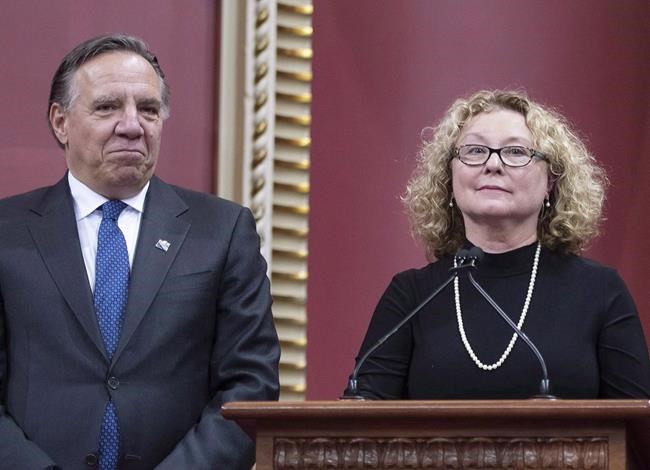
Seniors’ Minister Marguerite Blais told a news conference the government will provide quicker and better financial help to owners to get the work completed. Sprinkler systems can cost as much as $300,000 and for smaller, older residences, that can eat up a large chunk of their budgets.
“The problem isn’t the bigger residences, it’s the smaller residences that aren’t able to borrow the necessary money,” Blais said.
The previous deadline was also pushed back to December 2022.
The province moved to oblige all private seniors’ homes to install sprinklers in the wake of a major fire in January 2014 that claimed the lives of 32 seniors in L’Isle-Verte, Que.
Following a coroner’s inquest, it was included as one of the recommendations in the final report.
Blais said there were a number of irritants in the previous Liberal government’s program — particularly in terms of financial assistance — which led some owners to shut down rather that make the costly change.
Some 549 residences have shuttered since the law came into effect in 2015.
Since the creation of the program, Quebec gave itself five years to reimburse owners. In many cases, long after the sprinklers were installed, the government hadn’t sent the cheques, leaving residences in precarious financial situations.
Blais said of $183 million set aside for 2018, only $1.7 million had been sent.
The province is moving to increase the amount of the grants and providing owners with 25 per cent up front to help offset the cost.
For residences of 30 units and less, Quebec is assuming 100 per cent of the costs and for those between 31 and 99, it will assume 80 per cent of the cost.
For larger buildings with 100 units or more, the government is footing 60 per cent of the bill.