Cultural exploration of Nazis numbing

Advertisement

Advertise with us

This is an important book about a horrifyingly fascinating topic.

Read this article for free:


By clicking the button above, an account will be created and you will begin to receive some of our recommended newsletters. You may opt out of any newsletter by visiting your Email and Communication Preferences page or by clicking "unsubscribe" at the bottom of any email.

or

Already have an account? Log in here »

To continue reading, please subscribe:

Digital Subscription

One year of digital access for only $1.44 a week*

  • Enjoy unlimited reading on winnipegfreepress.com
  • Read the E-Edition, our digital replica newspaper
  • Access News Break, our award-winning app
  • Play interactive puzzles

*Billed as $5.77 plus GST every four weeks. After 52 weeks, price increases to the regular rate of $19.95 plus GST every four weeks. Offer available to new and qualified returning subscribers only. Cancel any time.

To continue reading, please subscribe:

Add Free Press access to your Brandon Sun subscription for only an additional

$1 for the first 4 weeks*

  • Enjoy unlimited reading on winnipegfreepress.com
  • Read the E-Edition, our digital replica newspaper
  • Access News Break, our award-winning app
  • Play interactive puzzles
Start now

*Your next Brandon Sun subscription payment will increase by $1.00 and you will be charged $17.95 plus GST for four weeks. After four weeks, your payment will increase to $24.95 plus GST every four weeks.

Hey there, time traveller!
This article was published 13/07/2019 (2662 days ago), so information in it may no longer be current.

This is an important book about a horrifyingly fascinating topic.

But it’s also an important book that lacks any verve or punch in the telling.

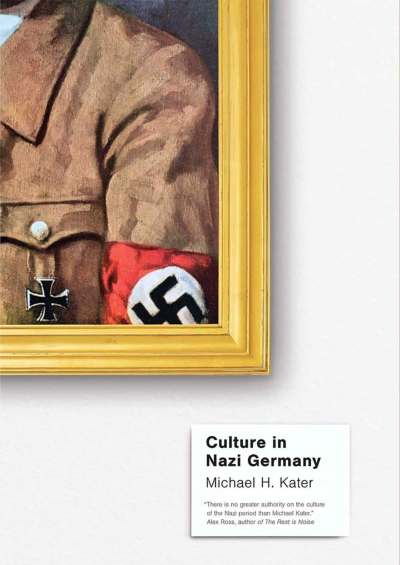
It examines how the Nazis appropriated culture — meaning the various branches of the arts, plus architecture and newspapers and radio — to create propaganda and serve the agenda of a totalitarian regime. It was an agenda that included extermination of the Jews and the subjugation or annihilation of non-Aryans (meaning, principally, Poles, Slavs and Romani peoples).

It covers all facets of the arts — literature, music, painting, sculpture, opera, theatre, film — in-depth and in detail. And there’s a wealth of interesting information here.

But that information is presented in such a dull and formulaic way that it’ll fast put the average Joe reader to sleep.

Author Michael Kater is a professor emeritus of history at Toronto’s York University and the author of several books about aspects of culture in the Third Reich. This volume seemingly attempts to consolidate much of his prior research in one omnibus work.

If his object is to reach an audience beyond a handful of academics, he’s failed. Neither he nor his editors know how to marshal historical evidence in a way palatable to the public.

Kater has a penchant for listing an artist, providing a potted bio, and then quickly moving on to the next person and repeating the process, without much thematic linkage or broader context. In the result, his writing too often has a jumpy, laundry-list feel about it.

Someone at Yale University Press should have told Kater a book for public consumption shouldn’t read like a collection of pieces culled from learned journals and academic works.

A number of contemporary academics have written outstanding historical works accessible to a non-academic audience — Americans Doris Kearns Goodwin and the late Stephen E. Ambrose, and Canadians David Bercuson and Jack Granatstein come to mind. Proof positive it can be done.

When Kater abandons his mania for abbreviated-bio listings of the cultural movers and shakers of the Weimar Republic as it morphed into Hitler’s Third Reich, his writing finally sings.

In a chapter titled Artist Emigres, he provides longer focused narratives about famous refugees from the Reich — both genuine and faux.

The individual stories of actor Marlene Dietrich, writers Erich Maria Remarque and Thomas Mann, soprano Lotte Lehmann and conductor Fritz Busch are compelling. But, by the next chapter, he’s again reverted to list-as-narrative prose.

Which is a shame, because that entirely novel chapter deals with latent aspects of Nazi culture that survived the war and existed in one form or another, particularly in West Germany, until the early 1970s. Kater also gives past-due historical comeuppance to some of the players in Nazi culture who, post the end of the Second World War in 1945, minimized or camouflaged their former roles in promoting a brutal ideology.

There’s no doubt Kater is an expert, and has done his homework. (The footnotes, bibliography and index, all told, run to well over 100 pages.)

And while he’s provided plentiful detail and copious research, his account never rises to being readily readable history.

Douglas J. Johnston is a Winnipeg lawyer and writer.

Report Error Submit a Tip

More Stories

Today’s horoscope

Georgia Nicols 4 minute read Yesterday at 2:00 AM CDT

MOON ALERT: Avoid shopping or making important decisions from 5:30 p.m. until 7 p.m. today.

ARIES (March 21-April 19)

Opportunities to socialize with others as well as to enjoy sporting events and fun activities with kids are abundant. Nevertheless, the full moon could create financial angst or disputes with someone, especially about money owed.

TAURUS (April 20-May 20)

Puzzles Palace

1 minute read Friday, Oct. 16, 2026

To solve our puzzles, please subscribe with this special offer: |

Hutterite colonies embrace the manufacturing business – while staying faithful to their way of life

Gabrielle Piché 13 minute read Preview

Hutterite colonies embrace the manufacturing business – while staying faithful to their way of life

Gabrielle Piché 13 minute read Thursday, Oct. 22, 2026

Tucked away at Oak Bluff Hutterite Colony, past rows of communal housing and farm buildings, Aaron Maendel tinkers in a laboratory.

Black-and-white sheets smeared with grey-test formulas cover a counter. A Thermotron — a refrigerator-looking machine — is powered off but standing by to simulate any desired temperature.

Maendel moves to a worktop littered with partly full mixing cups. He pulls out a small, rectangular sample — a sheet showing the drying time of his new fixation, floor coatings.

“Very simple, actually. Very simple machine. Drags a stick through the mud,” Maendel says.

Read
Thursday, Oct. 22, 2026

‘Savage and brutal’ Erickson home invasion nets 17-year sentence

Tessa Adamski 6 minute read Preview

‘Savage and brutal’ Erickson home invasion nets 17-year sentence

Tessa Adamski 6 minute read Saturday, Oct. 24, 2026

BRANDON — A woman who fought off the man who slashed her throat in a random home invasion in Erickson described the violent assault as the worst day of her life and a nightmare she can’t seem to shake off.

“I feel like a shell of the person I used to be. Not every second of every day, but definitely every day. It comes in waves,” Candace Richardson said as she read from a victim impact statement in a Brandon courtroom on Friday.

Carter Prince, 21, who pleaded guilty to attempted murder for the June 2023 attack, sat in the prisoner’s box as Richardson spoke.

“I’ll be completely fine, laughing, having fun or just relaxing with my family,” she told the court. “Then time goes so slowly, like you’re floating away, but instead of floating, I’m pinned to the ground, being stabbed over and over again. There’s blood everywhere and darkness surrounding me.”

Read
Saturday, Oct. 24, 2026

‘Well-known evil empire’: Barack Obama mocks President Trump’s trade war with Canada

The Canadian Press 3 minute read Preview

‘Well-known evil empire’: Barack Obama mocks President Trump’s trade war with Canada

The Canadian Press 3 minute read Updated: Yesterday at 11:03 PM CDT

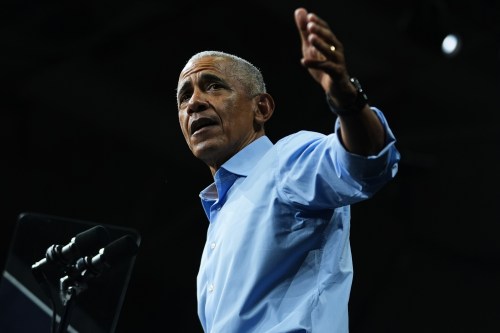
DETROIT - Former president Barack Obama took aim at U.S. President Donald Trump’s tariffs on Canadian goods Saturday during an impassioned speech at a Democrat campaign rally in Detroit, Michigan, ahead of next month’s U.S. midterm elections.

During a speech supporting Democratic candidates Abdul El-Sayed and Jocelyn Benson, Obama mocked the current president’s tariff war with its northern neighbour while jokingly referring to Canada as a "well-known evil empire.”

“That historical adversary of ours, Canada,” he said sarcastically. “It's your neighbour. It's a few minutes’ drive over the bridge.” 

The former president says Trump has upset Canadians through his abuse of the country and talks of making it the 51st state.

Read
Updated: Yesterday at 11:03 PM CDT

Cultural exploration of Nazis numbing

Reviewed by Douglas J. Johnston 3 minute read Preview

Cultural exploration of Nazis numbing

Reviewed by Douglas J. Johnston 3 minute read Saturday, Jul. 13, 2019

This is an important book about a horrifyingly fascinating topic.

But it’s also an important book that lacks any verve or punch in the telling.

It examines how the Nazis appropriated culture — meaning the various branches of the arts, plus architecture and newspapers and radio — to create propaganda and serve the agenda of a totalitarian regime. It was an agenda that included extermination of the Jews and the subjugation or annihilation of non-Aryans (meaning, principally, Poles, Slavs and Romani peoples).

It covers all facets of the arts — literature, music, painting, sculpture, opera, theatre, film — in-depth and in detail. And there’s a wealth of interesting information here.

Read
Saturday, Jul. 13, 2019