Cultural exploration of Nazis numbing

Advertisement

Advertise with us

This is an important book about a horrifyingly fascinating topic.

Read this article for free:


or

Already have an account? Log in here »

To continue reading, please subscribe:

Subscribe and receive a limited-edition Free Press branded hat or tote.

Digital Subscription

One year of digital access for only $205*

  • Enjoy unlimited reading on winnipegfreepress.com
  • Read the E-Edition, our digital replica newspaper
  • Access News Break, our award-winning app
  • Play interactive puzzles

*First annual payment billed as $205.00 + GST for one year. This annual subscription will automatically renew at $233.00 + GST every 52 weeks (10% off the regular annual price of $259.35). Offer available to new and qualified returning subscribers only. Cancel any time.

To continue reading, please subscribe:

Add Free Press access to your Brandon Sun subscription for only an additional

$1 for the first 4 weeks*

  • Enjoy unlimited reading on winnipegfreepress.com
  • Read the E-Edition, our digital replica newspaper
  • Access News Break, our award-winning app
  • Play interactive puzzles
Start now

*Your next Brandon Sun subscription payment will increase by $1.00 and you will be charged $17.95 plus GST for four weeks. After four weeks, your payment will increase to $24.95 plus GST every four weeks.

Hey there, time traveller!
This article was published 13/07/2019 (2642 days ago), so information in it may no longer be current.

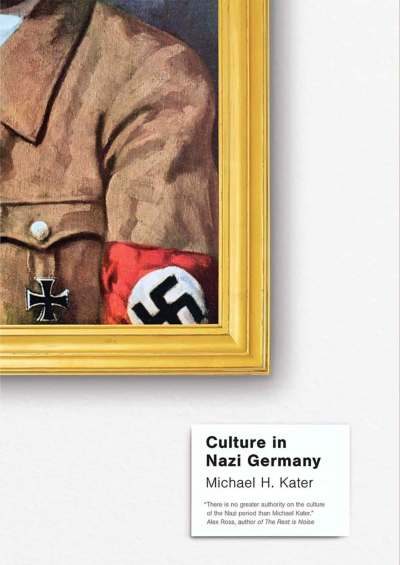
This is an important book about a horrifyingly fascinating topic.

But it’s also an important book that lacks any verve or punch in the telling.

It examines how the Nazis appropriated culture — meaning the various branches of the arts, plus architecture and newspapers and radio — to create propaganda and serve the agenda of a totalitarian regime. It was an agenda that included extermination of the Jews and the subjugation or annihilation of non-Aryans (meaning, principally, Poles, Slavs and Romani peoples).

It covers all facets of the arts — literature, music, painting, sculpture, opera, theatre, film — in-depth and in detail. And there’s a wealth of interesting information here.

But that information is presented in such a dull and formulaic way that it’ll fast put the average Joe reader to sleep.

Author Michael Kater is a professor emeritus of history at Toronto’s York University and the author of several books about aspects of culture in the Third Reich. This volume seemingly attempts to consolidate much of his prior research in one omnibus work.

If his object is to reach an audience beyond a handful of academics, he’s failed. Neither he nor his editors know how to marshal historical evidence in a way palatable to the public.

Kater has a penchant for listing an artist, providing a potted bio, and then quickly moving on to the next person and repeating the process, without much thematic linkage or broader context. In the result, his writing too often has a jumpy, laundry-list feel about it.

Someone at Yale University Press should have told Kater a book for public consumption shouldn’t read like a collection of pieces culled from learned journals and academic works.

A number of contemporary academics have written outstanding historical works accessible to a non-academic audience — Americans Doris Kearns Goodwin and the late Stephen E. Ambrose, and Canadians David Bercuson and Jack Granatstein come to mind. Proof positive it can be done.

When Kater abandons his mania for abbreviated-bio listings of the cultural movers and shakers of the Weimar Republic as it morphed into Hitler’s Third Reich, his writing finally sings.

In a chapter titled Artist Emigres, he provides longer focused narratives about famous refugees from the Reich — both genuine and faux.

The individual stories of actor Marlene Dietrich, writers Erich Maria Remarque and Thomas Mann, soprano Lotte Lehmann and conductor Fritz Busch are compelling. But, by the next chapter, he’s again reverted to list-as-narrative prose.

Which is a shame, because that entirely novel chapter deals with latent aspects of Nazi culture that survived the war and existed in one form or another, particularly in West Germany, until the early 1970s. Kater also gives past-due historical comeuppance to some of the players in Nazi culture who, post the end of the Second World War in 1945, minimized or camouflaged their former roles in promoting a brutal ideology.

There’s no doubt Kater is an expert, and has done his homework. (The footnotes, bibliography and index, all told, run to well over 100 pages.)

And while he’s provided plentiful detail and copious research, his account never rises to being readily readable history.

Douglas J. Johnston is a Winnipeg lawyer and writer.
Report Error Submit a Tip

More Stories

Cultural exploration of Nazis numbing

Reviewed by Douglas J. Johnston 3 minute read Preview

Cultural exploration of Nazis numbing

Reviewed by Douglas J. Johnston 3 minute read Saturday, Jul. 13, 2019

This is an important book about a horrifyingly fascinating topic.

But it’s also an important book that lacks any verve or punch in the telling.

It examines how the Nazis appropriated culture — meaning the various branches of the arts, plus architecture and newspapers and radio — to create propaganda and serve the agenda of a totalitarian regime. It was an agenda that included extermination of the Jews and the subjugation or annihilation of non-Aryans (meaning, principally, Poles, Slavs and Romani peoples).

It covers all facets of the arts — literature, music, painting, sculpture, opera, theatre, film — in-depth and in detail. And there’s a wealth of interesting information here.

Read
Saturday, Jul. 13, 2019

Stevenson set for first Jets start against Penguins

Ken Wiebe 5 minute read Preview

Stevenson set for first Jets start against Penguins

Ken Wiebe 5 minute read Sunday, Oct. 4, 2026

DETROIT — Clay Stevenson, the stage is yours.

As the Winnipeg Jets wrap up a two-game road trip on Monday against the Pittsburgh Penguins, the newest member of the team will be between the pipes after Stuart Skinner got the call in the first two outings of the campaign.

There will be an element of familiarity for Stevenson, as PPG Paints Arena is where he made his first NHL appearance with the Washington Capitals on April 17, 2025.

“There is some comfortability in that building,” said Stevenson, who made 33 saves in a 5-2 loss to the Penguins in that NHL debut. “It’s always a great challenge to play against (Sidney) Crosby and (Evgeni) Malkin and those guys. It’s an honour to get into the crease anytime.”

Read
Sunday, Oct. 4, 2026

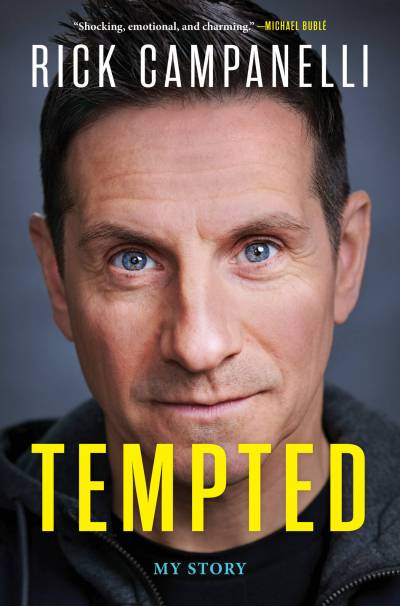
Former host/VJ Rick Campanelli revisits his gambling addiction in new memoir

Jen Zoratti 7 minute read Preview

Former host/VJ Rick Campanelli revisits his gambling addiction in new memoir

Jen Zoratti 7 minute read Yesterday at 6:00 AM CDT

To many Canadians, veteran media personality Rick Campanelli is better known as Rick the Temp, the energetic, baby-faced intern-turned-VJ on MuchMusic in the 1990s and early 2000s.

But behind that winning smile was a much darker reality.

In his new memoir, Tempted: My Story, released last month via HarperCollins Canada and co-written with John Meyer, Campanelli, 56, opens up for the first time about his struggles with a serious — and secret — gambling addiction, which reached its nadir in 2008 when the then-host of Entertainment Tonight Canada was detained by U.S. Homeland Security for unpaid casino debts on a flight back from Las Vegas.

The Free Press caught up with Campanelli in advance of his Winnipeg launch Monday evening at McNally Robinson Grant Park. This interview has been lightly edited for length and clarity.

Read
Yesterday at 6:00 AM CDT

Real journalists matter in an AI world

Paul Deegan 4 minute read Preview

Real journalists matter in an AI world

Paul Deegan 4 minute read 2:00 AM CDT

An algorithm can decide what you see, but it doesn’t report the news. Nunatsiaq News, an award-winning newspaper in Nunavut, recently reported that a so-called “news” website was posting AI-generated articles about the north by stealing real news stories produced by real journalists.

The articles were supposedly written by Nunavut correspondent Leah Qammaniq — a fake journalist, with a fake photo and a fake bio.

Governor General Louise Arbour warned us of fake news in her installation speech in June. She said, “We must continue to protect the public space in which our national debates take place: from schools and universities to the media, political parties, unions and civil society organizations …With instant access to vast amounts of information, it is very tempting to pay little attention to the reliability of sources. The lines between knowledge and belief, between truth and falsehood, between facts and assumptions, are increasingly blurred. AI could be threatening not only the way we live and work, but also the control we exercise over our own destiny.”

The Government of Canada has recognized the problem as well. Its recent discussion paper, Enhancing trust in artificial intelligence through increased transparency, stated, “Canadians encounter news reporting, product reviews, and audio-visual content across the internet, often without any indication of whether it was written by a person, generated by an AI system, or produced through some combination of both … A particular concern within this broader landscape is that generative AI greatly enables the creation and dissemination of deceptive or misleading content.”

Read
2:00 AM CDT

The election of our discontent: City at a crumbling crossroads, grumbling residents say in poll

Matthew Frank 7 minute read Preview

The election of our discontent: City at a crumbling crossroads, grumbling residents say in poll

Matthew Frank 7 minute read Updated: Yesterday at 3:16 PM CDT

There’s an undercurrent of unhappiness running through the Winnipeg electorate as the municipal election day approaches.

One-half of Winnipeggers believe the city is heading in the wrong direction, according to a new Abacus Data poll, with nearly one-third unsure if Winnipeg is regressing or progressing.

Only 21 per cent of residents believe the city is on the right track, the Free Press-commissioned poll found.

That discontentment extends to how the city spends its tax dollars, with four in 10 Winnipeggers believing they receive poor value for what they pay in property taxes.

Read
Updated: Yesterday at 3:16 PM CDT

Hydro Québec faces issue we should avoid

Editorial 4 minute read Preview

Hydro Québec faces issue we should avoid

Editorial 4 minute read Yesterday at 2:01 AM CDT

You might be tempted to call it a canary in an electric power generation coal mine.

Read
Yesterday at 2:01 AM CDT