

Oil spill-fighting bacteria under Experimental Lakes microscope

Advertisement
Read this article for free:
or
Already have an account? Log in here »
To continue reading, please subscribe:

Digital Subscription
One year of digital access for only $205*
- Enjoy unlimited reading on winnipegfreepress.com
- Read the E-Edition, our digital replica newspaper
- Access News Break, our award-winning app
- Play interactive puzzles
*First annual payment billed as $205.00 + GST for one year. This annual subscription will automatically renew at $233.00 + GST every 52 weeks (10% off the regular annual price of $259.35). Offer available to new and qualified returning subscribers only. Cancel any time.
To continue reading, please subscribe:
Add Free Press access to your Brandon Sun subscription for only an additional
$1 for the first 4 weeks*
- Enjoy unlimited reading on winnipegfreepress.com
- Read the E-Edition, our digital replica newspaper
- Access News Break, our award-winning app
- Play interactive puzzles
*Your next Brandon Sun subscription payment will increase by $1.00 and you will be charged $17.95 plus GST for four weeks. After four weeks, your payment will increase to $24.95 plus GST every four weeks.
Read unlimited articles for free today:
or
Already have an account? Log in here »
Hey there, time traveller!
This article was published 30/08/2019 (2578 days ago), so information in it may no longer be current.
Environmental scientists are spilling oil at a freshwater research facility in northwestern Ontario to test the waters for non-invasive cleanup techniques.
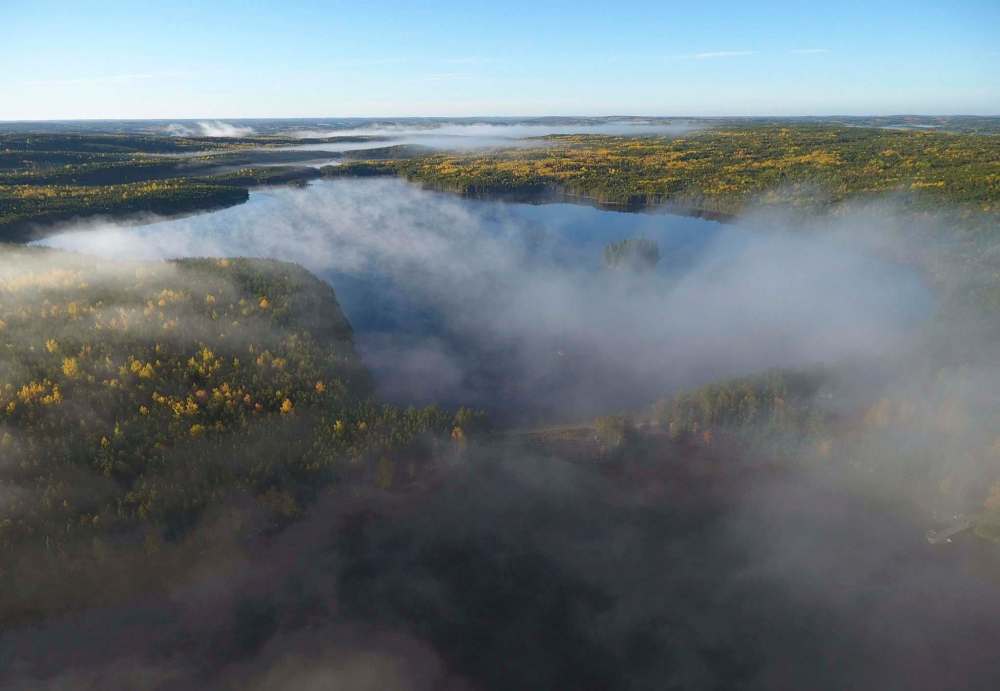
The Experimental Lakes Area, which is operated by the Winnipeg-based International Institute of Sustainable Development, consists of 58 small lakes and their watersheds. The natural laboratory is used by scientists who undertake real-world experiments on freshwater lakes to better understand wetlands and the impact people have on them.
The facility’s latest one-of-a-kind project has researchers conducting controlled oil spills and exploring ways to use bacteria in the wetlands to clean them up by turning oil into carbon dioxide and water, it announced Friday.
“When an oil spill occurs, there’s industry standard practices for removing that oil, but in many cases, it’s difficult to remove all that oil from the environment,” said Vince Palace, head scientist at the institute.
The environmental scientist said skimmers and absorbent pads aren’t 100 per cent effective in cleaning spills. As well, the traditional cleanup of an oil spill involves hauling heavy equipment onto a shore to dig up soil and remove vegetation — techniques Palace said can be even more damaging.
He said this project will attempt to stimulate bacteria to clean up the leftovers.
It will investigate how effective engineered floating wetlands — small, artificial islands that allow aquatic plants to thrive in water typically too deep for their growth — are at cleaning up spills in freshwater lakes over the next four years.
A network of plant roots on the floating platforms will create a layer of slime that allows bacteria to colonize, Palace said, adding researchers will then look at how microbes metabolize and degrade oil to flourish in the slime as they remediate a spill.
Palace said while engineered floating wetlands are a proven method for contamination treatment, their ability to remediate oil is a growing area of research. More than 100 fungi, 80 bacteria and 15 algae species can metabolize oil, he added.
The floating wetland treatment to enhanced remediation project (or FLOWTER) is being funded, in part, by Genome Prairie. The organization, which develops and manages genomics and related bioscience projects, is contributing $1.1 million.
The Canadian Association of Petroleum Producers, Canadian Energy Pipeline Association, Natural Resources Canada, Mitacs, TransMountain Corporation, Myera Group, Jacor LLC, and Stantec are also pitching in towards a total of $4.4 million in funding.
Statistics Canada’s latest pipeline transportation safety data shows a total of 111 incidents in 2018. Of those incidents — events including injuries and spills, as well as other occurrences — 42 involved “a release of product.” The average tally over the previous decade is 99 spills per year.
No product was released in any of the three incidents that took place in Manitoba last year.
Palace said it takes a long time for the environment to recover from oil spills, but researchers hypothesize the method that will be tested at the natural laboratory could improve recovery rates. “It’s actually the recovery period were most interested in.”
maggie.macintosh@freepress.mb.ca
Twitter: @macintoshmaggie

Maggie Macintosh
Education reporter
Maggie Macintosh reports on education for the Free Press. Originally from Hamilton, Ont., she first reported for the Free Press in 2017. Read more about Maggie.
Funding for the Free Press education reporter comes from the Government of Canada through the Local Journalism Initiative.
Every piece of reporting Maggie produces is reviewed by an editing team before it is posted online or published in print — part of the Free Press‘s tradition, since 1872, of producing reliable independent journalism. Read more about Free Press’s history and mandate, and learn how our newsroom operates.
Our newsroom depends on a growing audience of readers to power our journalism. If you are not a paid reader, please consider becoming a subscriber.
Our newsroom depends on its audience of readers to power our journalism. Thank you for your support.
Maggie Macintosh
Education reporter
Maggie Macintosh reports on education for the Free Press. Originally from Hamilton, Ont., she first reported for the Free Press in 2017. Read more about Maggie.
Funding for the Free Press education reporter comes from the Government of Canada through the Local Journalism Initiative.
Every piece of reporting Maggie produces is reviewed by an editing team before it is posted online or published in print — part of the Free Press‘s tradition, since 1872, of producing reliable independent journalism. Read more about Free Press’s history and mandate, and learn how our newsroom operates.
Our newsroom depends on a growing audience of readers to power our journalism. If you are not a paid reader, please consider becoming a subscriber.
Our newsroom depends on its audience of readers to power our journalism. Thank you for your support.
Advertisement Advertise With Us
Advertisement Advertise With Us