Family’s archive holds subtle secrets

Advertisement

Advertise with us

Every family has its stories, secrets and unconventional relatives. Catherine’s Mennonite, rural Alberta family is no different.

Read this article for free:


or

Already have an account? Log in here »

To continue reading, please subscribe:

Subscribe and receive a limited-edition Free Press branded hat or tote.

Digital Subscription

One year of digital access for only $205*

  • Enjoy unlimited reading on winnipegfreepress.com
  • Read the E-Edition, our digital replica newspaper
  • Access News Break, our award-winning app
  • Play interactive puzzles

*First annual payment billed as $205.00 + GST for one year. This annual subscription will automatically renew at $233.00 + GST every 52 weeks (10% off the regular annual price of $259.35). Offer available to new and qualified returning subscribers only. Cancel any time.

To continue reading, please subscribe:

Add Free Press access to your Brandon Sun subscription for only an additional

$1 for the first 4 weeks*

  • Enjoy unlimited reading on winnipegfreepress.com
  • Read the E-Edition, our digital replica newspaper
  • Access News Break, our award-winning app
  • Play interactive puzzles
Start now

*Your next Brandon Sun subscription payment will increase by $1.00 and you will be charged $17.95 plus GST for four weeks. After four weeks, your payment will increase to $24.95 plus GST every four weeks.

Hey there, time traveller!
This article was published 05/10/2019 (2530 days ago), so information in it may no longer be current.

Every family has its stories, secrets and unconventional relatives. Catherine’s Mennonite, rural Alberta family is no different.

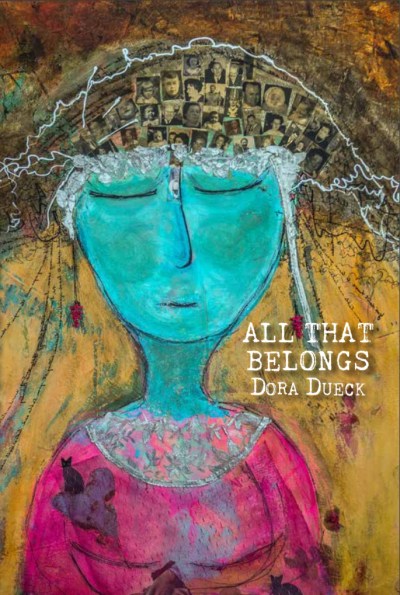
Catherine is the narrator of Dora Dueck’s new novel, All That Belongs. Dueck, who lived in Winnipeg for years but now lives and writes in British Columbia, is a former McNally Robinson Book of the Year Award winner for her novel, 2010’s This Hidden Thing.

In the opening chapter of Dueck’s new novel, Catherine has just retired from the regional archives in Winnipeg where she has spent decades conserving history. Planning to spend her post-employment days volunteering, walking, reading books and trying new recipes, she quickly becomes restless and decides instead to finally turn her attention to her own unexamined family history. As her husband Jim had told her, as an archivist, “she ought to be at home with her past.”

Catherine is particularly interested in finding out more about the events and unspoken emotions surrounding the deaths of her beloved and charismatic older brother Darrell and her eccentric Uncle Must. Uncle Must had farmed with Catherine’s father and lived with Catherine’s family during much of her youth. Strange, foreboding, judgmental and reticent, he had always been a source of embarrassment for her.

Catherine sets out on her quest by doing what she has been trained to do. She sifts through old newspapers, letters and scraps of paper, revisits her hometown in Alberta, reimagines long-ago conversations and occurrences and harasses her elderly mother for her fading memories.

“I would have to persist with the belief that a pilgrimage into the past could be a reset, that rehearsing shame could lessen it,” Catherine says. “Persist, even if retrospection was inherently disorderly. Even though I might feel my feelings too much.”

Most of the discoveries Catherine makes on her pilgrimage confirm what she has already known or always remembered. Still, she uncovers a few surprises and, in doing so, is finally able to properly grieve her brother and better understand her uncle’s religious fanaticism, bizarre behaviour and also his basic goodness.

There is not a lot of excitement or poignancy in these discoveries, but that does not diminish the pleasure or potency inherent in this lovely novel. It is, after all, much more than a story about digging up and coming to terms with one’s past, and even more than a story about the lingering effects of trauma and pain, and grief and guilt.

All That Belongs is also a story about aging with grace and accepting what you cannot change.

It happens to be, as well, an homage to a long, loyal and loving marriage, and an homage to the city of Winnipeg — even to its weather.

Sharon Chisvin is a Winnipeg writer.

History

Updated on Tuesday, October 8, 2019 11:15 AM CDT: Book cover changed.
Report Error Submit a Tip

More Stories

Text of Prime Minister Mark Carney’s ‘Forward Guidance’ video

13 minute read Preview

Text of Prime Minister Mark Carney’s ‘Forward Guidance’ video

13 minute read 5:55 PM CDT

Transcript of Prime Minister Mark Carney's remarks in a video released Tuesday after retaliatory tariffs on the United States came into effect.

Read
5:55 PM CDT

All that glitters … could work here

Editorial 4 minute read Preview

All that glitters … could work here

Editorial 4 minute read 2:00 AM CDT

Sometimes, it’s hard to even suggest a change, because it seems there is always a plethora of people ready to tell you that your idea just won’t work.

Read
2:00 AM CDT

For newcomer pizza purveyors, it’s all about crafting solid foundations

David Sanderson 7 minute read Preview

For newcomer pizza purveyors, it’s all about crafting solid foundations

David Sanderson 7 minute read Saturday, Sep. 5, 2026

A recent poll conducted by an Internet-based market-research firm determined that close to 20 per cent of people eschew their leftover pizza crust.

Some argued that the residual crust lacks flavour. Others submitted that it’s too hard or crunchy to enjoy sans toppings. Given that information, what are we to make of Crusty Craft Pizza, a five-month-old takeout spot whose owners are so confident in their European-style pizza crust that they’ve chosen to highlight it in their business moniker?

Whenever somebody informs them they don’t like pizza crust, their response is, well, they haven’t tried theirs, says Oleksii Samokvhal, who together with his wife, Iryna Mehedyn, opened Crusty Craft Pizza in early April, at 1311 Day St. in Transcona.

“It’s thin in the middle, with raised edges we hand-form ourselves,” says Mehedyn, a native of Ukraine who, like her Kyiv-born husband, relocated to Winnipeg to escape the conflict in their home country.

Read
Saturday, Sep. 5, 2026

Pointing fingers at Tories three years after election tiresome, accomplishes nothing

Tom Brodbeck 5 minute read Preview

Pointing fingers at Tories three years after election tiresome, accomplishes nothing

Tom Brodbeck 5 minute read 1:08 PM CDT

There is a point in every government’s life when blaming the previous government stops being an explanation and starts becoming an excuse.

For Manitoba’s NDP government, that point has arrived.

Justice Minister Matt Wiebe was asked last week about a grievance filed by Crown attorneys over excessive workloads and a government attempt to keep a report documenting those workloads out of an upcoming arbitration hearing.

Wiebe said he couldn’t discuss the arbitration case.

Read
1:08 PM CDT

Shtetl story: Rainbow Stage, WJT stage classic Yiddish tale

Ben Waldman 7 minute read Preview

Shtetl story: Rainbow Stage, WJT stage classic Yiddish tale

Ben Waldman 7 minute read 5:25 PM CDT

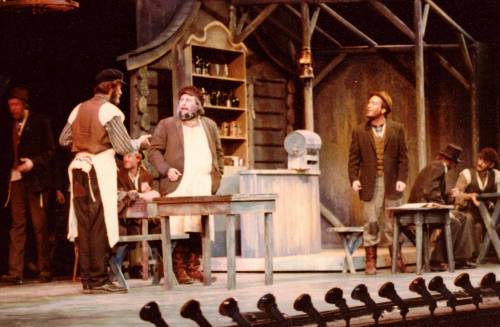
Reb Lazar Wolf (Dov Mickelson) marched down Selkirk Avenue last Friday afternoon to collect sustenance for his Fiddler on the Roof castmates, who’ve spent the past two weeks rehearsing at the Ukrainian National Federation Hall.

“Rugelach?” Mickelson offered after making a quick stop for a bag of sweet pastries at the 89-year-old Gunn’s Bakery, following in the footsteps of his parents’ and grandparents’ generations, those Jews who sought refuge in this neighbourhood after the world they once knew in Eastern Europe was obliterated by continental campaigns of anti-semitism which ultimately led to the Holocaust.

The pre- and post-war focal point of Winnipeg’s Jewish community, the North End became for thousands of refugees and immigrants a stand-in for shtetls — the small, yet sprawling communities that existed under tenuous and ever-threatened autonomy as satellite communities across the Pale of Settlement, the region within the Russian Empire where Jewish people were allowed to reside.

Under the rule of the Tsar — pheh — opportunity was scarce and any expression of Jewish joy or celebration — a bar mitzvah morning, a wedding night or a bris for a newborn boy — could occasion brutal suppression by either the ruling class or by the villagers at the gate.

Read
5:25 PM CDT

Family’s archive holds subtle secrets

Reviewed by Sharon Chisvin 3 minute read Preview

Family’s archive holds subtle secrets

Reviewed by Sharon Chisvin 3 minute read Tuesday, Oct. 8, 2019

Every family has its stories, secrets and unconventional relatives. Catherine’s Mennonite, rural Alberta family is no different.

Catherine is the narrator of Dora Dueck’s new novel, All That Belongs. Dueck, who lived in Winnipeg for years but now lives and writes in British Columbia, is a former McNally Robinson Book of the Year Award winner for her novel, 2010’s This Hidden Thing.

In the opening chapter of Dueck’s new novel, Catherine has just retired from the regional archives in Winnipeg where she has spent decades conserving history. Planning to spend her post-employment days volunteering, walking, reading books and trying new recipes, she quickly becomes restless and decides instead to finally turn her attention to her own unexamined family history. As her husband Jim had told her, as an archivist, “she ought to be at home with her past.”

Catherine is particularly interested in finding out more about the events and unspoken emotions surrounding the deaths of her beloved and charismatic older brother Darrell and her eccentric Uncle Must. Uncle Must had farmed with Catherine’s father and lived with Catherine’s family during much of her youth. Strange, foreboding, judgmental and reticent, he had always been a source of embarrassment for her.

Read
Tuesday, Oct. 8, 2019