Liberal search for dance partners: areas where Trudeau might find common ground
Advertisement
Read this article for free:
or
Already have an account? Log in here »
To continue reading, please subscribe:

Digital Subscription
One year of digital access for only $205*
- Enjoy unlimited reading on winnipegfreepress.com
- Read the E-Edition, our digital replica newspaper
- Access News Break, our award-winning app
- Play interactive puzzles
*First annual payment billed as $205.00 + GST for one year. This annual subscription will automatically renew at $233.00 + GST every 52 weeks (10% off the regular annual price of $259.35). Offer available to new and qualified returning subscribers only. Cancel any time.
To continue reading, please subscribe:
Add Free Press access to your Brandon Sun subscription for only an additional
$1 for the first 4 weeks*
- Enjoy unlimited reading on winnipegfreepress.com
- Read the E-Edition, our digital replica newspaper
- Access News Break, our award-winning app
- Play interactive puzzles
*Your next Brandon Sun subscription payment will increase by $1.00 and you will be charged $17.95 plus GST for four weeks. After four weeks, your payment will increase to $24.95 plus GST every four weeks.
Read unlimited articles for free today:
or
Already have an account? Log in here »
Hey there, time traveller!
This article was published 22/10/2019 (2528 days ago), so information in it may no longer be current.
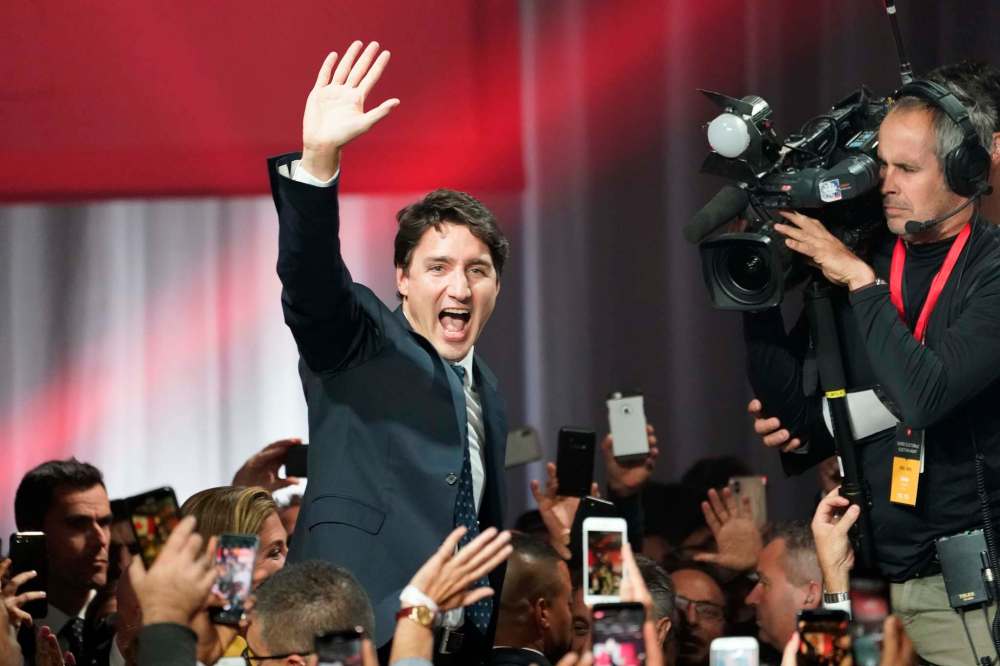
OTTAWA – The Liberals won more seats Monday than any other party, but came up short in their effort to return to Parliament with another majority mandate.
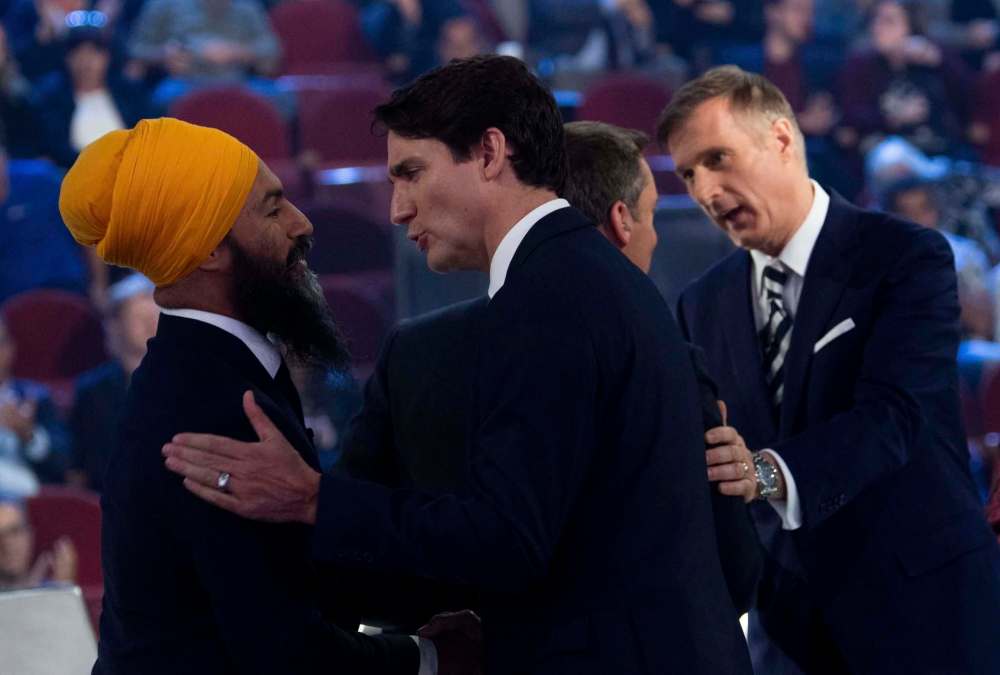
Unlike in Justin Trudeau’s first term, this time the Liberal prime minister will have to strike agreements with political rivals as he tries to win their support to pass legislation and, in some cases, survive confidence votes in the House of Commons.
First, some math. Here are the seat totals for each party following the election.
— Liberals: 157 seats, 13 shy of the 170 necessary for a majority in the 338-seat House of Commons.
— Conservatives: 121
— Bloc Quebecois: 32
— New Democrats: 24
— Greens: 3
— Independent: 1
The Liberals will have to find common ground with opposition parties to avoid the risk of triggering another election or giving the Conservatives a chance to try to form government. Deals could be part of a formal arrangement with another party — which Trudeau does not seem to be seeking at this point — or on a case-by-case basis.
Here’s a list of policy areas and potential scenarios:
—
Liberals and New Democrats
The New Democrats are the Liberals’ most likely allies. The parties, for instance, might be able to agree on moves in shared areas of interest such as housing and the environment.
NDP Leader Jagmeet Singh has laid out key priorities he said he will fight for when considering whether he’s willing to work with the Liberals.
They include building a national pharmacare program, investing in affordable housing, waiving interest payments on student loans, slashing cellphone bills, addressing climate change by ending fossil-fuel subsidies and investing in clean, renewable energy and forcing the “super wealthy” to pay a new tax.
“We’re not going to negotiate any of those things today and we’re certainly not going to negotiate those things in the media,” Singh said Tuesday when asked about his parameters for talks with the Liberals.
“We’re going to fight within those conditions with everything we have to ensure Canadians know that we’re in it for them.”
Singh was also asked if he would seek a broader deal with the Liberals or go issue-by-issue. He replied that “everything’s on the table.”
There are plenty of potential Liberal-NDP sticking points, however.
The parties have considerable work to do to narrow the chasm between their positions when it comes to the Liberals’ controversial Trans Mountain pipeline expansion project, the scale of investments towards a national drug plan and electoral reform.
The NDP committed to spend $10 billion per year towards pharmacare, while the Liberals pledged $6 billion over four years as a down payment.
Singh was asked Tuesday if he would be willing to soften his opposition to the Trans Mountain project in exchange for more Liberal support towards national pharmacare. He declined to go into detail about any talks, saying only that he will continue to oppose the pipeline expansion.
On reforming the electoral system, Singh said he intends to push for proportional representation, a system that would have given his party more seats in Monday’s vote. The Liberals broke a 2015 vow to introduce electoral reform, including a pledge to abandon Canada’s first-past-the-post system.
—
Liberals and Conservatives
The Liberals and Conservatives have long been bitter foes in a rivalry that translated into personal attacks during the campaign.
Newly elected Liberal Steven Guilbeault, a well-known environmentalist who won his Montreal riding, said Monday after the election that he doubted his party could work with the Conservatives.
There are, however, key areas where Trudeau’s Liberals will likely be able to find agreement with Andrew Scheer’s Conservatives.
The Trans Mountain pipeline expansion would bring crude oil to an ocean port from Alberta, the Conservatives’ heartland of voter support. The project would help boost the provincial economy and its oil sector. The Tories’ main complaint about the pipeline is that the Liberals haven’t expanded it yet.
The Liberals and Conservatives could also work together to ratify the updated North American free trade deal among Canada, the United States and Mexico.
Scheer has criticized Trudeau’s handling of the negotiations towards a modernized NAFTA, insisting the Liberal leader gave up numerous concessions to U.S. President Donald Trump. The Conservatives, however, support free trade and would be unlikely to block any efforts to finalize such an important deal.
—
Liberals and Bloc Quebecois
There’s potential for the Liberals and the pro-independence Bloc Quebecois to agree on issues under the broader themes of the environment and social policy.
Bloc Quebecois Leader Yves-Francois Blanchet would almost certainly seek more powers for Quebec from the federation in exchange for his support.

During the campaign, Trudeau was asked if he would be willing to work with the Bloc if he found himself leading a minority Parliament. Trudeau sidestepped the question and underscored his support for national unity and said Quebecers, like many Canadians, were talking to him about the environment.
On Tuesday, Blanchet told reporters his party will have plenty of leverage in any talks with the Liberals, though he declined to provide specifics. Blanchet said his party would not seek to make Parliament ineffective as a way to build a case for Quebec sovereignty.
“The responsibility of the prime minister, and the Liberal party, is to make this Parliament work — it is their responsibility, not ours, not the responsibility of the NDP or the Conservatives,” Blanchet said, though.
He added there’s a law stating that government mandates are supposed to last four years. Blanchet said the Liberals should do “what it takes” to make Parliament work, out of respect for voters.
This report was first published by The Canadian Press on Oct. 22, 2019.
Related Articles
Liberals win 4th mandate as NDP vote collapses and Singh announces he will resign







Advertisement Advertise With Us
Advertisement Advertise With Us