Science Says: What to know about the viral outbreak in China

Advertisement

Advertise with us

Health authorities are closely watching an outbreak of respiratory illness caused by a new virus that originated in China. Governments are stepping up surveillance of airline passengers from central China and taking other steps to try to control the outbreak.

Read this article for free:


or

Already have an account? Log in here »

To continue reading, please subscribe:

Subscribe and receive a limited-edition Free Press branded hat or tote.

Digital Subscription

One year of digital access for only $205*

  • Enjoy unlimited reading on winnipegfreepress.com
  • Read the E-Edition, our digital replica newspaper
  • Access News Break, our award-winning app
  • Play interactive puzzles

*First annual payment billed as $205.00 + GST for one year. This annual subscription will automatically renew at $233.00 + GST every 52 weeks (10% off the regular annual price of $259.35). Offer available to new and qualified returning subscribers only. Cancel any time.

To continue reading, please subscribe:

Add Free Press access to your Brandon Sun subscription for only an additional

$1 for the first 4 weeks*

  • Enjoy unlimited reading on winnipegfreepress.com
  • Read the E-Edition, our digital replica newspaper
  • Access News Break, our award-winning app
  • Play interactive puzzles
Start now

*Your next Brandon Sun subscription payment will increase by $1.00 and you will be charged $17.95 plus GST for four weeks. After four weeks, your payment will increase to $24.95 plus GST every four weeks.

Hey there, time traveller!
This article was published 21/01/2020 (2405 days ago), so information in it may no longer be current.

Health authorities are closely watching an outbreak of respiratory illness caused by a new virus that originated in China. Governments are stepping up surveillance of airline passengers from central China and taking other steps to try to control the outbreak.

Here’s what you should know about the illness:

WHAT IS THE NEW VIRUS?

Pharmacist Liu Zhuzhen stands near a sign reading
Pharmacist Liu Zhuzhen stands near a sign reading "face masks are sold out" at her pharmacy in Shanghai, Tuesday, Jan. 21, 2020. Heightened precautions were being taken in China and elsewhere Tuesday as governments strove to control the outbreak of a novel coronavirus that threatens to grow during the Lunar New Year travel rush. (AP Photo/Fu Ting)

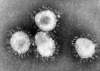
Scientists have identified it as a new coronavirus. The name comes from the Latin word for crowns or halos, which coronaviruses resemble under a microscope. The coronavirus family has many types that affect people. Some cause the common cold while others originating in bats, camels and other animals have evolved into more severe illnesses such as SARS — severe acute respiratory syndrome — or MERS — Middle East respiratory syndrome.

WHERE DID IT COME FROM?

The first cases appeared last month in Wuhan, a city in central China’s Hubei province. Many of the first people infected had visited or worked at the Huanan Seafood Wholesale Market in Wuhan, which has since been closed for an investigation. Chinese health officials say they believe the illness first spread from animals to people. They now say it can spread between people.

HOW WIDESPREAD IS IT?

China has identified more than 500 cases and 17 deaths, most of the illnesses and all of the deaths in Hubei province. Cases have also been confirmed in Thailand, South Korea, Japan, the U.S. and Taiwan. The outbreak coincides with China’s busiest travel season as people visit their families or go abroad for the Lunar New Year holiday. That travel rush is expected to spread the disease more widely.

WHAT ARE THE SYMPTOMS?

Common symptoms include a runny nose, headache, cough and fever. Shortness of breath, chills and body aches are associated with more dangerous kinds of coronavirus, according to the U.S. Centers for Disease Control and Prevention. In serious cases, the virus can cause pneumonia.

HOW IS IT TREATED?

There is a test to identify the virus, but no vaccine to prevent an infection. Patients with the virus have been isolated in hospitals or homes to prevent spreading it. The symptoms are treated with pain and fever medication, and people are advised to drink plenty of liquids and rest while they recover.

HOW IS IT SPREADING?

Many coronaviruses can spread through coughing or sneezing, or by touching an infected person. Scientists believe the new virus can spread from person to person in close contact through the respiratory tract.

COULD IT BE AS BAD AS SARS?

So far, the virus appears less dangerous and infectious than SARS, which also started in China in 2002-03 and killed about 800 people. However, viruses can mutate into more dangerous and contagious forms, and it’s too early to say what will happen with this one.

___

The Associated Press Health and Science Department receives support from the Howard Hughes Medical Institute’s Department of Science Education. The AP is solely responsible for all content.

Report Error Submit a Tip

More Stories

Transit union pleads for full shields after near ‘hijacking situation’

Nicole Buffie 5 minute read Preview

Transit union pleads for full shields after near ‘hijacking situation’

Nicole Buffie 5 minute read Yesterday at 6:37 PM CDT

The union representing Winnipeg Transit drivers says the need for full safety shields is critical after an operator was threatened with a hatchet early Thursday.

Read
Yesterday at 6:37 PM CDT

Sisters among 137 to begin doctor journey at U of M

Nicole Buffie 4 minute read Preview

Sisters among 137 to begin doctor journey at U of M

Nicole Buffie 4 minute read Wednesday, Aug. 19, 2026

Not everyone enters medical school with a built-in study buddy.

Sisters Maya and Dana Jalal joined 135 of their classmates to don white coats and mark the beginning of their journey through the University of Manitoba’s Max Rady College of Medicine Wednesday morning.

Maya, 22, and Dana, 21, were accepted into medical school at the same time.

“Thankfully, we both got accepted in the same area, same time. So we decided we’d rather go together than apart,” Maya said. “It’ll be nice seeing different perspectives during our studies. We are siblings, but we each have our own perspectives, our own lived experiences.”

Read
Wednesday, Aug. 19, 2026

Science Says: What to know about the viral outbreak in China

The Associated Press 3 minute read Preview

Science Says: What to know about the viral outbreak in China

The Associated Press 3 minute read Wednesday, Jan. 22, 2020

Health authorities are closely watching an outbreak of respiratory illness caused by a new virus that originated in China. Governments are stepping up surveillance of airline passengers from central China and taking other steps to try to control the outbreak.

Here's what you should know about the illness:

WHAT IS THE NEW VIRUS?

Scientists have identified it as a new coronavirus. The name comes from the Latin word for crowns or halos, which coronaviruses resemble under a microscope. The coronavirus family has many types that affect people. Some cause the common cold while others originating in bats, camels and other animals have evolved into more severe illnesses such as SARS — severe acute respiratory syndrome — or MERS — Middle East respiratory syndrome.

Read
Wednesday, Jan. 22, 2020

ER wait times have hit all-time highs in Winnipeg and are impacting nearly all aspects of hospital operations

Tom Brodbeck 17 minute read Preview

ER wait times have hit all-time highs in Winnipeg and are impacting nearly all aspects of hospital operations

Tom Brodbeck 17 minute read 6:00 AM CDT

On most days at Health Sciences Centre’s adult emergency department, all 58 treatment beds are filled with sick patients. Another dozen or so brought in by ambulance line the hallways on stretchers, with only one nurse to look after them.

Out in the waiting room, about 30 or 40 people — sometimes more — are slouched in chairs in pain or discomfort, waiting hours to see a doctor. Most have been assessed by a triage nurse, but many will have to wait 10 to 20 hours to be examined by a physician because there’s no room for them in the treatment area.

Some patients leave because they can no longer tolerate the excruciating wait, only to return days later, sicker than they were before.

Welcome to the emergency department at Manitoba’s largest hospital, where some of the highest-acuity patients seek medical care but now face delays that were unimaginable a few years ago.

Read
6:00 AM CDT

Provincial teacher watchdog releases names, details in three disciplinary matters

Maggie Macintosh 6 minute read Preview

Provincial teacher watchdog releases names, details in three disciplinary matters

Maggie Macintosh 6 minute read Updated: 11:19 AM CDT

An Interlake teacher with a history of “intimidating” outbursts has been ordered to participate in counselling and study anger-management strategies after he made a child cry.

Read
Updated: 11:19 AM CDT

Vance weighs in on Jivani trade advocacy and how Carney tried to ‘out-tough’ Trump

Kelly Geraldine Malone, The Canadian Press 5 minute read Preview

Vance weighs in on Jivani trade advocacy and how Carney tried to ‘out-tough’ Trump

Kelly Geraldine Malone, The Canadian Press 5 minute read Updated: 8:49 AM CDT

WASHINGTON - U.S. Vice-President JD Vance weighed in on the latest trade deal with Canada at a fundraising event Wednesday, saying Prime Minister Mark Carney tried to "out-tough" President Donald Trump while crediting his longtime friend Conservative MP Jamil Jivani as a helpful advocate for Canada.

In audio from the fundraiser in Southampton, N.Y., which was provided to The Canadian Press by a source who attended the private function, Vance said Carney is a "very sweet guy" and he gets along with him quite well.

But, Vance said, Carney "comes in and puffs his chest out and says, 'I'm going to, like, out-tough Donald Trump.'"

"It's hilarious because Carney presents this as some victory for Canada when fundamentally, like, they climb down on a lot of issues," Vance told the room.

Read
Updated: 8:49 AM CDT