The good and bad consequences of school closures amid a disease outbreak
Advertisement
Read this article for free:
or
Already have an account? Log in here »
To continue reading, please subscribe:

Digital Subscription
One year of digital access for only $205*
- Enjoy unlimited reading on winnipegfreepress.com
- Read the E-Edition, our digital replica newspaper
- Access News Break, our award-winning app
- Play interactive puzzles
*First annual payment billed as $205.00 + GST for one year. This annual subscription will automatically renew at $233.00 + GST every 52 weeks (10% off the regular annual price of $259.35). Offer available to new and qualified returning subscribers only. Cancel any time.
To continue reading, please subscribe:
Add Free Press access to your Brandon Sun subscription for only an additional
$1 for the first 4 weeks*
- Enjoy unlimited reading on winnipegfreepress.com
- Read the E-Edition, our digital replica newspaper
- Access News Break, our award-winning app
- Play interactive puzzles
*Your next Brandon Sun subscription payment will increase by $1.00 and you will be charged $17.95 plus GST for four weeks. After four weeks, your payment will increase to $24.95 plus GST every four weeks.
Read unlimited articles for free today:
or
Already have an account? Log in here »
Hey there, time traveller!
This article was published 13/03/2020 (2384 days ago), so information in it may no longer be current.
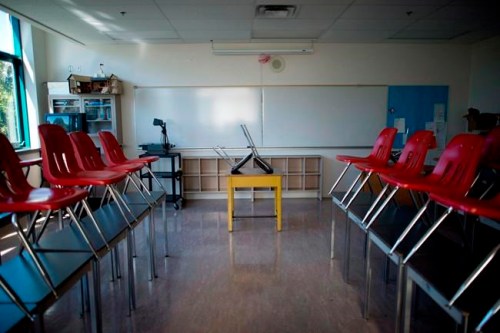
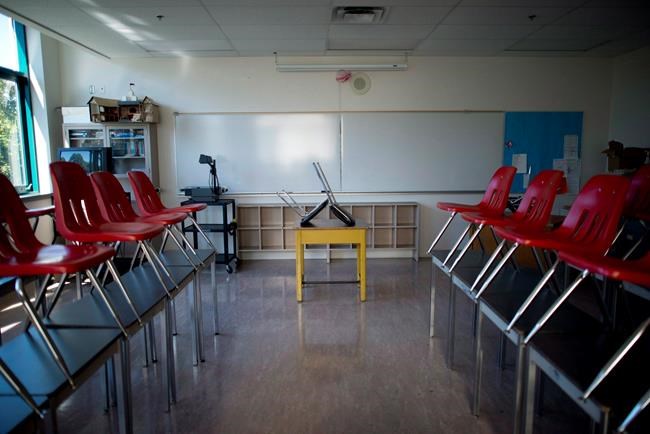
TORONTO – From school closures to travel restrictions to limits on large gatherings, Canada entered a new stage in combating the spread of COVID-19 this week with measures that various experts say will almost certainly have unintended consequences.
School closures in particular have come under scrutiny for their ability to adequately mitigate infection if millions of children are now in the community, many with less supervision and some possibly in the care of elderly grandparents who are at greater risk of complications from the emerging disease.
“There’re always going to be those scenarios where there’s unintended consequences, where people are harmed as a result of isolation or stopping everything, but these kind of measures are done on a population level,” says infection disease physician Alon Vaisman, a doctor at Toronto General Hospital.
“For sure there are going to be individuals where it is worse for them but, you know, we look at cases in Italy and in (China’s) Hubei (province) of what they did — it was a blunt tool to try to reduce the spread as fast as you can.”
Ontario said Thursday it was shutting down its public schools for two weeks following the weeklong March break set to begin Monday, while Nova Scotia is requiring its public school children to self-isolate for two weeks if they travel abroad on their spring break, also running next week.
Meanwhile, Quebec will close schools and daycares for two weeks starting Monday, and is offering daycare services to health-care workers and others who provide essential services.
Alberta’s chief medical officer stopped short of closing schools and daycares but joined Ontario, British Columbia and Quebec in banning gatherings of 250 people or more while Nova Scotia capped gatherings at 150.
On Friday, Canadians were also told to halt any non-essential travel out of the country.
Steven Hoffman, a professor of Global Health, Law, and Political Science at York University, cautioned the general public from interpreting these measures as indication the threat of COVID-19 has increased. The Public Health Agency of Canada website continued to label the threat to the general public as low Friday, but noted that could change rapidly.
“This might represent a turning point in the government’s response to COVID-19 in Canada, but it doesn’t represent a turning point in the way that the outbreak has changed,” says Hoffman, who holds posts with several public health organizations including the CIHR Institute of Population & Public Health at the Canadian Institutes of Health Research, and the WHO Collaborating Centre on Global Governance of Antimicrobial Resistance.
“We haven’t had many instances of community transmission but certainly, this could be pointed to as the day when the government did take quite a lot more action. Although I think we should also raise the question of whether that’s too much action, given the risk involved.”
Hoffman described school closures as a particularly “extraordinary measure” that is less effective at containment and prevention but can dramatically slow transmission.
The fallout, though, is that millions of kids will not be learning, and many of their parents may not be able to go to work — including doctors and nurses, he says.
“There is a place for it and research shows that it can be a very effective strategy as part of social-distancing efforts. The key is to make sure you do it as close to the right time as possible, because otherwise the consequences of it could actually exceed its benefits,” says Hoffman.
British Columbia health minister Adrian Dix acknowledged as much earlier this week when he dismissed the possibility of school closures, saying they would not prevent older children from gathering in groups, likely unsupervised and in public areas.
The province’s health officer Dr. Bonnie Henry reiterated Thursday schools are a place where young people can be kept safe.
“We know that sometimes the impacts of closing schools, particularly abruptly, can cause a lot of societal disruption and economic impact,” she said.
Much is still unknown about COVID-19 but so far, children don’t appear to suffer symptoms to the same degree as adults or older Canadians. Among Canada’s dozens of reported cases, just a handful were below the age of 18 as of Friday.
However, children are an important factor in any disease outbreak because they are especially good at spreading disease — they are in contact with large numbers of other children at school, and are notoriously poor at hand hygiene, says Vaisman.
Given the fact most schools contain hundreds of kids, and sometimes thousands, limiting those contacts makes a lot of sense, he says.
“Kids can be carriers or they could be reservoirs of the virus,” says Vaisman.
Meanwhile, the varying limits being imposed to large gatherings in each province point to the unique circumstances of each jurisdiction, says Vaisman, noting such decisions are based on the number of local cases and capacity of local hospitals.
“Somewhere along the way the risk goes down but it’s hard to know where that cutoff should be. Should it be at 250? Should it be at 20? Nobody really knows the answer and it’s just a matter of your jurisdiction’s risk tolerance,” he says.
The basic principle is the fewer people you’re in contact with, the slower the spread.
“This blunt instrument of shutting everything down basically reduces human-to-human interaction.”
But Hoffman worried about the social impact of forcing kids to stay home, noting that many families don’t have caregiving options or the luxury of taking time off work.
“These sorts of measures always disproportionately affect those who are already facing conditions of marginalization, which is really the tragedy of all public health events. It really affects the least well-off the most,” he says.
On the other hand, school closures and other social-distancing measures can reduce the burden on provincial health-care systems that may face increasing numbers of critically ill patients, says University of Toronto researcher Ashleigh Tuite, an epidemiologist at the Dalla Lana School of Public Health.
Tuite notes Ontario’s school closures have the associated impact of forcing many adults to stay home from work, since they must now take care of children. She says the combination of those two social-distancing measures can be dramatic.
“This proactive approach is quite admirable,” says Tuite, who used mathematical modelling to assess how different public policy strategies would impact local spread of COVID-19.
“The alternate scenario is you wait until you start seeing overcrowding in the hospital and you realize, ‘Oh my goodness, we’re at capacity right now. We need to implement quarantine and social distancing and whatnot.’ And at that point, it’s basically too late.”
Most cases of COVID-19 are mild or moderate, with many patients able to recover at home. But about 20 per cent of patients can suffer severe symptoms and require specialized, acute care in hospital.
This report by The Canadian Press was first published March 13, 2020.