

Without fans in the stands, it’s pointless to play
Advertisement
Read this article for free:
or
Already have an account? Log in here »
To continue reading, please subscribe:

Digital Subscription
One year of digital access for only $205*
- Enjoy unlimited reading on winnipegfreepress.com
- Read the E-Edition, our digital replica newspaper
- Access News Break, our award-winning app
- Play interactive puzzles
*First annual payment billed as $205.00 + GST for one year. This annual subscription will automatically renew at $233.00 + GST every 52 weeks (10% off the regular annual price of $259.35). Offer available to new and qualified returning subscribers only. Cancel any time.
To continue reading, please subscribe:
Add Free Press access to your Brandon Sun subscription for only an additional
$1 for the first 4 weeks*
- Enjoy unlimited reading on winnipegfreepress.com
- Read the E-Edition, our digital replica newspaper
- Access News Break, our award-winning app
- Play interactive puzzles
*Your next Brandon Sun subscription payment will increase by $1.00 and you will be charged $17.95 plus GST for four weeks. After four weeks, your payment will increase to $24.95 plus GST every four weeks.
Read unlimited articles for free today:
or
Already have an account? Log in here »
Hey there, time traveller!
This article was published 13/03/2020 (2342 days ago), so information in it may no longer be current.
‘S ports bring people together.’ That’s the line, right? Well, it shouldn’t be. Not this weekend or next week or this month or the one after that. And then, who knows? The COVID-19 pandemic is certainly not the first of its kind, but it is nevertheless unfamiliar to our lived experience, and for our purposes here, however trivial, it presents a scenario of the unknown in world football.
On Friday the Bundesliga joined the other major leagues of Europe in suspending its season, assigning a re-evaluation date of April 2. Until the decision, it seemed the German top flight would stubbornly proceed through Matchday 26, despite the cancelation of Werder Bremen-Bayer Leverkusen and regardless of a stadium ban for supporters.
“This is crazy,” tweeted Bayern Munich midfielder Thiago Alcantara earlier Friday. “Please stop fooling around and land on reality. Let’s be honest, there are much more important priorities than any sport.”
No kidding. And, as we’ve seen in recent weeks in Serie A and the UEFA club competitions, football without in-stadium fans just isn’t worth putting on.
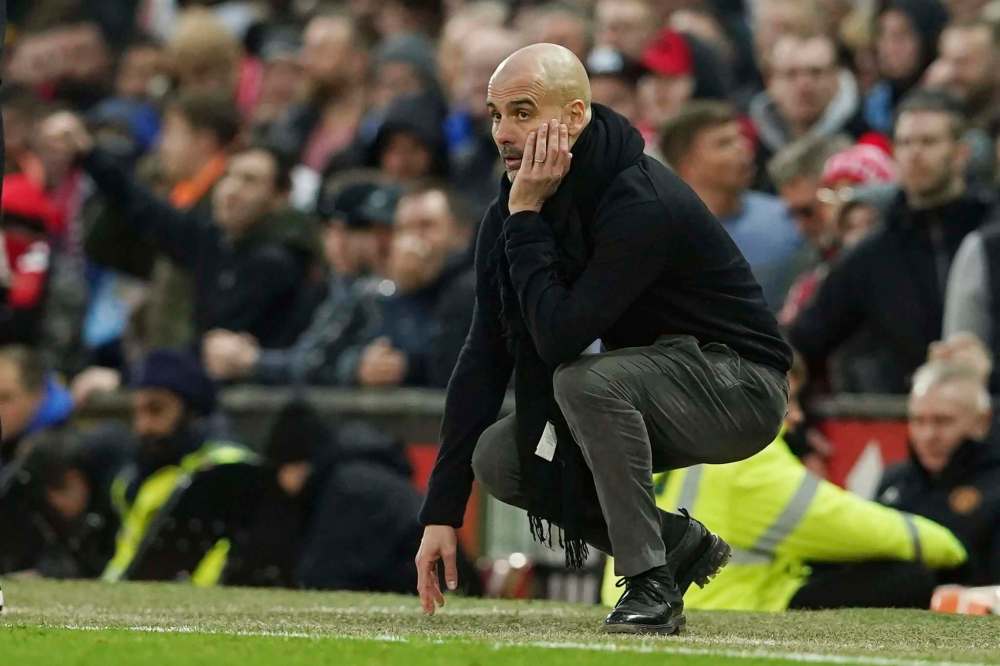
“There is no reason to play without the people,” reflected Manchester City manager Pep Guardiola in a Tuesday press conference, three days before the Premier League suspended its schedule until next month. “This is for the people. It’s like an actor going to a theatre and there’s nobody there.”
Incidentally, we’ve previously been told that a majority of Premier League clubs could turn a profit without gate receipts. “Does the English Premier League Actually Need Fans in the Stadium?” queried a Forbes headline in 2018. Supporters of other sports and teams have been fed similar lines, further expanding the perceived distance between fans and athletes. The thing is, the event we sign up for when we attend a game or watch one on television relies on non-player participation to complete the spectacle.
“There’s a feedback loop that happens,” explains Dr. Nicholas Greco, Associate Professor of Communications and Media at Providence University College in Otterburne. “The fans contribute to the game. The game is not only happening on the field of play, it’s also happening in the audience.”
As television or streaming service consumers, which the majority of fans are, we’re looking at and being entertained by a show of which the actual game is only a part. There is the crowd noise, sure, and even the occasional antics in the stands that will either amuse or enrage, but even the simple presence of a crowd creates a sense of occasion, of the match being important and therefore worth our attention.
“You’re not only watching the play on the field,” adds Dr. Greco. “As a viewer at home you’re watching whatever the camera is showing you. You’re watching a show. You want the feedback loop to work.”

It’s a reality that seems lost on Karl-Heinz Rummenigge. In the hours before the Bundesliga suspended its season, the Bayern executive board chairman remarked that, in addition to having a social responsibility to protect public health, football clubs also needed to protect the bottom line. “At the end of the day, professional football is also about finance,” he said, referencing TV money supposedly reliant on the mere 90 minutes of on-pitch action.
It’s a rather selfish, and extremely naïve, line of thinking. It wouldn’t be long before football’s appeal, like that of any televised sport, would be wrecked by removing a crucial component of the broadcast. And that would be a far more expensive proposition than playing behind closed doors in the short term to advance the schedule — an approach that would also have the irresponsible consequence of inviting crowds to cluster and cheer outside the ground, as is what happened during Wednesday’s Champions League match between Paris Saint-Germain and Borussia Dortmund.
Football, for the time being, is on hiatus. In that, it’s no different than anything else at the moment, and it shouldn’t be. When it returns, when COVID-19 is adequately contained or eradicated, it will do so as the portion of the spectacle it only ever was.
jerradpeters@gmail.com
Twitter @JerradPeters
Our newsroom depends on a growing audience of readers to power our journalism. If you are not a paid reader, please consider becoming a subscriber.
Our newsroom depends on its audience of readers to power our journalism. Thank you for your support.
Our newsroom depends on a growing audience of readers to power our journalism. If you are not a paid reader, please consider becoming a subscriber.
Our newsroom depends on its audience of readers to power our journalism. Thank you for your support.
Related Articles
Sounders staffer tests positive for virus Swiss soccer president Blanc tests positive for coronavirus





Advertisement Advertise With Us
Advertisement Advertise With Us