WEATHER ALERT

Dangerous decisions

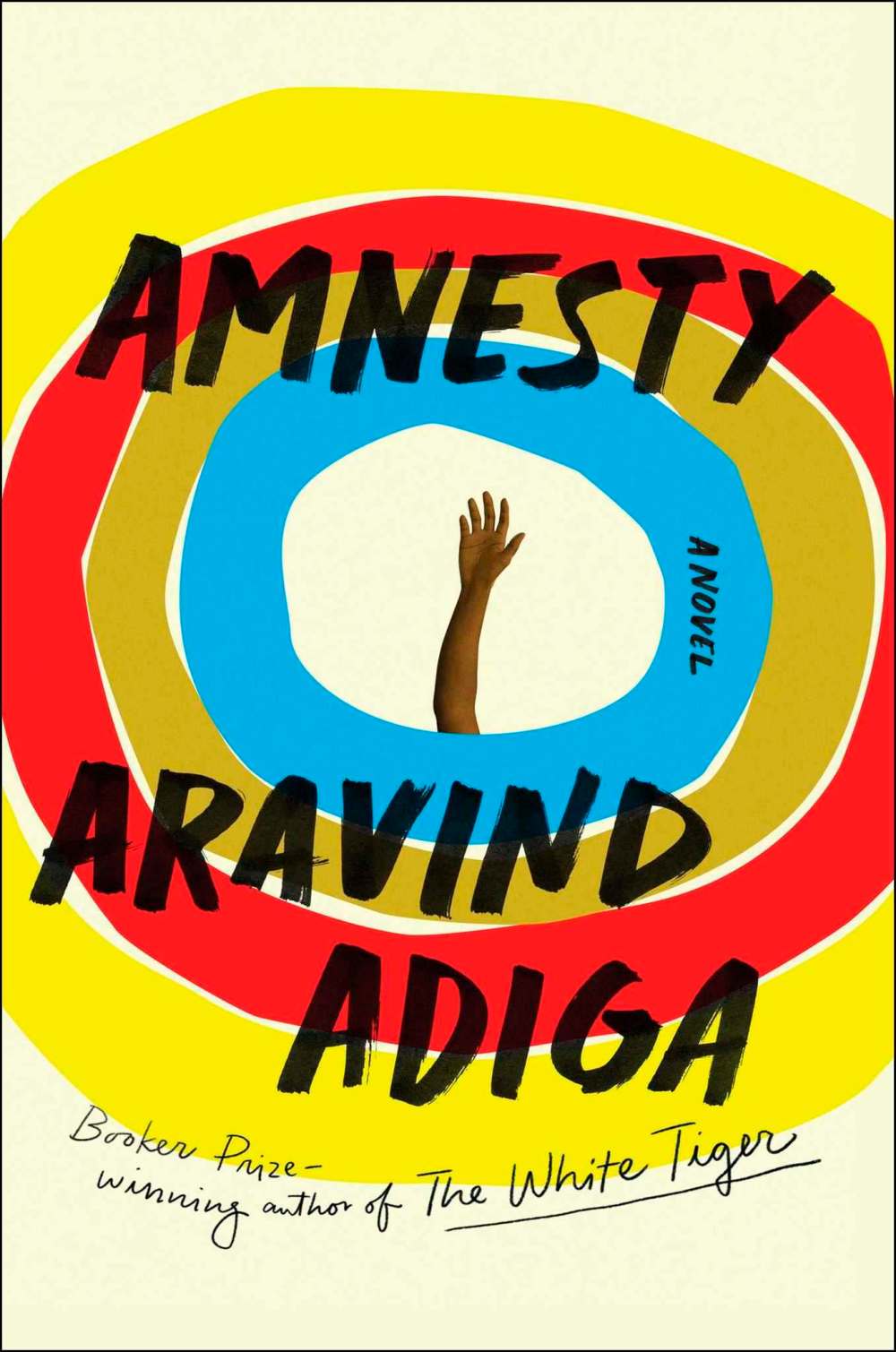
Adiga's latest novel highlights plight of refugees in Australia

Advertisement

Advertise with us

When Indian novelist Aravind Adiga’s first book, The White Tiger, won the Booker Prize in 2008, he became an instant celebrity, and for good reason: the novel fibrillates with manic and febrile energy as Adiga takes his protagonist, Balram Halwai, on a wild ride from his life as a village boy to the heights of entrepreneurial (if sleazy) success in a globalized world. The novel reads like a pithy amalgam of Slumdog Millionaire with The Apprenticeship of Duddy Kravitz, with more substantial ethical underpinning than the former and more spectacular narrative pyrotechnics than the latter.

Read this article for free:

or

Already have an account? Log in here »

To continue reading, please subscribe:

Subscribe and receive a limited-edition Free Press branded hat or tote.

Digital Subscription

One year of digital access for only $205*

  • Enjoy unlimited reading on winnipegfreepress.com
  • Read the E-Edition, our digital replica newspaper
  • Access News Break, our award-winning app
  • Play interactive puzzles

*First annual payment billed as $205.00 + GST for one year. This annual subscription will automatically renew at $233.00 + GST every 52 weeks (10% off the regular annual price of $259.35). Offer available to new and qualified returning subscribers only. Cancel any time.

To continue reading, please subscribe:

Add Free Press access to your Brandon Sun subscription for only an additional

$1 for the first 4 weeks*

  • Enjoy unlimited reading on winnipegfreepress.com
  • Read the E-Edition, our digital replica newspaper
  • Access News Break, our award-winning app
  • Play interactive puzzles
Start now

*Your next Brandon Sun subscription payment will increase by $1.00 and you will be charged $17.95 plus GST for four weeks. After four weeks, your payment will increase to $24.95 plus GST every four weeks.

Hey there, time traveller!
This article was published 21/03/2020 (2322 days ago), so information in it may no longer be current.

When Indian novelist Aravind Adiga’s first book, The White Tiger, won the Booker Prize in 2008, he became an instant celebrity, and for good reason: the novel fibrillates with manic and febrile energy as Adiga takes his protagonist, Balram Halwai, on a wild ride from his life as a village boy to the heights of entrepreneurial (if sleazy) success in a globalized world. The novel reads like a pithy amalgam of Slumdog Millionaire with The Apprenticeship of Duddy Kravitz, with more substantial ethical underpinning than the former and more spectacular narrative pyrotechnics than the latter.

Indian novelist Aravind Adiga situates his dissection of dispossession in Sydney, in a blatantly racist Australia that oppresses and exploits its burgeoning underclass of immigrants. (Fernando Morales)

In this, his fifth book, Adiga has focused his formidable talent on another pressing contemporary theme: refugees and illegal immigrants, the world’s seething and growing multitudes of the displaced, now estimated at some 71 million. Adiga situates his dissection of dispossession in Sydney, in a blatantly racist white Australia that oppresses and exploits its burgeoning underclass in every imaginable way.

Like The White Tiger, Amnesty concentrates its narrative tactics on one character — here, Dhananjaya Rajaratnam, or “Danny” as the Aussies mindlessly dub him, a Tamil from Sri Lanka who has fled to Australia originally as a student but has quickly submerged himself in the country’s vast subculture. He has become one of the millions of “illegals,” a furtive housecleaner always on the lam, one eye out for Aussie officialdom, the other out for the next Aussie — or legal immigrant — who will try to trample him underfoot. The narrative is further animated by the insistent internal rhythms of Danny’s paranoia, complemented by and inseparable from his external reality, his identity increasingly atomized as he dodges Sydney’s cops and traffic and gawks at its brutalist architecture.
The pulse of Adiga’s wired narrative is further jacked up by two elements: first, like a latter-day Ulysses, this novel takes place in one day, with the time continuously foregrounded by very short “chapters,” each entitled with a time of day, e.g., “12:03 p.m.,” “1:16 p.m.” and so on. Second, Danny discovers that he has become aware of the identity of a probable murderer when one of his housecleaning clients is discovered stabbed to death and submerged in a creek.

What to do? If he calls the cops, he himself will be revealed as an illegal and instantly deported; if he remains silent he becomes complicit, at least in his own eyes. His girlfriend Sonja — yet another immigrant in this culture — cannot save him; and the little cactus he has carried around for her all day long ultimately serves a less loving but more ironically shambolic end when he hurls it at the presumed killer.

There is a larger game afoot here: through Danny’s dilemma Adiga probes the ethical morass not only of the official racist culture, but of layers of the subcultures. The murderer is a thuggish and adulterous “legal” Indian who has his own set of racist and moral failings, while he and his victim — both addicted gamblers and philanderers — entertain themselves by patronizing Danny, who was himself tortured by Sri Lankan authorities when he returned home from Dubai, where he had fled in his first attempt at escape from the impossible conditions in his homeland. Now in Australia, he must survive by his wits and his wiles — a survival increasingly imperiled as the day unfolds and the killer persecutes Danny with an endless series of calls Danny reluctantly takes on his battered cell phone.

For Danny, there is no hopeful ending, but that must not be revealed herein. You must read Amnesty for any (provisional) hope of it. Or, more accurately: like many good novels, Amnesty re-imagines, inescapably, a dire part of our reality so that readers can neither shirk their complicity nor claim ignorance of its consequences.

In an attempt to save himself, Neil Besner reads and writes about good fiction.
Report Error Submit a Tip

More Stories

Rivers restoration projects get a funding boost

Alex Lambert 3 minute read Preview

Rivers restoration projects get a funding boost

Alex Lambert 3 minute read 6:36 PM CDT

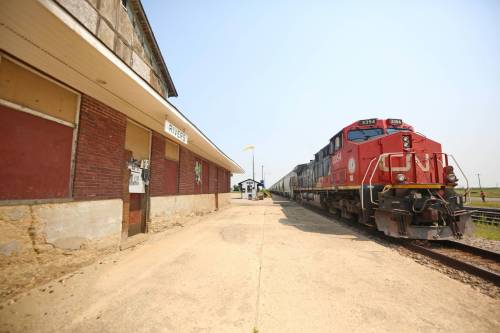
RIVERS — The provincial government is providing $98,000 to help restore the Rivers train station, develop a bicycle museum on the site and expand bike trails in the community.

The train station is an important part of the province’s history, said Municipal Relations Minister Glen Simard, who was in Rivers on Wednesday.

“This project preserves a key piece of Manitoba’s heritage, and it creates new opportunities for tourism, culture and local economic and recreational development,” Simard, the MLA for Brandon East, told a gathering of about 25 people.

The funding, which is coming from the provincial program From the Ground Up — Safe Healthy Communities for All, is also being used toward researching and producing the Sekine bicycle story with Ryukoku University in Kyoto, Japan, for the planned museum.

Read
6:36 PM CDT

Autopsy confirms dog attack killed animal-rescue volunteer on First Nation

Free Press staff 3 minute read Preview

Autopsy confirms dog attack killed animal-rescue volunteer on First Nation

Free Press staff 3 minute read Yesterday at 3:48 PM CDT

An autopsy has confirmed an animal rescue volunteer died of a dog attack on Sandy Bay Ojibway Nation earlier this month, the Manitoba First Nations Police Service says.

Amanda Nobiss, a 37-year-old woman from Winnipeg, was found dead in Sandy Bay on July 17 after police were contacted by a friend trying to locate her.

She often visited the community 180 kilometres northwest of Winnipeg to save animals.

The police service said Tuesday that an autopsy confirmed her “injuries were consistent with a dog attack.”

Read
Yesterday at 3:48 PM CDT

CMHR ‘fans flames of antisemitism,’ Asper says, ending support from family that led effort to create it

Carol Sanders 7 minute read Preview

CMHR ‘fans flames of antisemitism,’ Asper says, ending support from family that led effort to create it

Carol Sanders 7 minute read Monday, Jul. 27, 2026

The Winnipeg family that led the effort to build the Canadian Museum for Human Rights will not provide support going forward, philanthropist and honorary board member Gail Asper says.

Read
Monday, Jul. 27, 2026

Preserving past, pondering future of 142-year-old downtown church

Chris Kitching 6 minute read Preview

Preserving past, pondering future of 142-year-old downtown church

Chris Kitching 6 minute read 6:55 PM CDT

A 142-year-old church in downtown Winnipeg needs about $7.7 million for upgrades and related costs, while an ongoing heritage renewal project aims to create a blueprint for its future.

Potential options include selling Holy Trinity Anglican Church and leasing it back for a decades-long term, or building an apartment or office tower on an existing surface parking lot to generate revenue, officials said Wednesday.

“I think that is part of the negotiation and ensuring we have the right partners, but it is hard to put down on paper precisely every aspect of the future of a place of worship,” project manager Stephen Borys said of the potential duration of a sale and leaseback agreement to ensure the church still exists generations from now.

Similar agreements with 50- or 100-year leases exist elsewhere in Canada, he said, noting the option has been on the table for Holy Trinity for a year.

Read
6:55 PM CDT

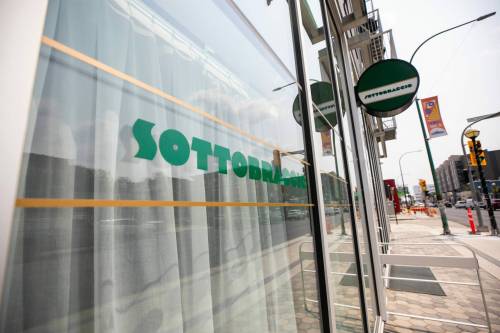
Sottobraccio brings Harth’s Italian flavours to new location in Osborne Village

Eva Wasney 4 minute read Preview

Sottobraccio brings Harth’s Italian flavours to new location in Osborne Village

Eva Wasney 4 minute read Yesterday at 5:21 PM CDT

Sottobraccio is the answer to a common refrain at Harth Mozza & Wine Bar.

“The No. 1 thing we always hear from guests at Harth is, ‘We love coming here, but it’s such a drive,’” chef Brent Genyk says of his popular fine-dining restaurant in South St. Vital.

Harth’s new sister restaurant opened in the heart of Osborne Village in June, joining a raft of other eateries that have moved into the central Winnipeg neighbourhood in recent years.

Sottobraccio is located at 160 Osborne St. in the main floor of the Zü, a new retail and residential complex built on the former site of the Osborne Village Motor Inn and its well-known music venue, the Zoo.

Read
Yesterday at 5:21 PM CDT

Manitoba receives top marks for reducing internal trade barriers

Free Press staff 2 minute read 8:03 PM CDT

Manitoba got top marks from the Canadian Federation of Independent Business for internal trade barrier reduction.

The business entity released its annual interprovincial co-operation report card earlier this month. Manitoba scored an “A” and was top of the class compared to fellow provinces.

The CFIB noted Manitoba has introduced legislation to improve the exchange of goods and services between reciprocating jurisdictions.

Manitoba and New Brunswick led the way in implementing direct-to-consumer alcohol sales without extra administrative hurdles or price markups.