WEATHER ALERT

Century-old lessons echo for retired scientist

Advertisement

Advertise with us

ACROSS Manitoba, faith groups are getting serious about the need to temporarily shutter religious services to prevent the spread of the novel coronavirus.

Read this article for free:

or

Already have an account? Log in here »

To continue reading, please subscribe:

Subscribe and receive a limited-edition Free Press branded hat or tote.

Digital Subscription

One year of digital access for only $205*

  • Enjoy unlimited reading on winnipegfreepress.com
  • Read the E-Edition, our digital replica newspaper
  • Access News Break, our award-winning app
  • Play interactive puzzles

*First annual payment billed as $205.00 + GST for one year. This annual subscription will automatically renew at $233.00 + GST every 52 weeks (10% off the regular annual price of $259.35). Offer available to new and qualified returning subscribers only. Cancel any time.

To continue reading, please subscribe:

Add Free Press access to your Brandon Sun subscription for only an additional

$1 for the first 4 weeks*

  • Enjoy unlimited reading on winnipegfreepress.com
  • Read the E-Edition, our digital replica newspaper
  • Access News Break, our award-winning app
  • Play interactive puzzles
Start now

*Your next Brandon Sun subscription payment will increase by $1.00 and you will be charged $17.95 plus GST for four weeks. After four weeks, your payment will increase to $24.95 plus GST every four weeks.

Hey there, time traveller!
This article was published 27/03/2020 (2313 days ago), so information in it may no longer be current.

ACROSS Manitoba, faith groups are getting serious about the need to temporarily shutter religious services to prevent the spread of the novel coronavirus.

Instead of gathering in churches, synagogues, mosques, temples, gurdwaras and other places of worship, people are gathering online.

This will go a long way towards flattening the COVID-19 case number curve — and also help prevent what happened to Mennonites in southern Manitoba during the 1918-19 Spanish flu pandemic.

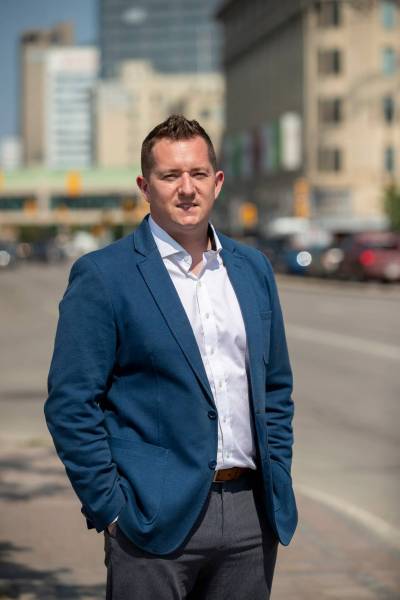
Glen Klassen, retired microbiologist

During that terrible time, when as many as 50 million people died worldwide and 55,000 in Canada, members of Mennonite churches in that part of the province died at double the rate of the rest of the population, retired Steinbach microbiologist Glen Klassen found in his 2008 research on the disease’s impact.

Klassen’s interest in the topic was sparked by his involvement in the 2007 Faith Community Pandemic Summit at Canadian Mennonite University in Winnipeg, which he helped organize.

The summit — which was sponsored by the International Centre for Infectious Diseases, Mennonite Disaster Service, Salvation Army, Christian Reformed Church and various other groups — was to help faith groups prepare for the next such global health emergency.

According to Klassen, who taught microbiology at the University of Manitoba, it is thought around 60 per cent of Mennonites in the Hanover area (which includes Steinbach) got sick in 1918-19. There were roughly 60 flu-related deaths in the rural municipality — a higher rate than in other nearby municipalities with smaller non-Mennonite populations.

A similar high death rate was found in other RMs with high numbers of Mennonites, such as Stanley (Winkler), Rhineland (Altona) and Morris, Klassen said.

“They died at twice the rate of non-Mennonites within the same municipality and between municipalities,” he said this week, noting the finding was confirmed by later research by Vanessa Quiring of the University of Winnipeg.

While there is no definite reason for the higher Mennonite numbers, one theory is based on how they maintained regular church-going habits.

“There was very little social distancing until it was too late,” Klassen said.

Compounding the problem, he noted, was some Mennonite church services moved around from village to village, meaning people went to church in different places and with different groups each time. “They met a different combination of people at each event,” said Klassen.

Added to this was the “constant visiting between relatives from many locales,” such as Sunday faspa, a late afternoon lunch and visit held after church in various homes. They were “promiscuous in their socializing,” Klassen said of how the desire to maintain community contributed to the spread of the flu virus.

Other contributing factors included strained relations between Mennonites and the Manitoba government over registration for military service during the First World War, and over control of schooling — factors that may have made them more suspicious of government warnings about the pandemic.

There was also a tendency among the community to see the sickness as an act of God that couldn’t be avoided, or as a sign of God’s displeasure and judgment. “Some said, ‘The Lord is speaking to us harshly,’” Klassen said.

For Klassen, who attends Grace Mennonite Church in Steinbach, the experience of Mennonites a century ago confirms the importance of social distancing and the need to close religious services during the time of COVID-19.

“Until we get a vaccine, we will have to do everything we can to prevent deaths,” he said.

faith@freepress.mb.ca

The Free Press is committed to covering faith in Manitoba through our Religion in the News project. This reporting continues because readers like you step forward to fund it.

Donate now to support our reporting on religion.

Your donation is eligible for a charitable tax receipt. BECOME A FAITH JOURNALISM SUPPORTER

John Longhurst

John Longhurst
Faith columnist & reporter

John Longhurst has been writing for Winnipeg's faith pages since 2003. He also writes for Religion News Service in the U.S., and blogs about the media, marketing and communications at Making the News.

Our newsroom depends on a growing audience of readers to power our journalism. If you are not a paid reader, please consider becoming a subscriber.

Our newsroom depends on its audience of readers to power our journalism. Thank you for your support.

Report Error Submit a Tip

The Free Press acknowledges the financial support it receives from members of the city’s faith community, which makes our coverage of religion possible.

More Stories

For unique Menno-centric take on Free Press, satirist mines her jibes between the lines

David Sanderson 8 minute read Preview

For unique Menno-centric take on Free Press, satirist mines her jibes between the lines

David Sanderson 8 minute read Saturday, Jul. 25, 2026

Free Press readers of a certain vintage may remember when tuning into a local radio station to hear a pair of disc jockeys perusing a section of the Saturday edition was appointment listening.

On Sunday mornings from 1962 until the mid-1980s, CKRC 630 personalities Bob Washington and Tom Ashmore — better known as Wash and Ash — entertained Winnipeggers of all ages by impersonating the likes of Dennis the Menace, Beetle Bailey and Archie Andrews, as they lent their voices to that weekend’s multi-page, colour comic insert.

In a 1984 interview, Washington, who died in 2016 at the age of 82, attributed the weekly program’s longevity to audiences enjoying the antics of “two middle-aged guys in 24 dialects, giving their version of what Dagwood is saying to Blondie, or what Hägar the Horrible is bragging about.”

More than 40 years later, another Winnipegger is turning to the Free Press for her material. Only instead of reading the paper’s funnies, Lori Klassen, a mother of three and grandmother of two, is funnily reading the paper.

Read
Saturday, Jul. 25, 2026

Automation reaches new heights on farm

Laura Rance-Unger 4 minute read Preview

Automation reaches new heights on farm

Laura Rance-Unger 4 minute read Saturday, Jul. 25, 2026

LANGHAM, Sask. — The thousands of farmers from across the Prairies who flock to the annual Ag in Motion show every July seem oblivious to the possibility the technology on display could one day replace many of them.

Families with children in tow, Hutterite colony workers, grandparents and young couples just starting out roamed through the 600 or more exhibitor displays, amazed at how everything about farming just keeps getting bigger, more efficient and increasingly more automated.

It’s now possible to seed using a 100-foot-wide drill — a 12-foot jump over the widest available a few years ago — provided the farmer can afford a tractor with enough horsepower to pull it. Those sell for around $850,000 and up.

Granted, the number of farms with enough acres to justify that kind of width and drawing power is still relatively small, but farms continue to grow. And it’s no secret the number of people who have the interest, skills and financial wherewithal to run them continues to shrink.

Read
Saturday, Jul. 25, 2026

An eroding Winnipeg neighbourhood looks to new foundations

Ian Bickis, The Canadian Press 6 minute read Preview

An eroding Winnipeg neighbourhood looks to new foundations

Ian Bickis, The Canadian Press 6 minute read Updated: Yesterday at 8:32 PM CDT

WINNIPEG - The lot Jesse Bettcher lives on in Winnipeg's north end used to be a pile of burnt rubble. Same with the one next door. And the one across the street.

But he's now the proud owner of a two-storey house with blue-grey siding and white trim, so new the orange construction fencing is still out front.

It's a dream home for Bettcher, and the latest hope for a city seeking to knock down, clean up and revitalize neighbourhoods that have seen hundreds of homes left vacant, leading to safety hazards and worries about the future.

He bought the house as part of a pilot project aimed at creating affordable home ownership. It let him and his family move out of a rental that he said was falling apart.

Read
Updated: Yesterday at 8:32 PM CDT

Man accused of breaking into Kingsway homes, high school

1 minute read Updated: Yesterday at 9:50 PM CDT

A 35-year-old man has been accused of breaking into six Crescentwood homes and a nearby high school on Saturday morning, causing damage estimated at $25,000.

At about 6:30 a.m. July 25, Winnipeg police got several 911 calls about an unknown man breaking into homes in the 100 block of Kingsway after throwing bricks and rocks through windows and glass doors. In some cases, a man confronted and threatened residents and stole their belongings, the Winnipeg Police Service said in a news release Sunday.

One of the victims flagged down officers when police arrived on scene, pointing out a man walking down the street armed with a broken liquor bottle. The suspect dropped the bottle and police arrested him.

No one was injured and the Major Crimes Unit took on the investigation.

A Life's Story: Beloved matriarch, kindergarten teacher lived a musical life

Gabrielle Piché 5 minute read Preview

A Life's Story: Beloved matriarch, kindergarten teacher lived a musical life

Gabrielle Piché 5 minute read Saturday, Jul. 25, 2026

Phyllis Dana faced a choice: leave Winnipeg to study opera at a prestigious Philadelphia school, or marry the man she loved.

She chose the latter.

Now, her Juno-winning granddaughter cherishes a Happy Birthday voicemail sung by Phyllis. Three generations of Dana women — Phyllis, her daughter, and granddaughter — would sing in Winnipeg’s prominent Jewish spaces. And hundreds of Manitobans know the matriarch as their kindergarten teacher.

“My mom said, ‘A sheet of music won’t keep you warm at night,’” Karen Dana recalled.

Read
Saturday, Jul. 25, 2026

Dropping the gloves to make the point

Editorial 4 minute read Preview

Dropping the gloves to make the point

Editorial 4 minute read Saturday, Jul. 25, 2026

In hockey parlance, it’s called “shedding,” the moment in a game when you are forced to deal with an instigator by dropping (shedding) your gloves for an all-out brawl.

That term is a deep cut from hockey culture that Prime Minister Mark Carney — he of the “elbows up” phenomenon — may need to not only embrace but practise more often in the face of yet another round of overly punitive tariffs imposed by United States President Donald Trump.

To be fair, under Carney’s leadership, Canada has not exactly rolled over in the face of Trump’s bully-boy tactics.

Yes, Canada has made concessions to placate Trump to further a new continental trade agreement: investing more money to combat the cross-border flow of fentanyl that isn’t actually happening, stalling efforts to tax streaming companies as most European countries already do, and — most recently — giving Trump a cut of profits from the Canadian-made, Canadian-paid Gordie Howe bridge between Windsor and Detroit.

Read
Saturday, Jul. 25, 2026