Vignettes in derelict Soviet dwelling delight

Advertisement

Advertise with us

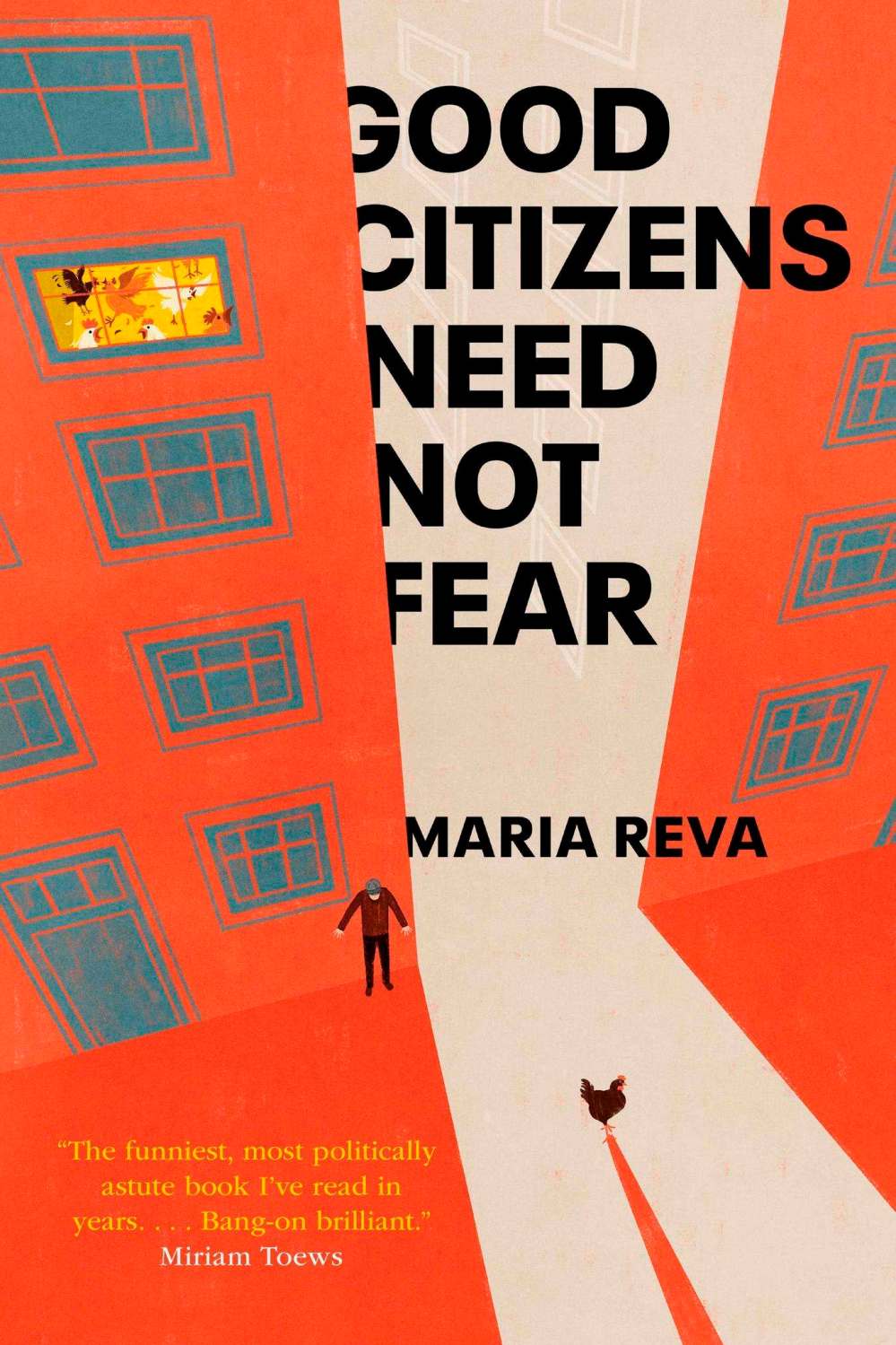
The new collection of nine interconnected short stories by Ukrainian-born, Vancouver-based writer Maria Reva — winner of the RBC Bronwen Wallace Award for Emerging Writers in 2018 — is set for the most part in a crumbling building in the Ukrainian town of Kirovka at the end of, and just after, the fall of the Soviet Union.

Read this article for free:


or

Already have an account? Log in here »

To continue reading, please subscribe:

Subscribe and receive a limited-edition Free Press branded hat or tote.

Digital Subscription

One year of digital access for only $205*

  • Enjoy unlimited reading on winnipegfreepress.com
  • Read the E-Edition, our digital replica newspaper
  • Access News Break, our award-winning app
  • Play interactive puzzles

*First annual payment billed as $205.00 + GST for one year. This annual subscription will automatically renew at $233.00 + GST every 52 weeks (10% off the regular annual price of $259.35). Offer available to new and qualified returning subscribers only. Cancel any time.

To continue reading, please subscribe:

Add Free Press access to your Brandon Sun subscription for only an additional

$1 for the first 4 weeks*

  • Enjoy unlimited reading on winnipegfreepress.com
  • Read the E-Edition, our digital replica newspaper
  • Access News Break, our award-winning app
  • Play interactive puzzles
Start now

*Your next Brandon Sun subscription payment will increase by $1.00 and you will be charged $17.95 plus GST for four weeks. After four weeks, your payment will increase to $24.95 plus GST every four weeks.

Hey there, time traveller!
This article was published 25/04/2020 (2311 days ago), so information in it may no longer be current.

The new collection of nine interconnected short stories by Ukrainian-born, Vancouver-based writer Maria Reva — winner of the RBC Bronwen Wallace Award for Emerging Writers in 2018 — is set for the most part in a crumbling building in the Ukrainian town of Kirovka at the end of, and just after, the fall of the Soviet Union.

The move from a crushing totalitarian state to a kind of wild west of make-do capitalist scrambling underlies and illuminates the lives of the building’s inhabitants. Survivors all — from the bureaucrats who try to make impossible demands from the commissars bearable to the underground antics of those bucking the state’s restrictions — Reva’s wonderful characters prove the central theme of the book: that the absurdity and cruelty of the world when push comes to shove can’t lessen or corrupt the human spirit.

The building, 1933 Ivansk Street, doesn’t officially exist according to state papers, coming into being because there was extra rubble left over to build something. If the building doesn’t exist officially, it follows that the inhabitants don’t either. This crazy notion may go beyond Franz Kafka, and Reva’s tone of the darkest satire makes the stories bitterly hilarious.
Like Nikolai Gogol, the first great Ukrainian-born Russian writer, who showed the crushing czarist state in all its absurdity, Reva’s satire spares no one, though many get a little sympathy. Perhaps that’s the Canadian in the author showing through. However, the sympathy mixed with laughter of the first pre-fall stories turns into the blackest comedy as the characters grow nastier in the post-fall tales.

At the edge of what goes on in the building is the story of Zaya, who grows up in the madhouse of a state orphanage operating in a converted monastery. Zaya’s bizarre escape with the desiccated body of a saint the monks had secreted away before the state took over the place makes perfect sense in this world.

Indeed, though Reva is careful about overt symbolism, Ukraine under the Soviet heel could be considered a mistreated orphan. In any case, Zaya becomes linked with the building’s residents — particularly Konstantyn, a scruffy would-be radical poet and minor bureaucrat (pre-fall) and scam artist (post-fall). She makes a scene at the first Miss U.S.S.R. pageant, a contest engineered by Konstantyn, and in Homecoming, the best of the stories, ends up leading Konstantyn’s Soviet-era tours after the fall, where the new rich visit Zaya’s horrible orphanage submitting themselves to the full outrageous “experience.”

Meanwhile Danil, an even-lesser bureaucrat than Konstantyn who once hounded the poet to apologize for a joke offending the state, now works as a security guard in the museum housed in the first floor of the building. It displays the desiccated saint and is visited mainly by the poor. In the story Lucky Toss the saint’s teeth are lost and eventually recycled to end up in Danil’s mouth. How the teeth got there in the new post-fall society reminds one that no matter how crazy the world was in the other stories, it can get even crazier.

As one story (and character) leads to another, the reader roots for them all, even if disliking some. The weaving of one character with another and the surprises experienced with them along the way is flawlessly written. Maria Reva is a new voice in fiction, but already on the basis of this great collection a dominating one.

Rory Runnells is a Winnipeg writer.
Report Error Submit a Tip

More Stories

Canada vows dollar-for-dollar tariff retaliation, suspends trade talks with U.S.

Catherine Morrison, The Canadian Press 7 minute read Preview

Canada vows dollar-for-dollar tariff retaliation, suspends trade talks with U.S.

Catherine Morrison, The Canadian Press 7 minute read Updated: Yesterday at 8:27 AM CDT

OTTAWA - A last-ditch effort to reach a new trade deal before a midnight tariff deadline failed Friday, as Prime Minister Mark Carney suspended talks with the United States and summoned his negotiators back to Ottawa.

The decision meant new 50 per cent tariffs on billions of dollars in Canadian exports to the U.S. took effect at 12:01 a.m., and Carney vowed Canada would retaliate with equal measures of its own.

"In recent weeks, we made important progress toward improving Canada's position as having the best deal in the world with the U.S.," Carney said in a statement just before Trump's tariff deadline.

"However, that progress has not been enough to meet our objectives for Canadians."

Read
Updated: Yesterday at 8:27 AM CDT

Frustration mounts as drug raids sweep problems out of downtown, into West End

Scott Billeck 7 minute read Preview

Frustration mounts as drug raids sweep problems out of downtown, into West End

Scott Billeck 7 minute read Friday, Aug. 21, 2026

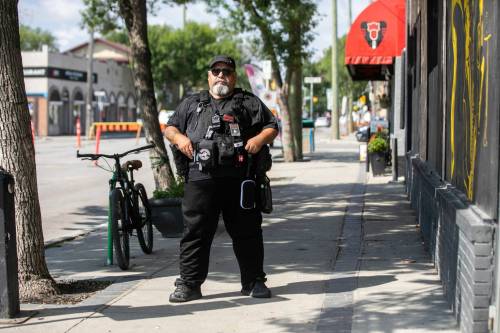
West End business owners say their neighbourhood has been under siege for months, and some believe downtown police drug sweeps have made things worse by pushing more street disorder in their direction — and pushing customers away.

Read
Friday, Aug. 21, 2026

Quick quotes: Here’s what people are saying about the Canada-U.S. trade negotiations

Catherine Morrison and David Baxter, The Canadian Press 10 minute read Preview

Quick quotes: Here’s what people are saying about the Canada-U.S. trade negotiations

Catherine Morrison and David Baxter, The Canadian Press 10 minute read Updated: Yesterday at 8:04 PM CDT

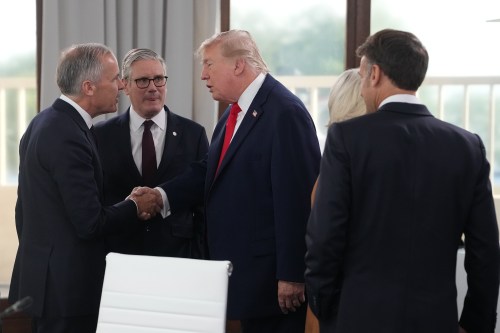
OTTAWA - The United States imposed 50 per cent tariffs on billions of dollars worth of Canadian exports Saturday, after the two countries failed to reach a new trade deal before an extended deadline imposed by President Donald Trump earlier in the week.

In response, Prime Minister Mark Carney announced Canada will retaliate with matching dollar-for-dollar tariffs. Carney also suspended talks with the United States and summoned his negotiators back to Ottawa.

Here's what people are saying in response: 

——— 

Read
Updated: Yesterday at 8:04 PM CDT

‘Strong sense of unity’

By Melissa Martin 6 minute read Preview

‘Strong sense of unity’

By Melissa Martin 6 minute read Yesterday at 5:14 PM CDT

Manitoba government and business leaders are rallying behind Prime Minister Mark Carney’s plan to fight back, after a sudden collapse of trade talks between the U.S. and Canada sparked a new salvo of U.S. tariffs on some Canadian goods.

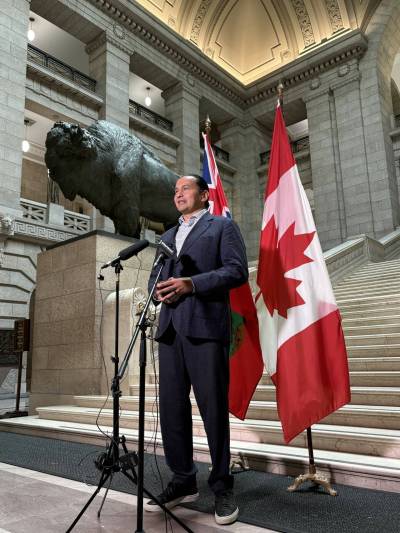
On Saturday, after Carney vowed to respond with retaliatory tariffs, Manitoba premier Wab Kinew said his government stood “100 per cent” behind the prime minister’s plan to respond to what Kinew called U.S. president Donald Trump’s “unjustified and immoral” tariffs.

“History will not be kind to Donald Trump, so we should never appease him,” Kinew said. “We should fight back, which is what Canada is doing today.”

Kinew met reporters for a brief news conference at the legislature on Saturday afternoon, about an hour after finishing a call with Carney and the other premiers. There was a “really strong sense of unity” on that call, Kinew said, and emphasized that he backs the federal decision to “walk away from what would have been a bad deal.”

Read
Yesterday at 5:14 PM CDT

Wooed by wood, Cedarella founder takes pride in handcrafted designs

David Sanderson 8 minute read Preview

Wooed by wood, Cedarella founder takes pride in handcrafted designs

David Sanderson 8 minute read Yesterday at 6:00 AM CDT

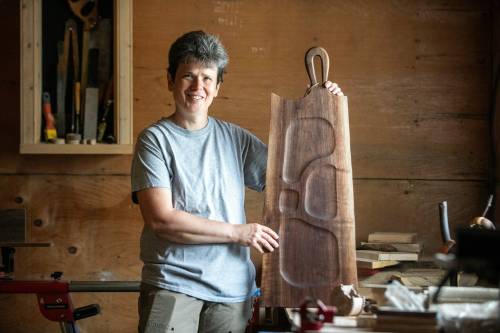
Marina Bulan is the founder of Cedarella, a two-year-old venture that turns out eye-catching wood products such as jewelry, kitchen decor, children’s toys and, most recently, metre-high outdoor planters that double as home street-number indicators.

Ahead of immigrating to Winnipeg a decade ago from their native Russia, Bulan and her partner thought it would be prudent to conduct some research on their soon-to-be new home, a city they knew next to nothing about.

Imagine their surprise as they were viewing the 2007 surrealist film My Winnipeg, which comically blends historical facts about our burg with what Winnipeg-born writer/director Guy Maddin has termed “mystical hypothesizing.”

(For instance, there is no proof that, as reported in the award-winning flick, Winnipeg is the sleepwalking capital of the world, and that residents keep keys to their former abodes on their person in the event they turn up there during a bout of somnambulism.)

Read
Yesterday at 6:00 AM CDT

Roadside giants towering symbols of Canada’s quirkiness

Jen Zoratti 4 minute read Preview

Roadside giants towering symbols of Canada’s quirkiness

Jen Zoratti 4 minute read Yesterday at 2:01 AM CDT

Could you imagine a Canada without Mr. PG repping Prince George, B.C.? Or the Big Nickel in Sudbury? Or, my personal favourite, Happy Rock in Gladstone?

Earlier this summer, CBC’s Cost of Living looked at the economics of these giant roadside attractions — of which there are more than 1,500 in Canada — and the cost of keeping them.

Some are falling into disrepair — this is why public art funding is necessary, by the way, not just for construction, but maintenance — and some towns are weighing whether or not that money is better spent elsewhere.

The main character of the story: Tyra the Tyrannosaurus, the rather literal symbol of Drumheller, Alta., a.k.a. the Dinosaur Capital of the World since 2000, who could be facing extinction after the lease agreement between the town and the Drumheller and District Chamber of Commerce ends in 2029.

Read
Yesterday at 2:01 AM CDT