

Province gathers absentee student data
Education department seeks to ensure pupils 'safe and accounted for'

Advertisement
Read this article for free:
or
Already have an account? Log in here »
To continue reading, please subscribe:
Monthly Digital Subscription
$1 per week for 24 weeks*
- Enjoy unlimited reading on winnipegfreepress.com
- Read the E-Edition, our digital replica newspaper
- Access News Break, our award-winning app
- Play interactive puzzles
*Billed as $4.00 plus GST every four weeks. After 24 weeks, price increases to the regular rate of $19.95 plus GST every four weeks. Offer available to new and qualified returning subscribers only. Cancel any time.
Monthly Digital Subscription
$4.99/week*
- Enjoy unlimited reading on winnipegfreepress.com
- Read the E-Edition, our digital replica newspaper
- Access News Break, our award-winning app
- Play interactive puzzles
*Billed as $19.95 plus GST every four weeks. Cancel any time.
To continue reading, please subscribe:
Add Free Press access to your Brandon Sun subscription for only an additional
$1 for the first 4 weeks*
*Your next subscription payment will increase by $1.00 and you will be charged $16.99 plus GST for four weeks. After four weeks, your payment will increase to $23.99 plus GST every four weeks.
Read unlimited articles for free today:
or
Already have an account? Log in here »
Hey there, time traveller!
This article was published 21/06/2020 (2133 days ago), so information in it may no longer be current.
Concerns teachers have lost contact with some students since classes were suspended — despite efforts to stay in touch — have prompted the province to collect information about absentees.
Manitoba Education recently contacted divisions to request they collaborate with schools to ensure all students are “safe and accounted for” during the distance-learning period as part of an initiative in partnership with the Families Department.
“There is already a process in place to report child-protection concerns that should continue to be followed, but this additional request will help Manitoba Education and divisions better understand the number of students who may not have been reached so they can continue to try to reach out, locate them, provide any supports needed and ensure their safety,” a provincial spokesperson said in an emailed statement.
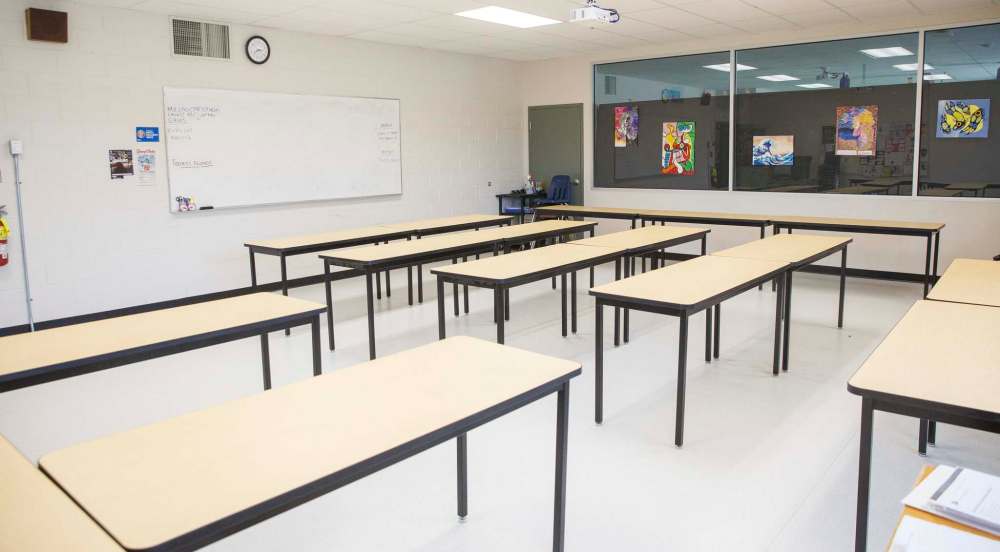
During the pandemic, teachers have been keeping in touch with students via email, phone and video call and with in-person visits.
After school administrators sent out requests for distance-learning absentees earlier this month, educators started to raise concerns in a closed Facebook group about how the information would be used, and if it was for checks by social workers.
Under the Manitoba Teachers’ Society’s professional practice code, teachers are bound to respect the confidential nature of student information unless they have concerns about students’ welfare, in which case they must report information to authorized personnel or an agency.
When pressed about specifics, the province said information collected about the students would only be shared with the Families Department, “if it was determined to be in the best interests of the child.”
The Assembly of Manitoba Chiefs family advocate, Cora Morgan, said there are numerous reasons why a student might not have been able to learn at home or share proof of learning. Those include the inability to access a smartphone or other device with reliable internet or having parents who do shift work and can’t support home learning during traditional school hours.
“When you are looking at families that are single moms living in the margins of society, (distance-learning) expectations weren’t necessarily realistic for them. Their children shouldn’t be put at risk because of that,” she said, adding there’s distrust among Indigenous families when things are done “in the best interest.”
In Manitoba, close to 90 per cent of child-welfare apprehensions involve Indigenous children.
Morgan said the best way to check on students’ well-being is for educators to visit in-person in a “mindful” manner. If CFS is called as a last resort, she said families should have access to an advocate or support person.

In a generic statement that emphasized the importance of student safety, MTS president James Bedford said teachers will contact students who haven’t been actively doing remote learning. Limited in-person instruction resumed in schools earlier this month.
With fall plans uncertain, Daphne Penrose, Manitoba’s children’s advocate, said there needs to be more consideration about how to help families manage the stresses of distance learning.
“We’re in an unpredictable time and it has been difficult for kids…. The need for mental health support and mental wellness support is increasing,” Penrose said, adding mental wellness needs to become a standard part of learning, similar to social studies, health, phys-ed, math and reading.
maggie.macintosh@freepress.mb.ca
Twitter: @macintoshmaggie
Maggie Macintosh
Education reporter
Maggie Macintosh reports on education for the Free Press. Originally from Hamilton, Ont., she first reported for the Free Press in 2017. Read more about Maggie.
Funding for the Free Press education reporter comes from the Government of Canada through the Local Journalism Initiative.
Every piece of reporting Maggie produces is reviewed by an editing team before it is posted online or published in print — part of the Free Press‘s tradition, since 1872, of producing reliable independent journalism. Read more about Free Press’s history and mandate, and learn how our newsroom operates.
Our newsroom depends on a growing audience of readers to power our journalism. If you are not a paid reader, please consider becoming a subscriber.
Our newsroom depends on its audience of readers to power our journalism. Thank you for your support.
Maggie Macintosh
Education reporter
Maggie Macintosh reports on education for the Free Press. Originally from Hamilton, Ont., she first reported for the Free Press in 2017. Read more about Maggie.
Funding for the Free Press education reporter comes from the Government of Canada through the Local Journalism Initiative.
Every piece of reporting Maggie produces is reviewed by an editing team before it is posted online or published in print — part of the Free Press‘s tradition, since 1872, of producing reliable independent journalism. Read more about Free Press’s history and mandate, and learn how our newsroom operates.
Our newsroom depends on a growing audience of readers to power our journalism. If you are not a paid reader, please consider becoming a subscriber.
Our newsroom depends on its audience of readers to power our journalism. Thank you for your support.
Advertisement Advertise With Us
Advertisement Advertise With Us