

Don’t be fooled by COVID-19 cons
Advertisement
Read this article for free:
or
Already have an account? Log in here »
To continue reading, please subscribe:
Monthly Digital Subscription
$1 per week for 24 weeks*
- Enjoy unlimited reading on winnipegfreepress.com
- Read the E-Edition, our digital replica newspaper
- Access News Break, our award-winning app
- Play interactive puzzles
*Billed as $4.00 plus GST every four weeks. After 24 weeks, price increases to the regular rate of $19.95 plus GST every four weeks. Offer available to new and qualified returning subscribers only. Cancel any time.
Monthly Digital Subscription
$4.99/week*
- Enjoy unlimited reading on winnipegfreepress.com
- Read the E-Edition, our digital replica newspaper
- Access News Break, our award-winning app
- Play interactive puzzles
*Billed as $19.95 plus GST every four weeks. Cancel any time.
To continue reading, please subscribe:
Add Free Press access to your Brandon Sun subscription for only an additional
$1 for the first 4 weeks*
*Your next subscription payment will increase by $1.00 and you will be charged $16.99 plus GST for four weeks. After four weeks, your payment will increase to $23.99 plus GST every four weeks.
Read unlimited articles for free today:
or
Already have an account? Log in here »
Hey there, time traveller!
This article was published 23/06/2020 (2111 days ago), so information in it may no longer be current.
When costs rise, most food companies adjust. Safe, fair and sustainable business practices are always a priority in this sector — almost.
Several food science experts believe an increase in food fraud is inevitable due to COVID-19.
The Food Authenticity Network advisory board, which includes more than 1,500 food science experts from around the world, met earlier this month. Given the disruption in global supply chains caused by COVID-19 and the decrease in the level of surveillance, an increase in the number of cases of food fraud is more than likely, according to the group.
There have already been some reported cases around the world. Several packages containing counterfeit food products were seized during a recent investigation in the European Union. Over the last two months, packages came from Brazil, China and Hong Kong, Germany, Sweden and Great Britain.
Substitution of ingredients, counterfeiting, incorrect labelling and other classic strategies were among the frauds.
With physical distancing and unprecedented health measures, the food chain has faced challenges since the beginning of the pandemic. The obvious objective is to protect workers. From farm to table, each company participating in the food chain has seen its operating costs increase. No company has been immune to this.
This is essentially why food prices will go up. But a minority of companies will try to stay competitive by not following well-established rules.
There are food shortages in some parts of the world, putting additional pressure on product suppliers, so it’s entirely reasonable to expect an increase in fraud that’s aimed at retaining customers, or even gaining new ones, by supplying goods that aren’t readily available on the market. Tempting, but illegal.
Indeed, each recession brings its share of criminals and food fraudsters, who are motivated by the desire for economic gains. COVID-19 is no exception — in fact, it has created an ideal scenario for criminals.
Most regions of the world face extreme economic slowdowns due to COVID-19. Businesses may be tempted to take shortcuts or turn a blind eye to things that may not seem entirely right when purchasing food and ingredients.
Many consumers, financially challenged by our faltering economy, will become full-time bargain hunters. Now that buying locally is more popular than ever, the number of products whose provenance has been tampered with may also increase.
Consumers need to ask questions and monitor prices. If the price is too low, for example, ask your retailer if their suppliers have been audited since the start of the pandemic. Audits are quite common in normal times, but the pandemic may have disrupted the schedules of several companies.
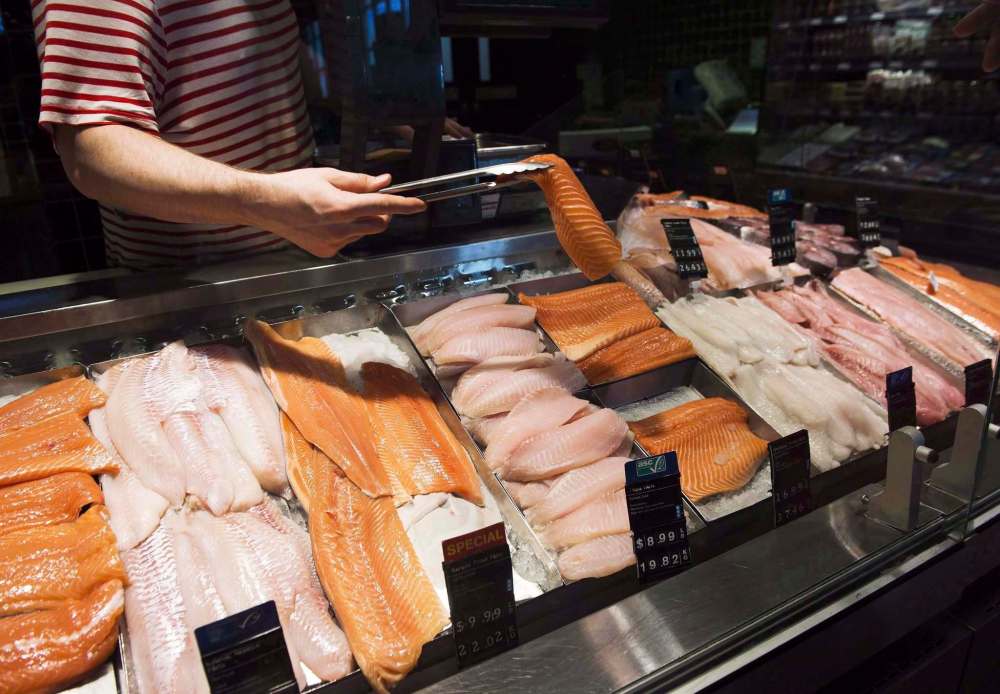
The product categories most often affected by food fraud and targeted by criminals are oils, fish, seafood and meat. Spices and liquids are also targets when the market contracts. Honey, fruit juice and organic food products are also often affected by fraud during an economic crisis.

We must be vigilant. You can report food safety or labelling concerns to the Canadian Food Inspection Agency, which now has a generous budget to combat fraud.
While not illegal, the reduction of the quantity per item sold, without changing the price, is another tactic to watch. This is known as shrinkflation. We risk seeing the quantity in several products decrease, or product volume reduced, without the price changing.
Food fraud has been around for thousands of years, but with better detection technologies and with greater surveillance practices, we can protect ourselves better. Governments are on the lookout, but we consumers must be, as well.
Sylvain Charlebois is senior director of the agri-food analytics lab and a professor in food distribution and policy at Dalhousie University.
— Troy Media