Hard-hit tribe takes strict steps as virus surges in Arizona

Advertisement

Advertise with us

FLAGSTAFF, Ariz. - People in the deserts of Arizona flee to the White Mountains when the triple-digit heat is too much to bear, cooling off in the forest a few hours away. That worries a Native American tribe that calls the area home, as coronavirus infections and temperatures have both spiked in one of the hardest-hit states.

Read this article for free:


or

Already have an account? Log in here »

To continue reading, please subscribe:

Subscribe and receive a limited-edition Free Press branded hat or tote.

Digital Subscription

One year of digital access for only $205*

  • Enjoy unlimited reading on winnipegfreepress.com
  • Read the E-Edition, our digital replica newspaper
  • Access News Break, our award-winning app
  • Play interactive puzzles

*First annual payment billed as $205.00 + GST for one year. This annual subscription will automatically renew at $233.00 + GST every 52 weeks (10% off the regular annual price of $259.35). Offer available to new and qualified returning subscribers only. Cancel any time.

To continue reading, please subscribe:

Add Free Press access to your Brandon Sun subscription for only an additional

$1 for the first 4 weeks*

  • Enjoy unlimited reading on winnipegfreepress.com
  • Read the E-Edition, our digital replica newspaper
  • Access News Break, our award-winning app
  • Play interactive puzzles
Start now

*Your next Brandon Sun subscription payment will increase by $1.00 and you will be charged $17.95 plus GST for four weeks. After four weeks, your payment will increase to $24.95 plus GST every four weeks.

Hey there, time traveller!
This article was published 26/06/2020 (2279 days ago), so information in it may no longer be current.

FLAGSTAFF, Ariz. – People in the deserts of Arizona flee to the White Mountains when the triple-digit heat is too much to bear, cooling off in the forest a few hours away. That worries a Native American tribe that calls the area home, as coronavirus infections and temperatures have both spiked in one of the hardest-hit states.

The White Mountain Apache Tribe is taking some of the most drastic actions in Arizona to protect its 13,500 residents, more than one-eighth of whom have already tested positive for COVID-19. It’s taking cues from severe measures imposed by other tribes nationwide, including the Navajo Nation, which has curtailed an outbreak that once made it a national hot spot.

Those living on the White Mountain Apache Tribe’s reservation in northeastern Arizona face the risk of fines and other penalties if they venture beyond their own yards this weekend. A two-week shelter-in-place order will follow. The tribe’s Fort Apache Reservation also is closed to the summertime visitors who flock to the area to fish, hike and camp among ponderosa pines.
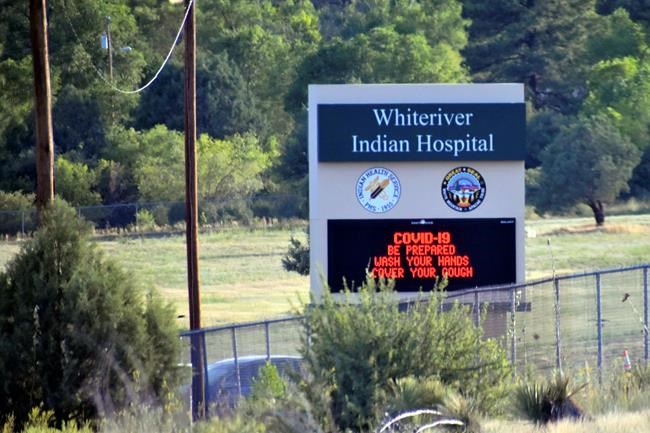
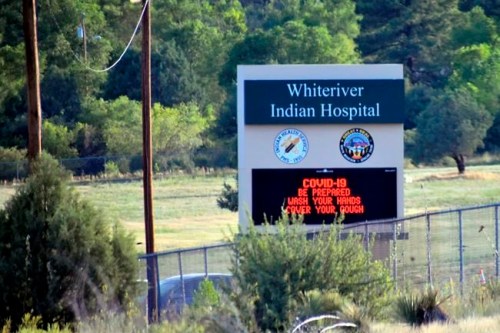
This Thursday, June 25, 2020 photo provided by C.M. Clay, shows sign at the entrance to the Whiteriver Indian Hospital in Whiteriver, Ariz., on the Fort Apache Reservation, The reservation, home to the White Mountain Apache Tribe, will be under lockdown this weekend to help slow the spread of the coronavirus. (C.M. Clay/White Mountain Apache Tribe via AP)

The tribe’s confirmed infections and 20 deaths as of Friday make the reservation one of the hardest-hit places in a state that’s recording over 3,000 cases a day and running short on hospital space.

“COVID has just turned our world upside down,” White Mountain Apache Chairwoman Gwendena Lee-Gatewood said.

The tribe also is ordering homeless people who test positive for the virus to quarantine at the tribe’s casino-hotel — now closed to visitors — and is banning the sale and use of alcohol for the rest of the year. Lee-Gatewood hopes it will help keep people safe if they get lax about social distancing and other measures when they’re drinking.

The tribe’s strict steps come as Arizona Gov. Doug Ducey has declined to impose new restrictions on businesses like other states where confirmed cases are surging. Fellow Republican governors in Texas and Florida cracked down on bars Friday.

Ducey, who lifted a stay-at-home order in mid-May, has now paused further efforts to reopen the economy and allowed cities to require face coverings, without bowing to pressure for a statewide mandate.

Lee-Gatewood said the White Mountain Apache Tribe took that into consideration, along with the typical summer crowds, when deciding how to target the pandemic on its land.

“We’re seeing these visitors not paying attention to social distancing and wearing masks, and the governor had a real relaxed attitude about all of that in reopening the businesses back up,” she said.

Elsewhere in Arizona, officials on the Havasupai reservation deep in a gorge off the Grand Canyon warned river rafters they would be detained if they stepped foot on land the tribe traditionally uses but isn’t part of its formal reservation. Known worldwide for its towering blue-green waterfalls, the reservation has been shut down for months and has no reported COVID-19 cases.

“We are left to take aggressive action to maintain the safety of our tribal members and the future of the Havasupai Tribe,” Chairwoman Evangeline Kissoon wrote in a notice to river guides.
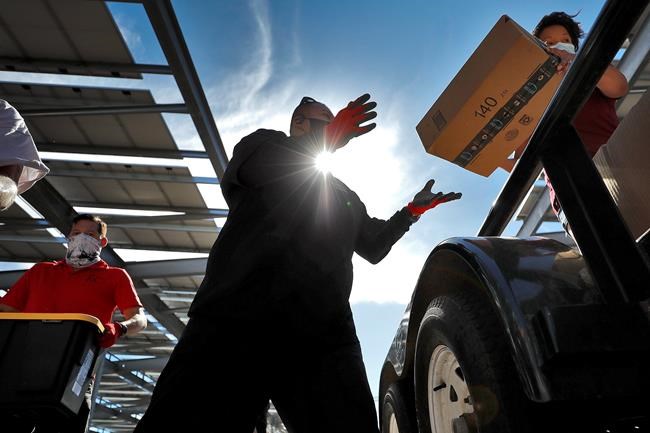
Volunteers prepare donations for delivery to those affected by COVID-19 on tribal lands Thursday, June 25, 2020, in Tempe, Ariz. The resource drive is for families isolated due to COVID-19 on Navajo, Hualapai, Havasupai and White Mountain Apache tribal lands. (AP Photo/Matt York)

After talking with Grand Canyon National Park, the tribe said it would station law enforcement at its boundary with the park, miles from the Colorado River shore.

The nearby Navajo Nation, the nation’s largest Native American reservation that spans parts of Arizona, New Mexico and Utah, has attributed a slowdown in infections to a daily curfew it’s had in place for months, a shutdown of government offices and tourist sites, weekend lockdowns and a mask requirement.

On tribal land elsewhere, residents of the tiny Alaska Native village of Napaskiak are being advised to stay home until July 5, leaving only for medical needs or quick runs to the grocery store. A health care corporation that serves the village and dozens of other rural communities pointed to a “strong likelihood” of community spread.

In Montana, tribal leaders on the Blackfeet Indian Reservation said this week that they closed their boundary with popular Glacier National Park for the tourism season to protect their residents.

The Cheyenne River Sioux Tribe in South Dakota has kept up roadblocks since March despite criticism from the state’s governor. Tribal Chairman Harold Frazier said this week that the tribe took the step because it realized it had to protect its people.

“All we have is ourselves,” he said.

In Arizona, the White Mountain Apache Tribe said people can travel on a highway through its land, but they can’t stop along the way. Tribal police also are considering checkpoints, and a COVID-19 testing blitz is planned.

“There’s frustration, there’s impatience, there’s a lot of things,” tribal Councilman Jerold Altaha said in a video. “But remember, we are doing the best we can, we are doing everything we can to help you.”

They’re looking to prevent more people from dying, like Apache elder Timothy Clawson Sr., 91. He married his sweetheart under a tree on the reservation and spent his life in the White Mountains, working as a rancher and at a sawmill.
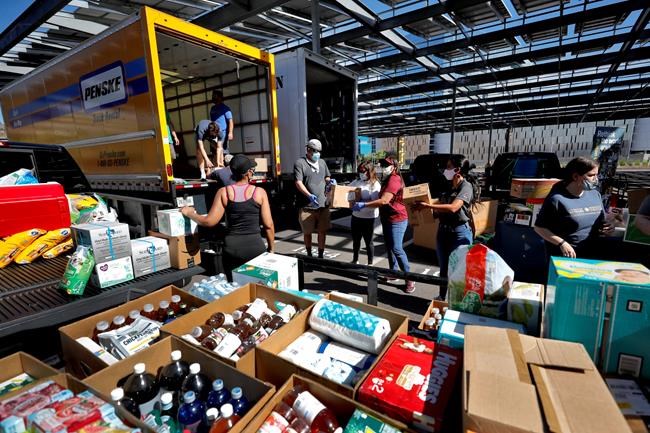
Volunteers prepare donations for delivery to those affected by COVID-19 on tribal lands Thursday, June 25, 2020, in Tempe, Ariz. The resource drive is for families isolated due to COVID-19 on Navajo, Hualapai, Havasupai and White Mountain Apache tribal lands. (AP Photo/Matt York)

Lee-Gatewood, the tribal chairwoman, recalled their last conversation. Clawson called earlier this month and said, “Well, chairwoman, I’m at the hospital, and they told me I have this virus. They treated me, and the doctors said I wouldn’t leave here, and I’m calling to say my goodbyes.”

Lee-Gatewood said Clawson told her that he was proud of her.

“You’re a tough cowboy,” she responded. “I’ll keep you in my prayers.”

The next day, Lee-Gatewood got a text from Clawson’s granddaughter: He had died.

___

Associated Press writers Becky Bohrer in Juneau, Alaska, and Matt Volz in Helena, Montana, contributed to this report.
Report Error Submit a Tip

More Stories

Accept the fact you’re a sensitive soul

Maureen Scurfield 6 minute read 2:00 AM CDT

DEAR MISS LONELYHEARTS: I’m 30, and recently met a girl eight years younger than I am. While we had a great time the first weeks going out for dinners, to the bar and back to my place to make love, she’s now thrown up a big wall!

She left very early in the morning yesterday. I yelled that I wanted to see her again real soon, as she went out the door. But she hasn’t replied to my texts or phone calls since! I’ve reached out, four or five times. I feel like I’m doing something wrong, but I can’t help feeling a lot for her! What should I do?

— Longing for More, River Heights

Dear Longing: Stop trying to reconnect now. By not replying, she’s telling you she’s not interested. You don’t need more of this rejection pain in your life, and you don’t need all this uncertainty and obsessing.

Post-secondary leaders to discuss cross-campus collaborations

Maggie Macintosh 4 minute read Preview

Post-secondary leaders to discuss cross-campus collaborations

Maggie Macintosh 4 minute read 2:00 AM CDT

The artificial intelligence boom is inducing panic about the makeup of Manitoba’s future workforce and influencing new post-secondary application trends.

What remains a constant, says the economist who oversees the University of Manitoba, is the often-overlooked value of a liberal arts degree.

“I’ve always believed in it being a foundation for lifelong learning,” said Michael Benarroch, president and vice-chancellor of the largest post-secondary institute in the province.

“Even more so, in a world of AI, where AI is going to do certain tasks, I think humanities education and social sciences education is going to become even more important.”

Read
2:00 AM CDT

Hard-hit tribe takes strict steps as virus surges in Arizona

Felicia Fonseca, The Associated Press 6 minute read Preview

Hard-hit tribe takes strict steps as virus surges in Arizona

Felicia Fonseca, The Associated Press 6 minute read Saturday, Jun. 27, 2020

FLAGSTAFF, Ariz. - People in the deserts of Arizona flee to the White Mountains when the triple-digit heat is too much to bear, cooling off in the forest a few hours away. That worries a Native American tribe that calls the area home, as coronavirus infections and temperatures have both spiked in one of the hardest-hit states.

The White Mountain Apache Tribe is taking some of the most drastic actions in Arizona to protect its 13,500 residents, more than one-eighth of whom have already tested positive for COVID-19. It's taking cues from severe measures imposed by other tribes nationwide, including the Navajo Nation, which has curtailed an outbreak that once made it a national hot spot.

Those living on the White Mountain Apache Tribe's reservation in northeastern Arizona face the risk of fines and other penalties if they venture beyond their own yards this weekend. A two-week shelter-in-place order will follow. The tribe's Fort Apache Reservation also is closed to the summertime visitors who flock to the area to fish, hike and camp among ponderosa pines.

The tribe's confirmed infections and 20 deaths as of Friday make the reservation one of the hardest-hit places in a state that's recording over 3,000 cases a day and running short on hospital space.

Read
Saturday, Jun. 27, 2020

Audited public accounts show Manitoba's deficit last year half of predicted $1.67 billion

Carol Sanders 6 minute read Preview

Audited public accounts show Manitoba's deficit last year half of predicted $1.67 billion

Carol Sanders 6 minute read Updated: Yesterday at 7:27 PM CDT

Manitoba’s audited public accounts for the last fiscal year show the province is “moving in the right direction,” NDP Finance Minister Adrien Sala said Monday.

The provincial deficit for fiscal 2025-26 was $832 million, nearly half the $1.67-billion deficit forecast in December, and in line with the $794-million estimate in Budget 2026.

“I’m particularly proud of this final result, (given the potential) implications of tariffs on our economy, the worst wildfire season in 30 years — which resulted in significant emergency expenditures — and, of course, a significant drought,” Sala said at a news conference.

The province reported revenues of $25.1 billion and expenses of $25.9 billion, resulting in the $832-million deficit. Manitoba’s net debt is $36.5 billion and costs the province $2.3 billion a year in debt-servicing charges.

Read
Updated: Yesterday at 7:27 PM CDT

Woman who fled abuse decries lack of consequences for landlord who breached lease-breaking confidentiality

Carol Sanders 5 minute read Preview

Woman who fled abuse decries lack of consequences for landlord who breached lease-breaking confidentiality

Carol Sanders 5 minute read Yesterday at 6:00 AM CDT

The provincial government is being asked to penalize landlords who breach the confidentiality of tenants breaking a lease to flee domestic violence after a survivor discovered there’s no consequences now.

“It put me in a very difficult situation,” said the woman, who was stunned to see that her landlord copied her abuser in email correspondence, including the domestic violence certificate she obtained to end a tenancy agreement early and leave an abusive relationship.

“My heart dropped to my stomach — I was in disbelief,” she said, recalling the confidentiality breach that occurred in 2025.

“I’m very lucky to be in a situation where it’s no longer a threat to my immediate safety.”

Read
Yesterday at 6:00 AM CDT

Railways, costs and benefits — the long view

Barry E. Prentice 5 minute read 2:00 AM CDT

A railway bypass route for Winnipeg has been endorsed by Premier Wab Kinew for further feasibility study. Naturally, critics have emerged that question the economics of a railway bypass.

Doubters want to be convinced that the benefits exceed the costs, and quite rightly.

So, how should we be thinking about costs and benefits?

It is always easier to estimate the costs of large infrastructure projects than it is to measure benefits. Rail contractors can provide cost estimates of the kilometres of rail bed construction and rails required, plus the additional switches, overpasses and a railway trestle that will be needed. Land acquisition is a major cost and time delay.