Polish army fought hard against Nazis, Soviets
Advertisement
Read this article for free:
or
Already have an account? Log in here »
To continue reading, please subscribe:
Digital Subscription
One year of digital access for only $1.44 a week*
- Enjoy unlimited reading on winnipegfreepress.com
- Read the E-Edition, our digital replica newspaper
- Access News Break, our award-winning app
- Play interactive puzzles
*Billed as $5.77 plus GST every four weeks. After 52 weeks, price increases to the regular rate of $19.95 plus GST every four weeks. Offer available to new and qualified returning subscribers only. Cancel any time.
To continue reading, please subscribe:
Add Free Press access to your Brandon Sun subscription for only an additional
$1 for the first 4 weeks*
- Enjoy unlimited reading on winnipegfreepress.com
- Read the E-Edition, our digital replica newspaper
- Access News Break, our award-winning app
- Play interactive puzzles
*Your next Brandon Sun subscription payment will increase by $1.00 and you will be charged $17.95 plus GST for four weeks. After four weeks, your payment will increase to $24.95 plus GST every four weeks.
Read unlimited articles for free today:
or
Already have an account? Log in here »
Hey there, time traveller!
This article was published 18/07/2020 (2287 days ago), so information in it may no longer be current.
In September 1939, Nazi Germany invaded Poland, triggering the Second World War.
Just over a couple of weeks later, the Soviet Union invaded Poland from the east: the two totalitarian powers had conspired, through their Nazi-Soviet pact, to wipe Poland off the map.
But the military campaign to annihilate Poland would not be so easy. The Poles launched a spirited defence of their territorial integrity against the odds, and were ultimately defeated only because of the overwhelming numerical superiority of the totalitarian armies that they faced.
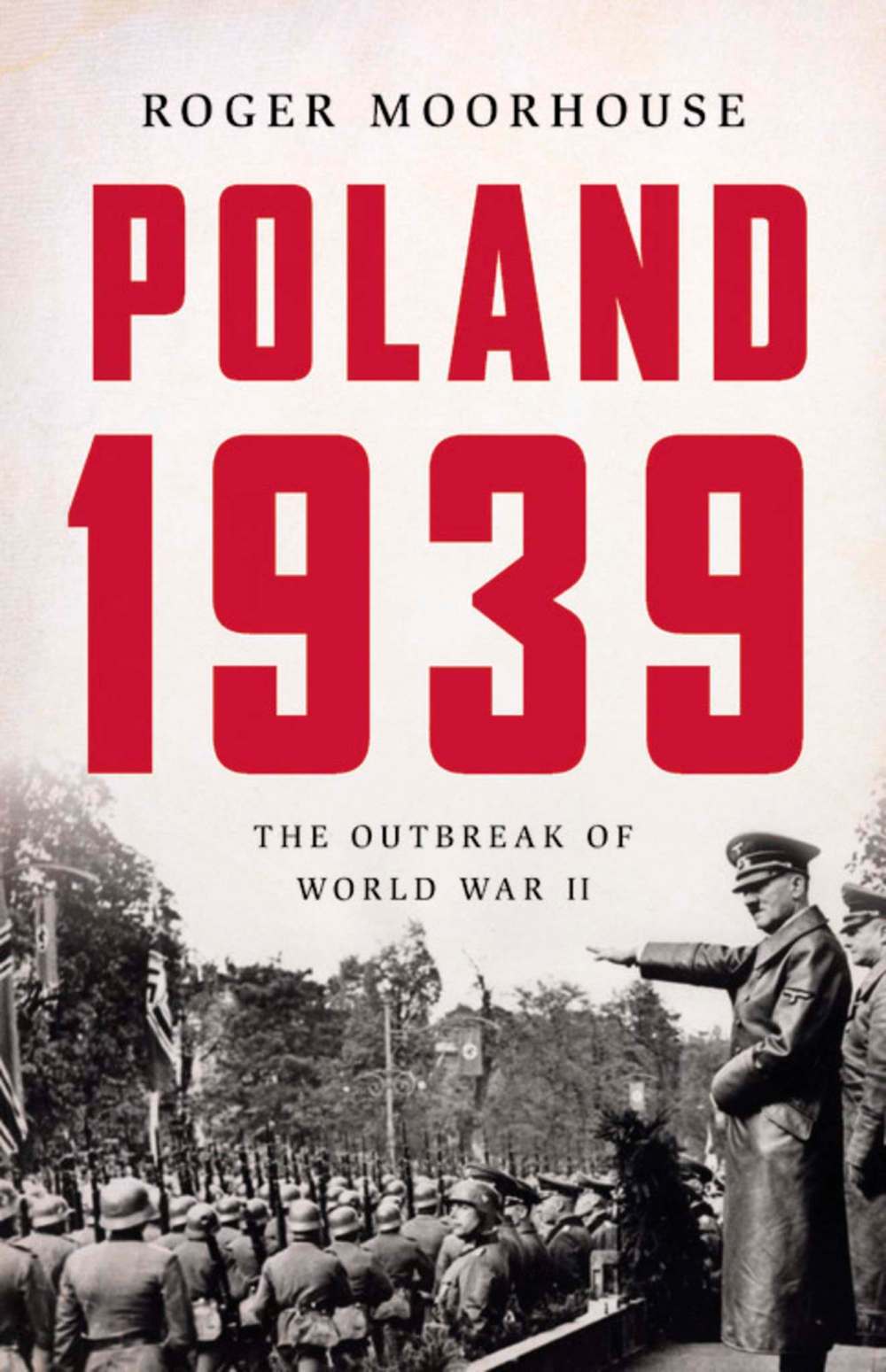
This opening campaign of the Second World War, British military historian Roger Moorhouse contends, has been given scant attention in the historiography of the English-speaking world.
He argues that there has been a complacent acceptance of Nazi and Soviet myths about the invasion of Poland.
It is to provide a more complete and accurate account of Poland’s defensive war of 1939 that Moorhouse has written this book. In particular, he cites Polish memoirs and diaries in order to underscore the Polish experience of the war, restoring Poles to the centre of their own narrative.
Nazi propagandists portrayed the war as an easy victory over an inept and backward foe that relied on cavalry charges against German armor. But the victory was not easy, and there was a lot more to the Polish army than cavalry.
Certainly cavalry was used, and was often highly effective against the oncoming German forces. In one battle, Moorhouse writes, a cavalry brigade, fighting on foot, held off an armored division for 10 hours.
Moorhouse cites the recollections of a Polish officer who led a cavalry charge against a battalion of German infantry: “I shall never forget the moment when I gave the signal with a whirl of my sabre and we set out at a gallop in dead silence… just the sound of galloping horses and their snorting. The Germans dispersed before us, tried to set up their machine guns; loose shots were fired and… there was total panic among the Germans. I had hardly any losses.”
As Moorhouse says, “far from being an object of ridicule, a Polish cavalry charge could clearly still provoke terror in the enemy.”

Moorhouse depicts the ruthlessness, barbarism and brutality of the Nazi conduct of war. German warplanes routinely strafed civilians and columns of refugees. Villages and towns with no military significance were destroyed. Churches, residential suburbs, hospitals and civilian trains were targeted.
As if the Nazi invasion was not calamitous enough, Poland’s fate was sealed with the Soviet invasion on Sept. 17, 1939. Like the Nazis, the Soviets disseminated a dishonest version of events, claiming that their incursion was a simple police action designed to protect Poland’s ethnic minorities. In fact, it was a brutal military invasion intended to establish Soviet hegemony over the Polish territory promised to the Soviet Union under the terms of the Nazi-Soviet pact.
The Poles fought heroically and suffered profoundly. Their brave defiance should always be remembered, and Moorhouse has performed a signal service in recounting that defiance for an English-speaking audience.
Graeme Voyer is a Winnipeg writer.