Vacation properties see spike in demand as people look for safe getaways
Advertisement
Read this article for free:
or
Already have an account? Log in here »
To continue reading, please subscribe:

Digital Subscription
One year of digital access for only $205*
- Enjoy unlimited reading on winnipegfreepress.com
- Read the E-Edition, our digital replica newspaper
- Access News Break, our award-winning app
- Play interactive puzzles
*First annual payment billed as $205.00 + GST for one year. This annual subscription will automatically renew at $233.00 + GST every 52 weeks (10% off the regular annual price of $259.35). Offer available to new and qualified returning subscribers only. Cancel any time.
To continue reading, please subscribe:
Add Free Press access to your Brandon Sun subscription for only an additional
$1 for the first 4 weeks*
- Enjoy unlimited reading on winnipegfreepress.com
- Read the E-Edition, our digital replica newspaper
- Access News Break, our award-winning app
- Play interactive puzzles
*Your next Brandon Sun subscription payment will increase by $1.00 and you will be charged $17.95 plus GST for four weeks. After four weeks, your payment will increase to $24.95 plus GST every four weeks.
Read unlimited articles for free today:
or
Already have an account? Log in here »
Hey there, time traveller!
This article was published 28/07/2020 (2251 days ago), so information in it may no longer be current.
Like many realtors working Canada’s recreational markets, David Jurek says he’s seen properties move unusually quickly since the start of COVID-19.
The RE/MAX real estate agent in 100 Mile House, B.C. recently listed a $140,000 home in an off-the-grid region where he’s had difficulty in the past: “The last and only sale that we had there took about three years to sell,” Jurek says. “I listed this property thinking, ‘okay, well, this year maybe we’ll get more action.'”
But shortly after listing, Jurek started receiving daily inquiries on the house. Before long, he had three offers on it.
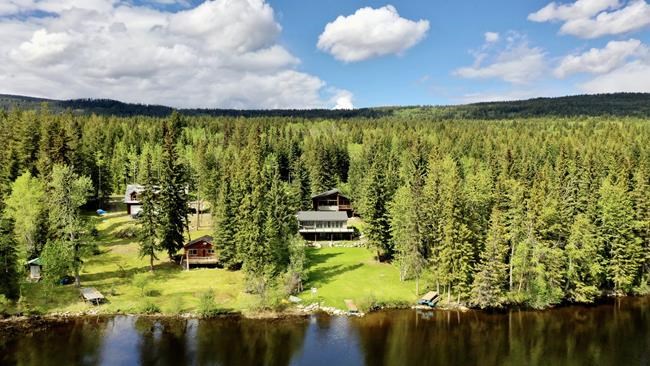
“Some of the stuff that normally would sit, that wasn’t as choice of a property necessarily in the past is now selling very quickly,” Jurek says.
He attributes the quick heat-up in the B.C. recreational property market to COVID-19 lockdown orders, part of a growing trend in which Canadians are looking to vacation property in search of space, an alternative place from which to work remotely or a driveable vacation destination while travel is not an option.
“People who maybe weren’t in the second home and recreational market [before] are now saying, ‘Hey, we need to do that. If we can make it happen let’s make it happen,'” Jurek says.
He’s seen month-over-month sales increase by an estimated 30 per cent in his region since the start of the pandemic. And while demand has risen across the market, he says prices have yet to climb to match, so those looking to buy should explore their options quickly.
The same has occurred in the greater Vancouver region, home to the Sunshine Coast and Whistler, according to Colette Gerber, realtor at Sutton West Coast Realty and chair of the Real Estate Board of Greater Vancouver. “Last month we saw a 21 per cent increase in sales,” Gerber says. “So, yes, it looks like vacation homes are now becoming a hot commodity.”
The Muskoka region and other parts of Ontario’s cottage country have seen similar upticks in demand, according to David Reid, sales representative at Enjoy Muskoka Realty in Gravenhurst, Ontario, and former president of the Ontario Real Estate Association. “One of the big drivers really is high speed internet,” he says. “You’ve got such great quality internet now and the paradigms have changed.”
Not every cottage comes with strong cell or web service, of course, and for many this is a non-starter. Those unfamiliar with the area in which they’re shopping should look for a realtor who knows the region well, all three agents suggest.
While this rule typically goes without saying, it’s especially important when searching for lakefront, rural, and two- or three-season properties, which come with their own quirks. In B.C., for example, it’s important to understand the underground system from which a property sources its water, Gerber says. “You need local knowledge to know what the ramifications are, how to deal with a well, how to deal with septic fields,” she says.
And in lake country, buyers should understand the permitting rules and nuances of the specific piece of water they’re looking at. A good realtor with hyper-local knowledge can help with this.
“We do have a lot of waterfront, but it can be very different from one lake to the next,” Jurek says of 100 Mile House. “Are you wanting to buy that second property and be able to waterski or are you just wanting to be able to fish? What lake you back on to [determines] what you can expect that you can do there.”
Recreational properties also come with their own specific maintenance requirements. While year-round homes have owners’ constant attention, summer spots need an extra set of eyes (and hands, in the event of snowfall) during colder months.

Reid suggests finding a helpful neighbour or enlisting the services of a local road maintenance or cottage sitter program, like Muskoka Cottage Sitters, which typically comes with fees of a few hundred dollars per month but offers owners peace of mind and protection from accidents.
In addition to maintenance fees, prospective buyers should budget for repairs and winter-proofing expenses — such as replacing windows, adding insulation, and updating utilities — which can run in the thousands depending on what a home needs. Ensuring that a house is protected from winter weather will “keep insurance happy,” Jurek says. “If you don’t follow the proper procedures and you have a problem, you don’t want to be denied the claim.”
While the costs of owning vacation property go far beyond a home’s sale price, first-time buyers shouldn’t be intimidated. Go into the process with eyes wide open, do your research, spend a few days in the area, and ask your realtor as many questions as possible. The more you know about a home, the better.
“The best way to find a vacation home is start driving,” Gerber says. “Go to these areas. Look around.”
This report by The Canadian Press was first published July 28, 2020.