Park drinking over indoor gatherings? Experts say finding risk mitigation is key

Advertisement

Advertise with us

As bars, restaurants and house parties continue to play significant roles in spreading COVID-19, some infectious disease experts in Canada think it's time to offer a safer alternative to drinking in public.

Read this article for free:


or

Already have an account? Log in here »

To continue reading, please subscribe:

Subscribe and receive a limited-edition Free Press branded hat or tote.

Digital Subscription

One year of digital access for only $205*

  • Enjoy unlimited reading on winnipegfreepress.com
  • Read the E-Edition, our digital replica newspaper
  • Access News Break, our award-winning app
  • Play interactive puzzles

*First annual payment billed as $205.00 + GST for one year. This annual subscription will automatically renew at $233.00 + GST every 52 weeks (10% off the regular annual price of $259.35). Offer available to new and qualified returning subscribers only. Cancel any time.

To continue reading, please subscribe:

Add Free Press access to your Brandon Sun subscription for only an additional

$1 for the first 4 weeks*

  • Enjoy unlimited reading on winnipegfreepress.com
  • Read the E-Edition, our digital replica newspaper
  • Access News Break, our award-winning app
  • Play interactive puzzles
Start now

*Your next Brandon Sun subscription payment will increase by $1.00 and you will be charged $17.95 plus GST for four weeks. After four weeks, your payment will increase to $24.95 plus GST every four weeks.

Hey there, time traveller!
This article was published 31/07/2020 (2239 days ago), so information in it may no longer be current.

As bars, restaurants and house parties continue to play significant roles in spreading COVID-19, some infectious disease experts in Canada think it’s time to offer a safer alternative to drinking in public.

Cracking a cold one in a park may be a good substitution, they say, if only it wasn’t illegal throughout most of the country.

Drinking among friends in sprawling green spaces — where there’s much more room to physically distance — can keep people away from dangerously crowded indoor gatherings, says Dr. Zain Chagla, an associate professor at McMaster University in Hamilton.

As bars, restaurants and house parties continue to play significant roles in spreading COVID-19, some infectious disease experts in Canada think it's time to offer a safer alternative to drinking in public. A man sips his beer while sitting in environmentally friendly physical distancing circles at Trinity Bellwoods Park during the COVID-19 pandemic in Toronto, Thursday, May 28, 2020. THE CANADIAN PRESS/Nathan Denette

“There’s all these reports of transmission in bars and house parties. So why don’t we mitigate that risk?” he said. “Let’s use the outdoors rather than forcing people indoors for their gatherings.”

Chagla likens the debate to sexual health scenarios.

While abstinence is the best way to avoid sexually-transmitted infections, asking people to refrain from sex doesn’t work. Making sex safer by wearing a condom is more realistic.

“Drinking in public isn’t by any means a perfect solution, but people want to drink with their friends,” he said. “Why can’t we do it in a way that’s less risky?”

While drinking in public parks is commonplace in many European cities, Canada has been slower to adopt those laws.

Some areas seem to be moving in that direction — or at least crawling towards it.

Park board commissioners in Vancouver this week voted in favour of allowing alcohol consumption in 22 parks around the city, though actual implementation of legal park drinking likely won’t happen until next summer.

Steven Taylor, a professor and clinical psychologist at UBC, doesn’t see the public drinking option as an either-or scenario where people will choose between enjoying beer in a bar or pilsner in a park.

They’ll likely imbibe in both, he says, adding that alcohol’s disinhibiting properties will lead people to pay less attention to safety precautions.

People are getting increasingly tired of the rules, Taylor said.

“And the longer social distancing drags out, the worse compliance becomes.”

Toronto and Peel Region moved into Stage 3 of Ontario’s reopening plan Friday, allowing bars and restaurants to operate. Patios within the province had reopened during Stage 2.

But indoor eateries and watering holes, as well as private parties, have proven risky environments for COVID-19 spread.

A sudden surge in B.C. cases led the province to announce stricter measures for restaurants, bars and nightclubs. And large clusters of cases were also traced back to parties in the Kelowna area.

Edmonton had 41 cases traced to restaurants last month, and a downtown Calgary establishment shut its doors two weeks ago after six cases originated there.

While Chagla agrees alcohol can cause people to relax or ignore physical distancing, indoor environments makes those settings especially dangerous.

“That transmission is happening not just because of the drinking, it’s all the things people do in bars — they get up close and personal, they interact with a bunch of different people,” Chagla said.

“We go to bars for a social experience.”

Being allowed to drink outdoors will take care of some of the risk, but not all.

The dangers associated with public drinking such as reckless behaviour, public drunkenness and the potential for drunk driving, make the topic controversial.

Taylor doesn’t think it’s worth it.

“Inevitably, there’ll be some bad actors who egregiously violate social distancing under the influence of alcohol,” he said. “My concern is that this could well precipitate a second round of lockdown.

“We’ve seen bored, stressed out people congregating in large groups and partying, and that’s leading to spikes in outbreaks. And alcohol is just going to fuel that, unfortunately.”

Dr. Ilan Schwartz, an infectious disease expert with the University of Alberta, says being able to drink in public doesn’t mean people will drink in excess.

The Winnipeg native has lived in areas with loosened public drinking laws in Texas and South Africa and said issues were minimal there.

“We don’t want to outlaw all behaviour just because taken to the extreme there can be problematic examples,” he said.

Schwartz says easing up on public drinking laws would be useful right now, during the short summer months of a lengthy global pandemic.

“We need to realize that we’re in this for the long haul and we need to make concessions so people buy into the program that this isn’t just a big conspiracy to suppress any joy in life,” he said.

“Anything that is outdoors — as long as people aren’t shoulder to shoulder — we should be encouraging.”

Public drinking rules differ from province to province, and municipalities often have their own bylaws. Drinking or holding an open container of alcohol in a Toronto park, for example, carries a $300 fine.

Chagla says people would need to be mindful of distance if public drinking laws were passed in their municipalities. Higher-risk individuals should still avoid those scenarios, he added.

“It would be low risk, but not zero-risk,” he said.

This report by The Canadian Press was first published July 31, 2020.
Report Error Submit a Tip

More Stories

Federal Court awards OCN $27M, 62 years after construction of hydro dam

Nicole Buffie 5 minute read Preview

Federal Court awards OCN $27M, 62 years after construction of hydro dam

Nicole Buffie 5 minute read Updated: Yesterday at 12:02 PM CDT

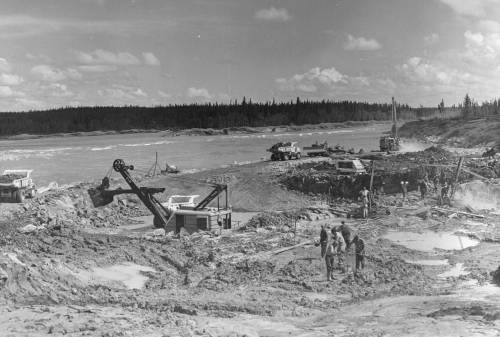
The Federal Court has ordered Ottawa pay Opaskwayak Cree Nation $27 million over damages suffered due to the construction of the Grand Rapids hydro dam in the 1960s.

In a decision dated Sept. 3, Federal Court Justice Sébastien Grammond says the federal government had a fiduciary duty to protect the community from the impacts of the dam.

“When the Crown exercises a discretionary power over an Indigenous interest, it has a fiduciary duty and it must exercise the discretion in the best interests of the Indigenous group,” the ruling said. “Canada breached its fiduciary duty to OCN because it approved the (project) without ensuring that the impacts of the Grand Rapids dam on OCN’s traditional way of life were mitigated or compensated.”

The First Nation took the federal government to court in February over impacts on the community after the dam, located about 145 kilometres southeast of Opaskwayak Cree Nation, was installed on the Saskatchewan River in 1964. The case was heard over 14 days in a judge-alone trial in Winnipeg.

Read
Updated: Yesterday at 12:02 PM CDT

Today’s horoscope

Georgia Nicols 4 minute read Preview

Today’s horoscope

Georgia Nicols 4 minute read Yesterday at 2:00 AM CDT

MOON ALERT: Avoid shopping (except food and gas) or important decisions until noon today. After that, the moon moves from Scorpio into Sagittarius.

ARIES (March 21-April 19)

Your idealism is aroused, perhaps because you feel sympathy for the suffering of someone far away. Because you are proactive by nature, you might do something to help in any way you can. Pay attention to what you say and do. Expect detours.

TAURUS (April 20-May 20)

Read
Yesterday at 2:00 AM CDT

A distant island and a European border

Editorial 4 minute read Preview

A distant island and a European border

Editorial 4 minute read 2:00 AM CDT

It’s at roughly 80°49′35″ North latitude and 66°27′30″West longitude.

Or, you might also know it as being in the Kennedy Channel of the Nares Strait in the high Arctic.

It’s Hans Island, an island that’s split between the Kingdom of Denmark and Canada.

The border was a bone of contention between the two nations for years, but not one that sired threats of annexation. Each simply claimed it as their own.

Read
2:00 AM CDT

Storied photojournalist inducted into Media Roll of Honour

Taylor Allen 5 minute read Preview

Storied photojournalist inducted into Media Roll of Honour

Taylor Allen 5 minute read Tuesday, Sep. 15, 2026

If you’re a longtime hockey fan from around these parts, chances are you’ve seen the photo.

It’s an iconic snapshot of Ulf Nilsson and Anders Hedberg carrying the Avco Cup together on the ice after helping the Winnipeg Jets win the World Hockey Association’s top prize in 1978.

The person behind the camera was the late, great Jon Thordarson, who was inducted into the Manitoba Sportswriters and Sportscasters Association’s Media Roll of Honour on Tuesday inside the Manitoba Sports Hall of Fame.

And while they say every picture tells a story, there’s also a darn good story about what happened after Thordarson hit the shutter button.

Read
Tuesday, Sep. 15, 2026

Winnipeg, police and downtown crime

Editorial 4 minute read Preview

Winnipeg, police and downtown crime

Editorial 4 minute read Yesterday at 2:01 AM CDT

A safer downtown is not much use if people are still afraid to walk there.

That is the uncomfortable message from Winnipeg’s latest police citizen survey, and one city council should take seriously.

Downtown crime has fallen this year, according to the most recent police statistics. Violent crime is down even more. But for most Winnipeggers, the downtown still feels like a place to avoid, particularly after dark.

Only 44 per cent of survey respondents said they feel very or reasonably safe walking alone downtown during the day. At night, that number plunges to just eight per cent. Among women, it is an appalling three per cent, compared with 14 per cent of men.

Read
Yesterday at 2:01 AM CDT

Gas turbine peaker plants are a mistake

Don Scott 7 minute read 2:00 AM CDT

Technology respecting electricity generation, storage and grid management is rapidly advancing and displacing gas-fired peaker plants. New battery storage systems are more efficient and less costly, smooth grid flow and are non-polluting. Texas, California and Australia are replacing gas turbine peaker plants with more effective storage batteries.

Solar and wind energy generation combined with battery storage at both the grid and home/business level is the most efficient way to meet peak demand. Building expensive, outdated, polluting American gas turbines, as Manitoba Hydro is proposing, is not in Manitoba’s interest.

Premier Wab Kinew noted that a final decision to build a new turbine power plant in Brandon has not been made. I hope he’s correct, for if Manitoba Hydro already made the decision and entered binding financial obligations with GE Vernova, the PUB’s role was superfluous.

In 2025/26 Nova Scotia Power installed 3 x 50 MW Lithium-ion grid batteries with the storage capacity of over 600 MWh. Installed by Kitchener/Waterloo based Canadian Solar’s subsidiary e-Storage who have operations around the world, they accomplished this in less than two years from the approval date in June 2024. Two were operational within 18 months, the third in 24. The cost was $237 million. At Nova Scotia’s cost per MW, a 750 MW battery peaker facility would cost Hydro $1.185 billion, just 40 per cent of the proposed $3 billion gas peaker plant.