New music
Reviews of this week's CD releases
Advertisement
Read this article for free:
or
Already have an account? Log in here »
To continue reading, please subscribe:

Digital Subscription
One year of digital access for only $205*
- Enjoy unlimited reading on winnipegfreepress.com
- Read the E-Edition, our digital replica newspaper
- Access News Break, our award-winning app
- Play interactive puzzles
*First annual payment billed as $205.00 + GST for one year. This annual subscription will automatically renew at $233.00 + GST every 52 weeks (10% off the regular annual price of $259.35). Offer available to new and qualified returning subscribers only. Cancel any time.
To continue reading, please subscribe:
Add Free Press access to your Brandon Sun subscription for only an additional
$1 for the first 4 weeks*
- Enjoy unlimited reading on winnipegfreepress.com
- Read the E-Edition, our digital replica newspaper
- Access News Break, our award-winning app
- Play interactive puzzles
*Your next Brandon Sun subscription payment will increase by $1.00 and you will be charged $17.95 plus GST for four weeks. After four weeks, your payment will increase to $24.95 plus GST every four weeks.
Read unlimited articles for free today:
or
Already have an account? Log in here »
Hey there, time traveller!
This article was published 03/09/2020 (2173 days ago), so information in it may no longer be current.
POP / ROCK
Katy Perry
Smile (Capitol Records)
Katy Perry released two very personal projects this summer — the 12-track album Smile and a baby. Only one will really make people grin.
Smile comes three years after the dismal release of Witness, a criminally underappreciated album that flirted with a more hip-hop sound and that’s considered a commercial dud.

Its underperformance — and some heartbreak, we assume — led to what Perry describes in the liner notes as “my own darkest times.”
So Smile is a course-correction back to pure pop, with no featured artists and no political messages. It is Perry’s “I’m so sorry” album, littered with references to a chastened songwriter — “ego check,” “humble pie,” “better version” and “2.0.” Like the cover image, she’s a sad clown.
To be honest, there are only rare moments of levity. Perry just had her first child with actor Orlando Bloom and one of the best lines on the album is, “Look at me now/I’m in full bloom.”
But most of the set is a bit of a bummer. Just the titles alone — Never Really Over, Cry About It Later and Teary Eyes — are about mistakes, regret and lessons learned. This isn’t an album of pop songs as much as a therapy session set to music.
“I’ve gone to sleep/Night after night punching a pillow,” she sings on Resilient. “I know the higher I climb/The harder the wind blows.” She’s even sad when celebrating overcoming couples’ issues in Champagne Problems.
The fireworks have vanished. There’s no eye of the tiger anymore. The depressive mood only lifts with the electric title song, clearly the best of a middling list of tunes. Smile is Perry at her most Perry: “Used to be dull/Now I sparkle,” she sings, finally with some bluster.
There are some serious misfires before the end, like Tucked, a Kylie Minogue rip-off, and Harleys in Hawaii, which is clumsy and too needy, despite a Charlie Puth songwriting assist.
So Smile is something of a housekeeping album. Apologies to everyone — parents, fans, lovers, other women, old lovers. Here’s hoping motherhood gives Perry a real reason to smile. ★★★ out of five
— Mark Kennedy, The Associated Press
ROOTS / COUNTRY
Chuck Prophet
The Land That Time Forgot (Yep Roc)
Chuck Prophet goes history channelling on The Land That Time Forgot, and not just with his roots-rock sound.

“Just last night I fantasized I was in a time machine,” he sings, which may explain songs about the Great Depression, U.S. presidents Lincoln and Nixon, and the New York Dolls’ late guitar hero. There’s even a reference to a stereo. The effective thematic thread serves as an argument for albums as delivery systems even in 2020.
The subject matter pushes Prophet more toward pop. His wise-guy tenor hasn’t changed, and is the perfect match for lines like, “You’re headed for prison, you know.” But retro horns and chiming guitars provide sunny support as Prophet remembers his father on Best Shirt On, and the ode to escape Waving Goodbye features one of several arresting melodies.
The mood becomes melancholy when Prophet sings about Lincoln on Paying My Respects to the Train, while dark humour fills Nixonland. Prophet turns to the current president on the final cut, Get Off the Stage, and concludes Donald Trump is also history. ★★★★ out of five
STREAM THESE: Waving Goodbye, Nixonland
— Steven Wine, The Associated Press
JAZZ
Eric Revis
Slipknots Through a Looking Glass (Pyroclastic Records)
I sometimes wonder how best to review a solidly avant-garde album, recognising that even within the jazz community, the experimental mode is a subset. A man I met in New Zealand refers to this music as “bendy,” while a friend of mine refers to it affectionately as “skronk.” I love the line by Maggie Smith’s character on Downton Abbey, who, when asked how she liked the jazz combo introduced at Downton, replied, “Do you think any of them know what the others are playing?”
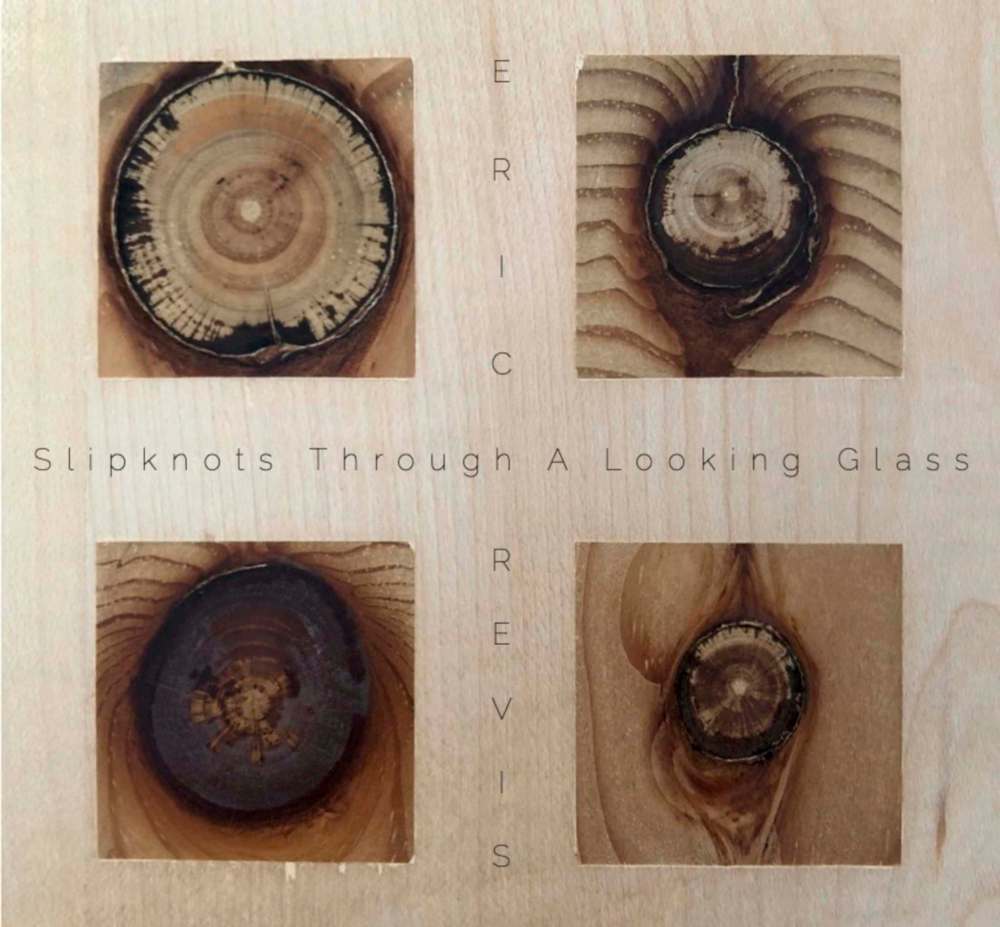
The answer is yes. Within the often unfamiliar structure of edgy music is indeed a plan, not chaos. This album by bassist Eric Revis, set for release on Sept. 11, is a wonderful way to become acquainted with some of the range of avant-garde jazz. Players here are pianist Kris Davis (born in Vancouver, raised in Calgary and a leading figure in the New York jazz scene), Darius Jones and Bill McHenry on saxes and Chad Taylor on drums. Bass and drums offer a powerful rhythmic base to the album that moves from mainly accessible tracks, such as Earl & The Three-Fifths Compromise, to definitely “bendy” tracks such as Shutter or Vimen. The saxes play both conventional riffs as well as wild, blurry passages over the rhythmic foundation. Words like “raw” and “visceral” have been used to describe Revis’s compositions. There is tangible tension in the dissonant energy of many tracks. Yet there is a range and a sense of unity throughout. The lovely ballad When I Become Nothing confirms that Revis’s compositional approach is not one-dimensional.
This music is serious without being pedantic. As with much music in this style, repeated listening offers deeper insight into the musical intentions of the artists. I would encourage folks to give themselves the opportunity for repeated listening to this album. It is worth it. ★★★★ out of five
STREAM THESE: House of Leaves, Earl & The Three-Fifths Compromise
— Keith Black
CLASSICAL
Schubert: Octet
Modigliani Quartet (Mirare)
The Modigliani Quartet performs Schubert’s lovely, lilting Octet in F major, D. 803, which pays homage to Beethoven’s earlier Septet in E-flat major, Op. 20, paradoxically penned during some of the darkest days of the composer’s own illness.
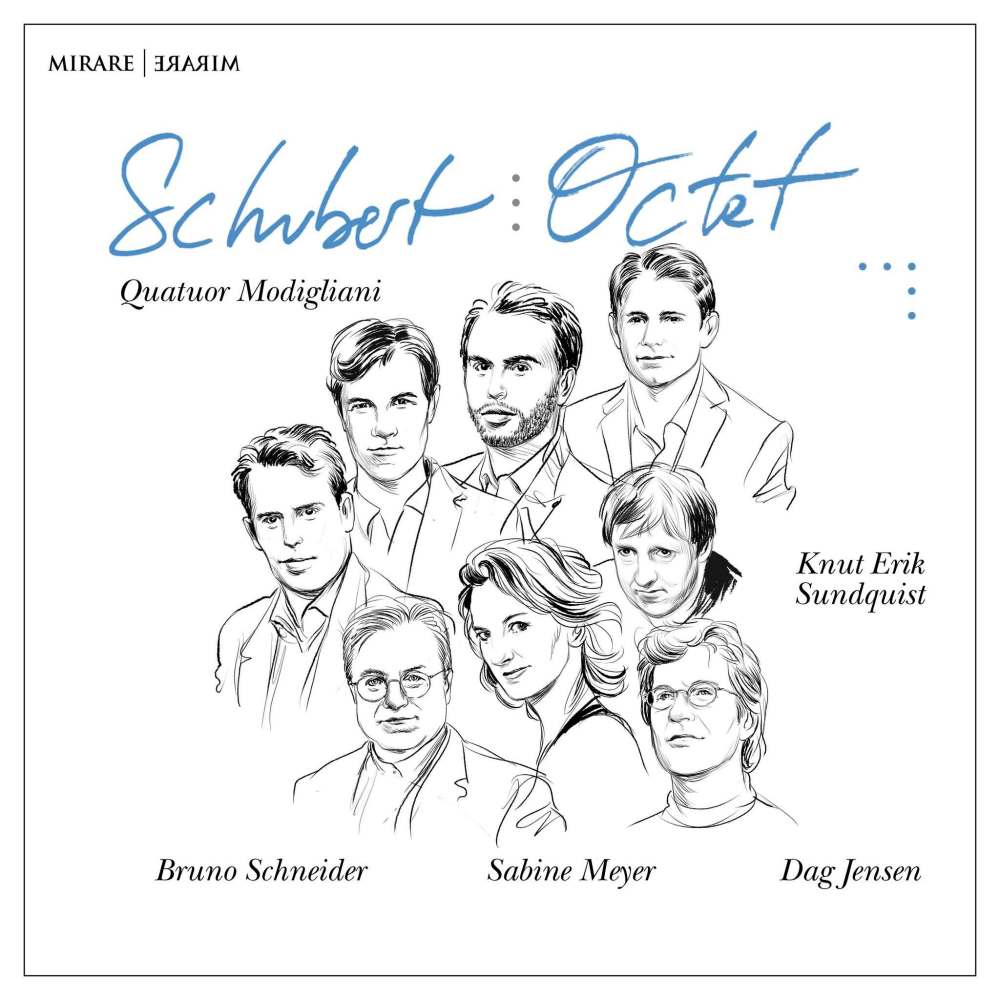
The Paris-based ensemble — originally founded in 2003 by four graduates of the renowned Paris Conservatory — instils clarity and lightness throughout the six-movement work. It’s Schubert’s largest-scaled chamber piece, typically clocking in at just over one hour in length, including its opening section derived from Schubert’s lied (romantic song) Der Wanderer. An unabashedly lyrical Adagio follows, with guest clarinettist Sabine Meyer’s seamless legato phrasing introducing the principal theme, later subsumed and further woven into the overall texture by the quartet’s string players: violinists Amaury Coetaux and Loic Rio, violist Laurent Marfaing and cellist François Kieffer.
The more contrasting Scherzo brings a crisper rhythmic attack, followed by an eloquent reading of the Andante, an appealing set of theme and variations based on the composer’s singspiel Die Freunde von Salamanka. This evoking of earlier, kinder, gentler worlds is one of the strengths of the ensemble, later heard during the subsequent Menuetto, rendered with elegant finesse and careful dynamic shading.
Finally, after a brooding introduction to the closing Andante molto, which ebbs and flows through valleys of greater dramatic intensity, brighter spirits ultimately prevail, with the eight players bringing this satisfying work to life as a cohesive, well-balanced ensemble, as though in thoughtful dialogue about the vagaries of life itself. ★★★★ out of five
STREAM THIS: Schubert’s Octet in F major, D. 803, Adagio
— Holly Harris