Canada’s carbon tax conundrum continues as Supreme Court reserves judgment in cases

Advertisement

Advertise with us

OTTAWA - The Supreme Court of Canada reserved judgment on the national carbon tax Wednesday.

Read this article for free:


or

Already have an account? Log in here »

To continue reading, please subscribe:

Subscribe and receive a limited-edition Free Press branded hat or tote.

Digital Subscription

One year of digital access for only $205*

  • Enjoy unlimited reading on winnipegfreepress.com
  • Read the E-Edition, our digital replica newspaper
  • Access News Break, our award-winning app
  • Play interactive puzzles

*First annual payment billed as $205.00 + GST for one year. This annual subscription will automatically renew at $233.00 + GST every 52 weeks (10% off the regular annual price of $259.35). Offer available to new and qualified returning subscribers only. Cancel any time.

To continue reading, please subscribe:

Add Free Press access to your Brandon Sun subscription for only an additional

$1 for the first 4 weeks*

  • Enjoy unlimited reading on winnipegfreepress.com
  • Read the E-Edition, our digital replica newspaper
  • Access News Break, our award-winning app
  • Play interactive puzzles
Start now

*Your next Brandon Sun subscription payment will increase by $1.00 and you will be charged $17.95 plus GST for four weeks. After four weeks, your payment will increase to $24.95 plus GST every four weeks.

Hey there, time traveller!
This article was published 23/09/2020 (2208 days ago), so information in it may no longer be current.

OTTAWA – The Supreme Court of Canada reserved judgment on the national carbon tax Wednesday.

After two days of hearings and presentations from more than two dozen interested parties, the court adjourned without yet deciding whether the carbon price is constitutional.

A decision could take several more months.
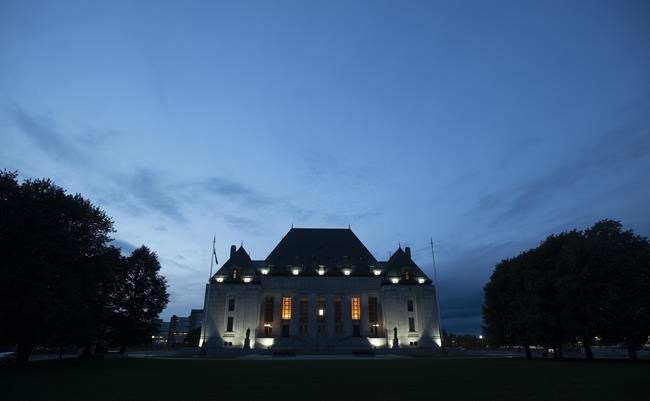
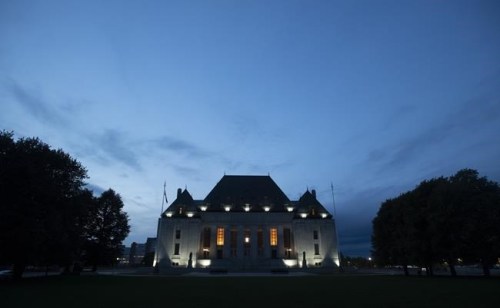
The Supreme Court of Canada is seen at sunset in Ottawa on September 1, 2020. THE CANADIAN PRESS/Adrian Wyld

The hearings brought together three separate appeals related to the federal government’s Greenhouse Gas Pollution Pricing Act, which sets minimum standards for carbon pricing and imposes a federal system on provinces that don’t have an equivalent version of their own.

Appeals courts in Saskatchewan and Ontario ruled in 2019 that the federal carbon tax legislation was constitutional, but in February of this year, the Alberta Court of Appeal said it was not.

Those provinces argued the law leaks into provincial jurisdiction during the first day of hearings Tuesday, while the federal government and British Columbia both defended the law as being in the national interest.

On Wednesday, the court heard from Quebec, New Brunswick and Manitoba, which all argued the law should be struck down. Quebec was one of the first provinces to have a carbon pricing scheme, with its cap-and-trade program, that started in 2013.

Nevertheless, lawyer Jean-Vincent Lacroix told the Supreme Court Quebec strongly feels like Ottawa should not get to decide if provinces have acceptable systems.

Manitoba and New Brunswick both had the federal tax imposed on them in 2019, but that changed for New Brunswick earlier this year after it implemented a provincial program. Premier Blaine Higgs said last fall he would adjust New Brunswick’s policy after the federal election, where a majority of New Brunswick voters cast ballots for parties that backed a carbon tax.

Both provinces argued in court that they should be in control of greenhouse gas policies. Manitoba lawyer Michael Conner said the reason provinces have their own jurisdiction is that there is not a one-size fits all policy that would work, and that carbon pricing will have a different impact depending on where it is applied.

A lengthy list of environmental experts and advocates pleaded with the court to recognize the seriousness of climate change and the necessity of having a national response to it.

Stewart Elgie, speaking in court on behalf of the Ecofiscal Commission, said the court has many times before ruled in Ottawa’s favour when it came to national policies to manage pollution that crosses provincial borders, including water pollution and clean air.

New Brunswick lawyer Rachelle Standing likened it to how provinces had their own ways of trying to address the COVID-19 pandemic, such as New Brunswick’s decision to close its borders to outsiders.

That prompted Justice Rosalie Abella to ask her how she thought New Brunswick could possibly close its borders to greenhouse gas emissions.

Most justices expressed confidence that the science on climate change as a crisis is clear but some expressed concerns the federal law might be too broad.

The carbon tax is a central pillar of the Liberal’s climate change agenda, accounting for as much as 40 per cent of the emissions cuts it has planned for in order to reach its goals under the Paris climate change agreement.

Ontario and Saskatchewan’s appeals were to be heard in March but were delayed by COVID-19, which allowed enough time for the Alberta case to be added to the mix.

This is the first in-person hearing the court has had since COVID-19 shut things down in March. The justices sat in two rows, further apart than usual, with clear shields erected between them.

On Wednesday, several of the interveners presented their arguments by video link.

This report by The Canadian Press was first published Sept. 23, 2020.

Report Error Submit a Tip

More Stories

‘Please excuse us from writing these notes …’

Editorial 4 minute read Preview

‘Please excuse us from writing these notes …’

Editorial 4 minute read Yesterday at 2:01 AM CDT

It’s a common-sense prescription for the health-care system. The only wonder is that it took so long to happen.

Read
Yesterday at 2:01 AM CDT

Is this the season of secession?

David McLaughlin 5 minute read Preview

Is this the season of secession?

David McLaughlin 5 minute read 2:01 AM CDT

Canada has entered its season of secession. Like El Nino, the currents of grievance can blow hot and cold. Today, they are hot. But how hot for how long? The odds of Alberta and now Quebec separating from Canada are not high, but they are never zero.

After a year of waving the flag in a surge of national patriotism to confront Donald Trump’s attacks on Canada — economic and verbal — it is both jarring and frustrating for most Canadians to be reminded of the pervasive and persistent tensions that come with governing our federation.

When we need new national purpose to confront big economic sovereignty and security challenges from outside, that purpose is undermined and diminished by having to confront homegrown grievances.

We’ve seen and seen off two separation referendums in Quebec. Now we have a newly elected separatist party coming to power. In Alberta, voters will soon decide whether the independence road is one they want to travel.

Read
2:01 AM CDT

Phoneless concert a beautiful chance to bask in moment

Jen Zoratti 5 minute read Preview

Phoneless concert a beautiful chance to bask in moment

Jen Zoratti 5 minute read 2:01 AM CDT

Outside the Scotiabank Arena in Toronto, digital billboards flashed fans their singular photo op for the night: “I took this photo before I saw Phoebe Bridgers: The Lost Tour 2026.”

It is, as it is for so many other people, my only documentation of a concert by one of my favourite artists. The American singer-songwriter — who I discovered at the Winnipeg Folk Festival in 2018 — has had a meteoric rise in the past few years, winning three Grammys in 2024 as one third of Boygenius, the indie-rock supergroup rounded out by Lucy Dacus and Julien Baker, and opening for Taylor Swift on select dates of her titanic Eras Tour.

Now, Bridgers is touring in support of Lost Weekend, her third album and first since 2020’s Punisher. It’s a feat of a record, a richly textured meditation on loss and grief, written in the aftermath of the death of her dad, with whom she had a complicated relationship.

So she is in a position to not only play multiple sold-out arena shows, but also insist that those shows be phone-free.

Read
2:01 AM CDT

A Life's Story: Writer built bridges with genuine curiosity, compassion for diversity of religious practices

Janine LeGal 6 minute read Preview

A Life's Story: Writer built bridges with genuine curiosity, compassion for diversity of religious practices

Janine LeGal 6 minute read 6:00 AM CDT

Brenda Suderman knew how to make people feel comfortable. For a journalist, that character trait is a real strength, and it made people trust and appreciate her.

Whether covering musicals, worship spaces, the effects of pandemic shutdowns, death rituals and practices of different traditions, the discovery of the burial of 2,284 infants in unmarked graves, or any other of the countless topics she wrote about in her four- decade career, Suderman did it with genuine interest and care.

Born and raised in Winkler, Suderman grew up on a farm. Much of her childhood was spent in gardens and sugar beet fields.

Baptized at 16, she became a member of the Winkler Bergthaler Mennonite Church. The restrictions against women at the time contributed to planting the seeds of Suderman’s feminist perspective.

Read
6:00 AM CDT

Late philanthropist, family fill Harvest’s Empty Bowls with record-setting $5-M donation

Morgan Modjeski 3 minute read Preview

Late philanthropist, family fill Harvest’s Empty Bowls with record-setting $5-M donation

Morgan Modjeski 3 minute read Updated: Yesterday at 11:54 PM CDT

It was a record-breaking night for Harvest Manitoba made possible by a genuine Winnipeg hero and his family.

The organization’s annual Empty Bowls Celebrity Auction Dinner on Thursday raised $6.5 million to support Manitobans facing hunger and food insecurity.

And it was a $5-million legacy donation from late city philanthropist Doug Harvey and his family that will see the event go down in the history books as the largest gala fundraising total ever recorded in Manitoba.

“There was literally nothing that lit my dad up more than contributing himself, but even more so, inspiring others to give,” his daughter Lauren Harvey said Friday.

Read
Updated: Yesterday at 11:54 PM CDT

Towing company hands stolen car back, but not to owner

By Matthew Frank 4 minute read Preview

Towing company hands stolen car back, but not to owner

By Matthew Frank 4 minute read Yesterday at 4:29 PM CDT

A Manitoba man says he is dumbfounded after his car was stolen, impounded by a Winnipeg towing company and given back — to someone that wasn’t him.

Cody Lamb lives in the western Manitoba community of Douglas, about 18 kilometres east of Brandon, but spends weeks away from home working on oil rigs in Alberta.

The 24-year-old says on Sept. 11, while away for work, he heard from his girlfriend who told him his car wasn’t in their driveway. Lamb reported the car stolen to Brandon RCMP the same day.

After filing the report, he heard from Steinbach RCMP on Oct. 1 that his car was recovered that day in the community of Mitchell, roughly five km west of Steinbach.

Read
Yesterday at 4:29 PM CDT