

Temporary distance learning not an option for all

Advertisement
Read this article for free:
or
Already have an account? Log in here »
To continue reading, please subscribe:
Monthly Digital Subscription
$1 per week for 24 weeks*
- Enjoy unlimited reading on winnipegfreepress.com
- Read the E-Edition, our digital replica newspaper
- Access News Break, our award-winning app
- Play interactive puzzles
*Billed as $4.00 plus GST every four weeks. After 24 weeks, price increases to the regular rate of $19.95 plus GST every four weeks. Offer available to new and qualified returning subscribers only. Cancel any time.
Monthly Digital Subscription
$4.99/week*
- Enjoy unlimited reading on winnipegfreepress.com
- Read the E-Edition, our digital replica newspaper
- Access News Break, our award-winning app
- Play interactive puzzles
*Billed as $19.95 plus GST every four weeks. Cancel any time.
To continue reading, please subscribe:
Add Free Press access to your Brandon Sun subscription for only an additional
$1 for the first 4 weeks*
*Your next subscription payment will increase by $1.00 and you will be charged $16.99 plus GST for four weeks. After four weeks, your payment will increase to $23.99 plus GST every four weeks.
Read unlimited articles for free today:
or
Already have an account? Log in here »
Hey there, time traveller!
This article was published 12/11/2020 (1988 days ago), so information in it may no longer be current.
For a growing number of Manitoba families, remote learning becomes increasingly appealing — be it COVID-19 exposures in schools, the high number of daily cases announced or patients hospitalized because of the virus.
But not all students have the option.
“I can’t punish my kids any longer,” Jason Keenan, a father of three, said during a phone call Thursday. “They have to be getting some type of education, so today’s the first day they’ve gone back to school in almost two weeks.”
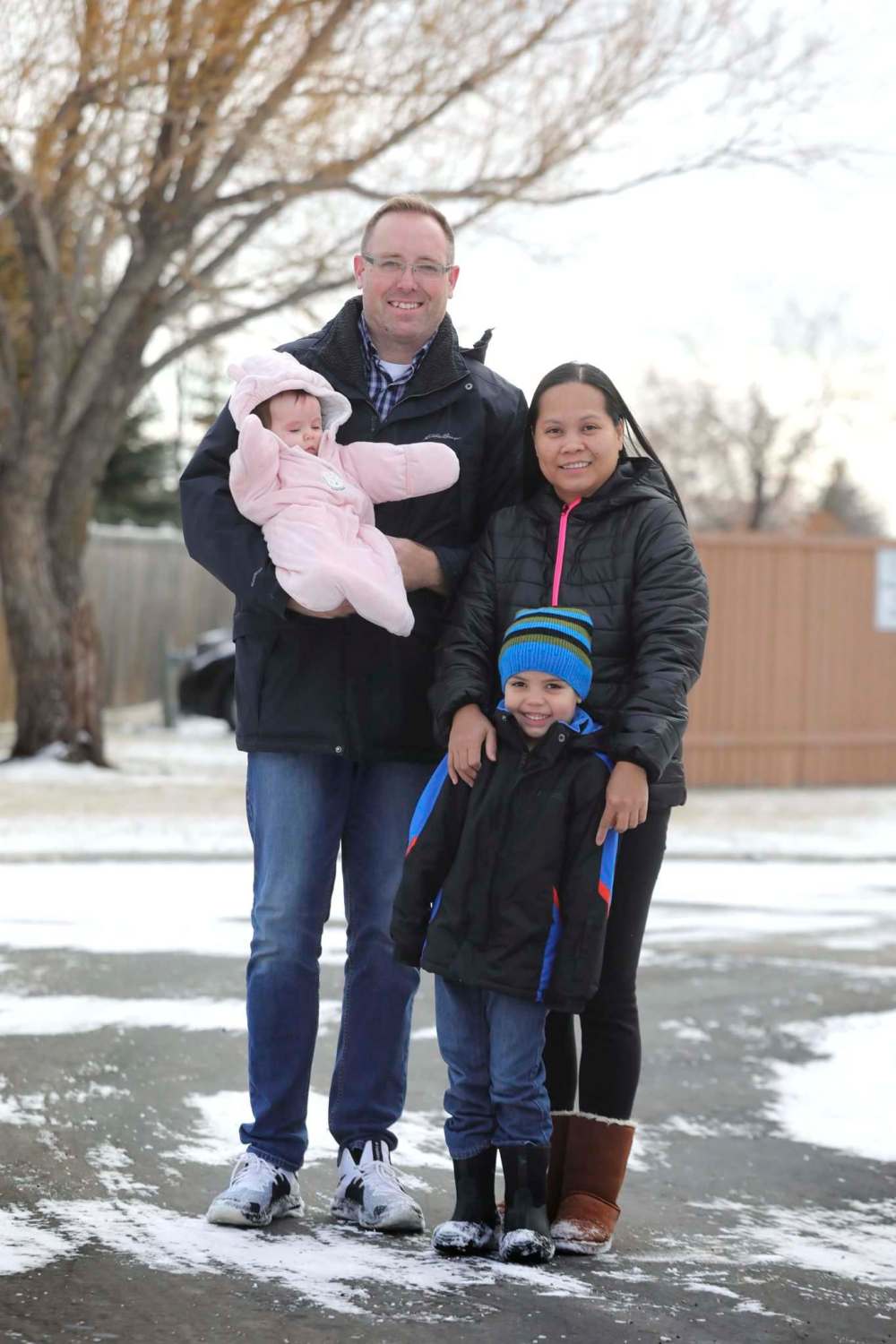
The Keenans’ choices are limited, given the fact the Winnipeg family doesn’t have access to reliable internet, a computer, or the option to learn at home with packages from Sister MacNamara School.
While some schools have temporarily loosened criteria for remote learning during the restricted (code orange) phase, many that can accommodate two metres of distance between staff and students in their buildings have not.
(Manitoba has gone provincewide code red, but public schools remain at orange.)
That’s a blessing for Keenan’s daughters, who are eager to see their friends and teachers during the week. For him, it’s anxiety-inducing.
Keenan said he can’t help but worry his second grader’s classmates aren’t required to wear face masks despite spiking COVID-19 numbers: “Isn’t that like having a peeing section in the pool?”
Upwards of 6,400 students — of the more than 100,000 students in K-12 public schools in Winnipeg — have signed up for temporary distance learning in recent weeks. Broken down by division, there are approximately: 2,600 students in River-East Transcona; 2,000 in Winnipeg; 1,340 in Pembina Trails; 360 in Seven Oaks; and 188 in metro schools in the Division scolaire franco-manitobaine.
Students who have been granted medical exemptions for home learning this year aren’t included in the counts, neither are statistics from St. James-Assiniboia, which did not provide details before deadline.
In Louis Riel, administrators are not making the option available because of the two metres mapped out in their buildings. In late October, the superintendent told families he understood there was demand for it, but asking classroom teachers to do both remote and in-class instruction was “unrealistic and unsustainable.”
City schools vary, some with classroom teachers that don’t have support for remote delivery; in other cases, staff do.
Corazon Price counts herself lucky: her five-year-old son was eligible for remote learning in Pembina Trails.
Fifteen minutes of livestream instruction from his classroom teacher, accompanied by his peers, isn’t ideal, she said, but the adjustment has been easier than it was in the springtime, when he suddenly switched to remote pre-school.
“We have to keep my son (home) to keep safe, for his health,” Price said. “The numbers are growing every single day, that makes me scared.”
Earlier this week, the province announced it was hiring 100 teachers for the forthcoming launch of its remote learning support centre, which is aimed at providing distance learners and teachers with additional curriculum and assessment resources, as well as tech support.
The $10-million announcement was met with disappointment from classroom teachers who are currently creating lesson plans for both in-class and remote students.
One elementary teacher, who spoke to the Free Press on the condition of anonymity, said she would have much preferred the province takeover remote instruction and provide support for schools to hire additional staff.

“I am very lucky that I only have one remote learner, but even one is too much,” she said.
During a typical school day, the Winnipeg teacher assesses her eight- and nine-year-olds in two physical classrooms — which are down the hall and around a corner from each other — and provides remote instruction to one student after the school day.
She said some days she cannot get coverage to provide supervision to all of her in-class students so there might be an hour period where she is supervising half her class via a screen.
maggie.macintosh@freepress.mb.ca
Twitter: @macintoshmaggie
Maggie Macintosh
Education reporter
Maggie Macintosh reports on education for the Free Press. Originally from Hamilton, Ont., she first reported for the Free Press in 2017. Read more about Maggie.
Funding for the Free Press education reporter comes from the Government of Canada through the Local Journalism Initiative.
Every piece of reporting Maggie produces is reviewed by an editing team before it is posted online or published in print — part of the Free Press‘s tradition, since 1872, of producing reliable independent journalism. Read more about Free Press’s history and mandate, and learn how our newsroom operates.
Our newsroom depends on a growing audience of readers to power our journalism. If you are not a paid reader, please consider becoming a subscriber.
Our newsroom depends on its audience of readers to power our journalism. Thank you for your support.
Approximate temporary remote learners
Winnipeg School Division: 2,000*
River-East Transcona School Division: 2,600
Louis Riel School Division: 0*
Pembina Trails School Division: 1,340
Seven Oaks School Division: 360
Division scolaire franco-manitobaine: 188
St. James Assiniboia School Division: approximate figures were not provided before deadline
* — Remote learning has only been made available to students enrolled in schools that cannot accomodate physical distancing of two metres between staff and students in these divisions
Maggie Macintosh
Education reporter
Maggie Macintosh reports on education for the Free Press. Originally from Hamilton, Ont., she first reported for the Free Press in 2017. Read more about Maggie.
Funding for the Free Press education reporter comes from the Government of Canada through the Local Journalism Initiative.
Every piece of reporting Maggie produces is reviewed by an editing team before it is posted online or published in print — part of the Free Press‘s tradition, since 1872, of producing reliable independent journalism. Read more about Free Press’s history and mandate, and learn how our newsroom operates.
Our newsroom depends on a growing audience of readers to power our journalism. If you are not a paid reader, please consider becoming a subscriber.
Our newsroom depends on its audience of readers to power our journalism. Thank you for your support.
Advertisement Advertise With Us
Advertisement Advertise With Us