

Anthropology class delves into coping amidst COVID-19 pandemic

Advertisement
Read this article for free:
or
Already have an account? Log in here »
To continue reading, please subscribe:
Digital Subscription
One year of digital access for only $1.44 a week*
- Enjoy unlimited reading on winnipegfreepress.com
- Read the E-Edition, our digital replica newspaper
- Access News Break, our award-winning app
- Play interactive puzzles
*Billed as $5.77 plus GST every four weeks. After 52 weeks, price increases to the regular rate of $19.95 plus GST every four weeks. Offer available to new and qualified returning subscribers only. Cancel any time.
To continue reading, please subscribe:
Add Free Press access to your Brandon Sun subscription for only an additional
$1 for the first 4 weeks*
- Enjoy unlimited reading on winnipegfreepress.com
- Read the E-Edition, our digital replica newspaper
- Access News Break, our award-winning app
- Play interactive puzzles
*Your next Brandon Sun subscription payment will increase by $1.00 and you will be charged $17.95 plus GST for four weeks. After four weeks, your payment will increase to $24.95 plus GST every four weeks.
Read unlimited articles for free today:
or
Already have an account? Log in here »
Hey there, time traveller!
This article was published 16/11/2020 (2035 days ago), so information in it may no longer be current.
For Frankie Parker, self-care looks like a smudging bowl.
It comes in the form of walks, homemade baked goods, and video calls with family for Shelley Smith.
As for Lucia Cuyun? Cuddling with her cat has proven to be a quarantine comfort.
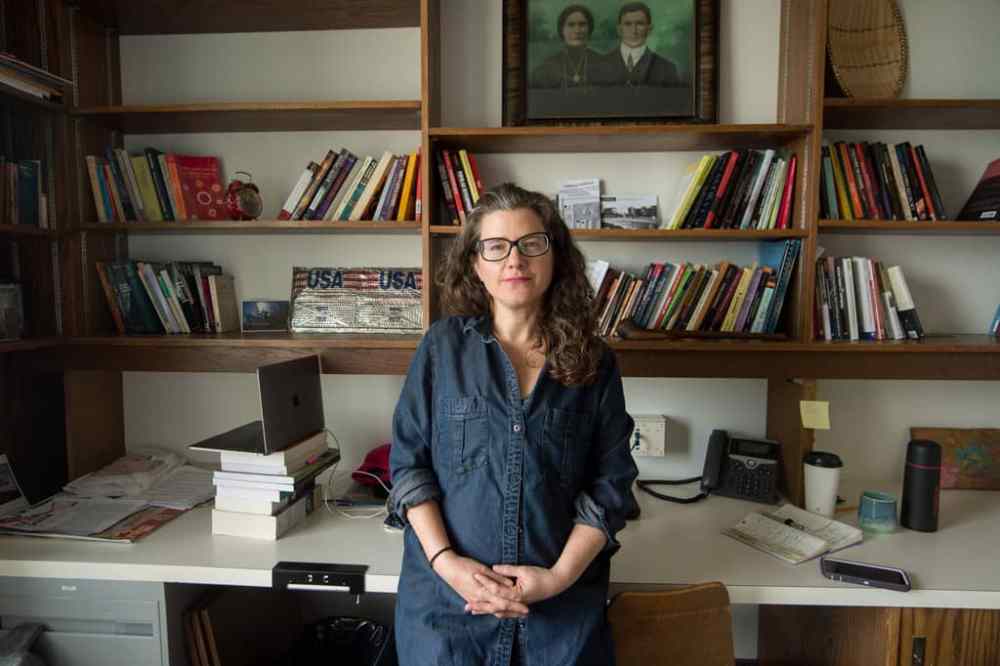
These frank replies were among those students at the University of Manitoba shared Monday, when asked how they have been coping amid the COVID-19 pandemic.
“From my understanding, this is what I think group therapy would look like,” said Cuyun, after an intimate video-conference class with her peers in the U of M’s new Anthropology Now: COVID-19 course.
Since the start of the fall semester, students in the course have been reflecting on how the novel coronavirus has — and continues to — change their lives.
The class of fewer than 20 students has studied pandemics of the past, read about anti-lockdown protests, and undertaken research to find out how others have been coping during the crisis.
“Students learn best when they’re engaged in the material,” said Lara Rosenoff Gauvin, an assistant professor at U of M.
Rosenoff Gauvin compiled the syllabus for ANTH 7900, also known as CRN 20443, in the hopes of encouraging her students to use different anthropological insights to examine their present.
Reflecting on the course so far, she said the remote learning set-up has, in some ways, enriched the course because students are living very different realities — and yet, they’re still able to connect from wherever they are in the world.
The key topics on the syllabus include social media, memory, protest, economics, and mental health, this week’s theme.
The students were asked to have three conversations about mental health with people of different age groups before Monday’s 2 1/2-hour class on Cisco Webex. (The class later pivoted to Zoom because of technological glitches.)
Some shared the pandemic has made talking about mental health easier with loved ones, since so many others are struggling with isolation and hard feelings. Others said the stigma of mental illness in social circles remains ever-present and painful.
There was talk of grief and a loved one’s attempted suicide. As well, how children in their lives have been processing the pandemic.
Only 10 weeks ago, the students were strangers with unique resumés — among the group: new and experienced anthropologists, health-care professionals, and an academic with a career in public health.
Taylor Neustaeter said the course content has helped her feel “less scared” about the unprecedented situation she’s living in and the endless stream of information about COVID-19, conspiracy theories included, on social media. It’s also brought about understanding, the student said, adding she has learned people are more likely to believe rumours during periods of uncertainty.
“(It’s) an opportunity to engage with COVID on my terms,” said Nicholas Catalano, echoing his classmate’s sentiments about the overwhelming crisis.
It’s one of few classes Catalano said he has enjoyed this term, adding it’s the only class during which he isn’t staring at hundreds of blank videoscreen icons rather than faces.
Rosenoff Gauvin said she picked mental health as the Week 10 theme because typically, the Western perspective of health is very individualistic. COVID-19, however, has made obvious “our connectedness with health,” she said, citing the challenge of social isolation.

“People talk about, ‘the new normal’ and what that means, but it is just finding normalcy within crisis,” added Rosenoff Gauvin, whose research background is in how northern Ugandans moved forward during a war.
Ugandans displaced by the war lived in camps in which they carried on by sharing food rations and making toys out of scraps, the cultural anthropologist said.
“Life doesn’t stop,” she said. “People still have to find a way.”
maggie.macintosh@freepress.mb.ca
Twitter: @macintoshmaggie
Maggie Macintosh
Education reporter
Maggie Macintosh reports on education for the Free Press. Originally from Hamilton, Ont., she first reported for the Free Press in 2017. Read more about Maggie.
Funding for the Free Press education reporter comes from the Government of Canada through the Local Journalism Initiative.
Every piece of reporting Maggie produces is reviewed by an editing team before it is posted online or published in print — part of the Free Press‘s tradition, since 1872, of producing reliable independent journalism. Read more about Free Press’s history and mandate, and learn how our newsroom operates.
Our newsroom depends on a growing audience of readers to power our journalism. If you are not a paid reader, please consider becoming a subscriber.
Our newsroom depends on its audience of readers to power our journalism. Thank you for your support.
Maggie Macintosh
Education reporter
Maggie Macintosh reports on education for the Free Press. Originally from Hamilton, Ont., she first reported for the Free Press in 2017. Read more about Maggie.
Funding for the Free Press education reporter comes from the Government of Canada through the Local Journalism Initiative.
Every piece of reporting Maggie produces is reviewed by an editing team before it is posted online or published in print — part of the Free Press‘s tradition, since 1872, of producing reliable independent journalism. Read more about Free Press’s history and mandate, and learn how our newsroom operates.
Our newsroom depends on a growing audience of readers to power our journalism. If you are not a paid reader, please consider becoming a subscriber.
Our newsroom depends on its audience of readers to power our journalism. Thank you for your support.
Advertisement Advertise With Us
Advertisement Advertise With Us
History
Updated on Monday, November 16, 2020 9:54 PM CST: Adds photo