Growing number of Canadians plan to get vaccinated for COVID-19

Advertisement

Advertise with us

OTTAWA - A new poll suggests the proportion of Canadians planning to get vaccinated for COVID-19 is on the rise after encouraging initial results from Pfizer's vaccine trial.

Read this article for free:


or

Already have an account? Log in here »

To continue reading, please subscribe:

Subscribe and receive a limited-edition Free Press branded hat or tote.

Digital Subscription

One year of digital access for only $205*

  • Enjoy unlimited reading on winnipegfreepress.com
  • Read the E-Edition, our digital replica newspaper
  • Access News Break, our award-winning app
  • Play interactive puzzles

*First annual payment billed as $205.00 + GST for one year. This annual subscription will automatically renew at $233.00 + GST every 52 weeks (10% off the regular annual price of $259.35). Offer available to new and qualified returning subscribers only. Cancel any time.

To continue reading, please subscribe:

Add Free Press access to your Brandon Sun subscription for only an additional

$1 for the first 4 weeks*

  • Enjoy unlimited reading on winnipegfreepress.com
  • Read the E-Edition, our digital replica newspaper
  • Access News Break, our award-winning app
  • Play interactive puzzles
Start now

*Your next Brandon Sun subscription payment will increase by $1.00 and you will be charged $17.95 plus GST for four weeks. After four weeks, your payment will increase to $24.95 plus GST every four weeks.

Hey there, time traveller!
This article was published 17/11/2020 (2129 days ago), so information in it may no longer be current.

OTTAWA – A new poll suggests the proportion of Canadians planning to get vaccinated for COVID-19 is on the rise after encouraging initial results from Pfizer’s vaccine trial.

Sixty-nine per cent of respondents said they plan to get inoculated against the novel coronavirus once Health Canada approves a vaccine that is broadly available and free, according to a survey by Léger and the Association for Canadian Studies.

The number is a jump from the 63 per cent who said they would take up such an offer one month ago, and a return to levels of vaccine enthusiasm reported in a similar poll in July.
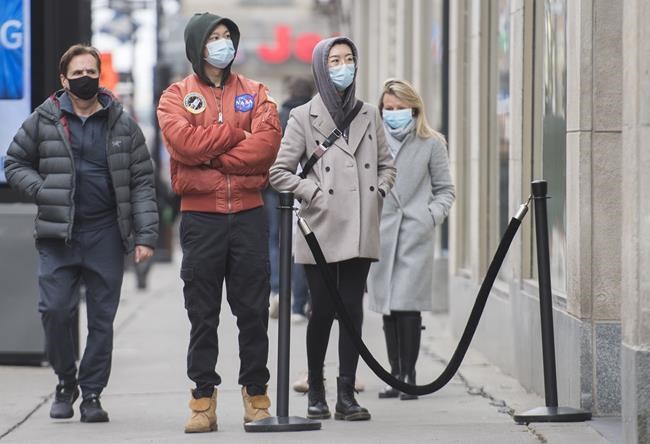
People wear face masks as they wait to enter a store in Montreal, Saturday, November 14, 2020, as the COVID-19 pandemic continues in Canada and around the world. THE CANADIAN PRESS/Graham Hughes

Nonetheless, 22 per cent of respondents said they did not intend to receive doses of the Pfizer vaccine in particular if it were ready in the spring, despite early results that suggest a 90 per cent efficacy rate. Another 22 per cent said they did not know.

Léger executive vice-president Christian Bourque attributed the apprehension to lack of familiarity with the pharmaceutical giant rather than a wave of anti-vaccination fever.

“It worries me that if the vaccine or vaccines were available, we might have 20 per cent of Canadians who would reject it,” he said in an interview.

“I think the public authorities will need a concerted communications effort to convince Canadians to jump on the bandwagon.”

Nonetheless, only nine per cent of respondents said they think vaccines are dangerous and should not be taken or given. Meanwhile, 79 per cent said they do not hold such a belief.

The proportion of Canadians who expect anti-pandemic measures to remain in place even after a vaccine becomes widely available is also notably high, Bourque said.

Nearly two-thirds said they anticipated that requirements such as physical distancing, limited social gatherings and face masks in public spaces would continue after vaccination becomes widespread, while one in four weren’t sure.

“It’s not like it’s going to be that great night where everybody parties all night long. People will still want themselves and their neighbours to be disciplined about this,” Bourque said.

The proportion of Canadians opposed to mandatory vaccination remains higher than earlier this year, with only 42 per cent in favour — roughly in line with figures from last month but down from the nearly 60 per cent who supported the idea in May.

Conducted Nov. 13 to 15, the online poll surveyed 1,522 Canadians. It cannot be assigned a margin of error because internet-based polls are not considered random samples.

This report by The Canadian Press was first published Nov. 17, 2020.

Report Error Submit a Tip

More Stories

BRANDON — A 29-year-old man has been sentenced to 18 years in prison for sexually abusing and impregnating a 14-year-old girl in 2024.

“Sexual abuse of a child is inherently a grave violation of the child’s bodily integrity, dignity, and security, and in this case, the consequences were compounded by the victim’s pregnancy and the need to undergo a termination,” Brandon provincial court Judge Patrick Sullivan said on Tuesday.

The accused had pleaded guilty to two counts of sexual interference and two counts of breaching a court order banning him from contacting anyone under 18.

A publication ban prohibits the publication of information that could identify the 14-year-old, who is from a western Manitoba First Nation, and two other minors with whom he communicated.

Winnipeg, economic diversity and risks from AI

Al Vigier 5 minute read 2:00 AM CDT

I run a company that builds software to read documents and fill out forms. When I look at Winnipeg, I see a lot of potential customers. I also think the city should be asking some fairly uncomfortable questions about what companies like mine are selling.

Winnipeg has spent decades building an economy that does not depend on any one industry. Insurance, agriculture, transportation, aerospace, manufacturing, government, health care. That mix has served it well. A bad year for one employer does not necessarily become a bad year for the whole city.

But there is another way to look at that economy: what people actually do when they arrive at work.

Great-West Lifeco, Wawanesa, IGM Financial and Manitoba Public Insurance are all headquartered in Winnipeg. There are provincial departments, Shared Health and businesses handling the freight moving through CentrePort. Their purposes are different. A surprising amount of their paperwork follows the same routine.

City wants short-term rental unit property owners to report all emergency-service responses

Joyanne Pursaga 5 minute read Preview

City wants short-term rental unit property owners to report all emergency-service responses

Joyanne Pursaga 5 minute read Yesterday at 6:16 PM CDT

New rules could require the owners of short-term rental units, such as Airbnbs and VRBOs, to tell the city every time an emergency responder is called to their properties.

Read
Yesterday at 6:16 PM CDT

Federal Court awards OCN $27M, 62 years after construction of hydro dam

Nicole Buffie 5 minute read Preview

Federal Court awards OCN $27M, 62 years after construction of hydro dam

Nicole Buffie 5 minute read Yesterday at 6:34 PM CDT

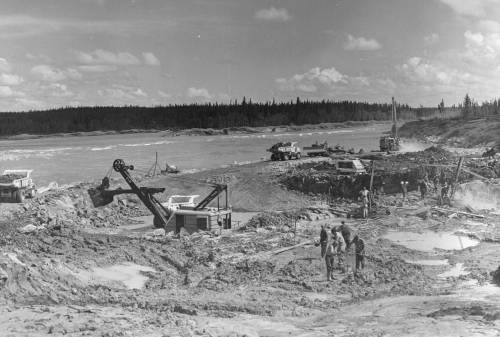
The Federal Court has ordered Ottawa pay Opaskwayak Cree Nation $27 million over damages suffered due to the construction of the Grand Rapids hydro dam in the 1960s.

In a decision dated Sept. 3, Federal Court Justice Sébastien Grammond says the federal government had a fiduciary duty to protect the community from the impacts of the dam.

“When the Crown exercises a discretionary power over an Indigenous interest, it has a fiduciary duty and it must exercise the discretion in the best interests of the Indigenous group,” the ruling said. “Canada breached its fiduciary duty to OCN because it approved the (project) without ensuring that the impacts of the Grand Rapids dam on OCN’s traditional way of life were mitigated or compensated.”

The First Nation took the federal government to court in February over impacts on the community after the dam, located about 145 kilometres southeast of Opaskwayak Cree Nation, was installed on the Saskatchewan River in 1964. The case was heard over 14 days in a judge-alone trial in Winnipeg.

Read
Yesterday at 6:34 PM CDT

Police cracking down on gangs, organized crime in bars and lounges

Nicole Buffie 4 minute read Preview

Police cracking down on gangs, organized crime in bars and lounges

Nicole Buffie 4 minute read Updated: Yesterday at 6:56 PM CDT

Patrons can expect to see more police officers in and around bars and lounges in the coming months as the Winnipeg Police Service plans to crack down on gangs and organized crime.

Read
Updated: Yesterday at 6:56 PM CDT

Manitoba’s police watchdog is investigating after a man was found dead eight days after officers were unable to locate him following a 911 call from Canupawakpa Dakota First Nation in 2024.

The Independent Investigation Unit said the call came in just after midnight on Nov. 22, 2024, with a disturbance audible in the background. GPS coordinates traced it to the First Nation, 305 kilometres west of Winnipeg, prompting Manitoba First Nations Police Service officers to search the area.

Officers could not find the caller, whom they believed to be a local man. Eight days later, on Nov. 30, MFNPS conducted another search and found a man dead.

The death was initially referred to RCMP Major Crime Services as suspicious. The RCMP later returned the case to MFNPS for possible referral to the IIU because of concerns about the eight-day delay in locating the man. MFNPS notified the IIU on Sept. 15, 2026 — nearly two years after the incident.