History of alphabetization riveting to the letter
Advertisement
Read this article for free:
or
Already have an account? Log in here »
To continue reading, please subscribe:

Digital Subscription
One year of digital access for only $205*
- Enjoy unlimited reading on winnipegfreepress.com
- Read the E-Edition, our digital replica newspaper
- Access News Break, our award-winning app
- Play interactive puzzles
*First annual payment billed as $205.00 + GST for one year. This annual subscription will automatically renew at $233.00 + GST every 52 weeks (10% off the regular annual price of $259.35). Offer available to new and qualified returning subscribers only. Cancel any time.
To continue reading, please subscribe:
Add Free Press access to your Brandon Sun subscription for only an additional
$1 for the first 4 weeks*
- Enjoy unlimited reading on winnipegfreepress.com
- Read the E-Edition, our digital replica newspaper
- Access News Break, our award-winning app
- Play interactive puzzles
*Your next Brandon Sun subscription payment will increase by $1.00 and you will be charged $17.95 plus GST for four weeks. After four weeks, your payment will increase to $24.95 plus GST every four weeks.
Read unlimited articles for free today:
or
Already have an account? Log in here »
Hey there, time traveller!
This article was published 28/11/2020 (2130 days ago), so information in it may no longer be current.
Even celebrated fictional geniuses need filing systems. Take Sherlock Holmes. The compiler of a vast collection of newspaper clippings and notes, Holmes can locate useful information with ease. He can, for example, quickly look up an American adventuress, finding her biography “sandwiched” between those of a rabbi and the author of “a monograph upon the deep-sea fishes.”
Holmes’ collection is an effective tool, easy enough for even Watson to use, because the knowledge it contains is organized alphabetically. Threatened by a criminal mastermind named Moriarty? See the file marked M.
Holmes’ use of alphabetical order to organize his files might seem like an obvious choice. Accustomed to dictionaries, encyclopedias and directories, all of them organized from A to Z, we tend to take alphabetization for granted.
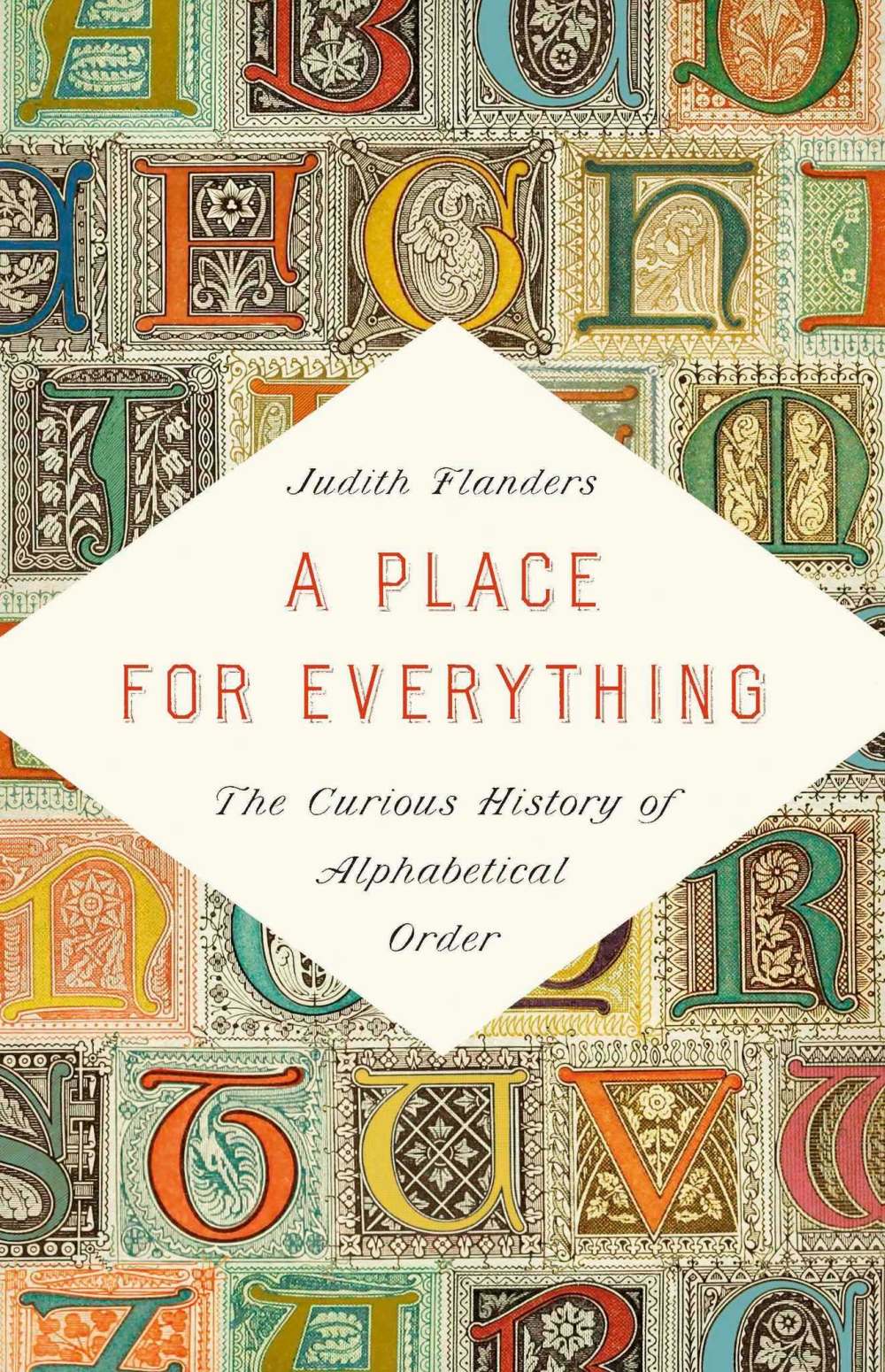
But as Judith Flanders shows in her new book, alphabetization was, for many centuries, anything but standard practice. It was instead a method overlooked by generations of scholars and scientists — this despite widespread agreement in the Western world regarding the ordering of the letters of the alphabet.
Flanders, the British-born, Canadian-educated author of seven critically-acclaimed history books is also, notably, the author of the Sam Clair mystery series. In A Place for Everything, her eighth non-fiction title, she explores the historical developments that fostered the adoption of alphabetical order. Among them are the tidal wave of text that followed the invention of the printing press, the proliferation of libraries and the piles of paperwork generated by twentieth-century offices.
Flanders explains that alphabetization’s earliest adopters were troubled by how this method differed from established ways of understanding and describing the world. Alphabetical order places a baron before a king; “Vice” comes before “Virtue” in a dictionary. Would the adoption of alphabetical order imply that a baron has precedence over a king or that vice is more valued than virtue?
Features of alphabetization that gave medieval scholars pause are now embraced. As Flanders explains, alphabetization is “as close as we can get to a universally accessible, non-elitist form of sorting.” This is a key insight of Flanders’ exploration. While the idea of taking attendance using a list organized by students’ test scores, highest to lowest, would trouble many contemporary observers, the neutrality of alphabetization, of starting with A and ending with Z, is widely valued.
Though Flanders’ book is organized chronologically, not alphabetically, A Place for Everything has an encyclopedic feel. It takes on topics as diverse as, on the one hand, the storage of ancient Greek scrolls and, on the other, the literacy skills of nineteenth-century Danish army recruits. Flanders, a gifted analyst of daily life, is especially good at getting readers to think in new ways about everyday objects. Roll-top desks, telephone directories, the three-ring binders on many students’ back-to-school shopping lists: Flanders reveals how these inventions were shaped by alphabetization.
As the slow death of the telephone directory suggests, Flanders has chosen an interesting moment in which to think about the history of information management. Digital culture makes us far less reliant than previous generations on tools like indexes. We don’t need to locate the “F” section of Wikipedia to learn about filing cabinets or to look up facts about Flanders’ writing career.

But as Flanders shows, traces of long-lost practices related to alphabetization continue to shape our lives. The use of “file” to describe a chunk of digital data is, of course, a relatively recent application of a term traditionally used to describe both a set of papers and the folder in which they are stored. Flanders asks her readers to go far back in time and to consider the term’s Latin origin — the word filum, meaning string. She explains that sixteenth-century bureaucrats used string to thread documents together, arranging and storing their paper records like beads on a necklace.
Details like this one suggest the surprising charm of the history of alphabetical order, a history few of us have taken time to consider and that Flanders brings compellingly to life.
Vanessa Warne teaches Victorian literature and culture at the University of Manitoba.