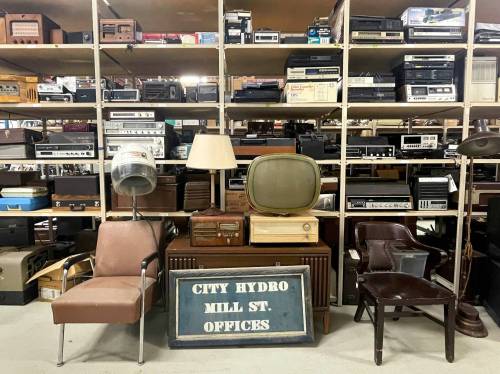
Collection has juice Museum warehouse holds the history of electrical power in Manitoba
Read this article for free:
or
Already have an account? Log in here »
To continue reading, please subscribe:

Digital Subscription
One year of digital access for only $205*
- Enjoy unlimited reading on winnipegfreepress.com
- Read the E-Edition, our digital replica newspaper
- Access News Break, our award-winning app
- Play interactive puzzles
*First annual payment billed as $205.00 + GST for one year. This annual subscription will automatically renew at $233.00 + GST every 52 weeks (10% off the regular annual price of $259.35). Offer available to new and qualified returning subscribers only. Cancel any time.
To continue reading, please subscribe:
Add Free Press access to your Brandon Sun subscription for only an additional
$1 for the first 4 weeks*
- Enjoy unlimited reading on winnipegfreepress.com
- Read the E-Edition, our digital replica newspaper
- Access News Break, our award-winning app
- Play interactive puzzles
*Your next Brandon Sun subscription payment will increase by $1.00 and you will be charged $17.95 plus GST for four weeks. After four weeks, your payment will increase to $24.95 plus GST every four weeks.
Read unlimited articles for free today:
or
Already have an account? Log in here »
The work it takes to bring any endeavour to light is rarely, if ever, seen by those who look upon the final result — be that a creative work such as a feature film or a museum display.
Since 2001, the Manitoba Electrical Museum and Education Centre, located at 680 Harrow St., has provided thousands of visitors with a century’s worth of history on electrical power in Manitoba.
“Everyone who comes in here is amazed at how much we can pack into such a small space,” says executive director Beryth Strong, who took on the role last November.
RUTH BONNEVILLE / FREE PRESS Dave White, a longtime volunteer curator of the Manitoba Electrical Museum, worked for Winnipeg Hydro and Manitoba Hydro for a combined total of 35 years.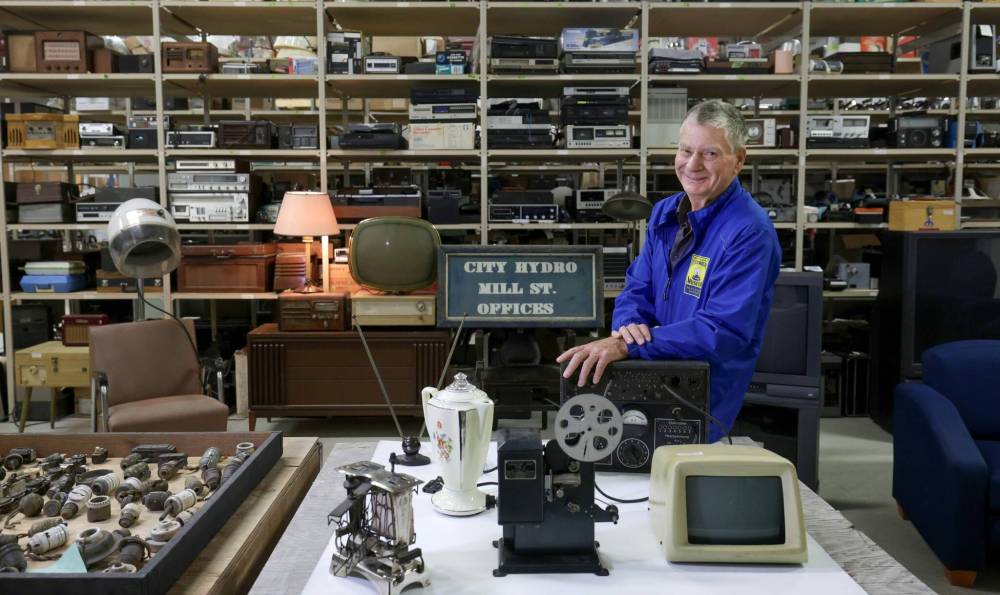
The museum is open to the public Tuesday to Saturday from 1 to 4 p.m. and hosts large groups of students throughout the school year. While the museum itself boasts numerous displays featuring approximately 220 electrical artifacts, including household appliances, computers, telephones, technical gear and much more, along with a collection of nearly 20,000 photos documenting major electrical construction projects, its warehouse just south of McGillivray Boulevard houses thousands more unique items.
RUTH BONNEVILLE / FREE PRESS An old Hydro workstation at the Manitoba Electrical Museum and Education Centre. 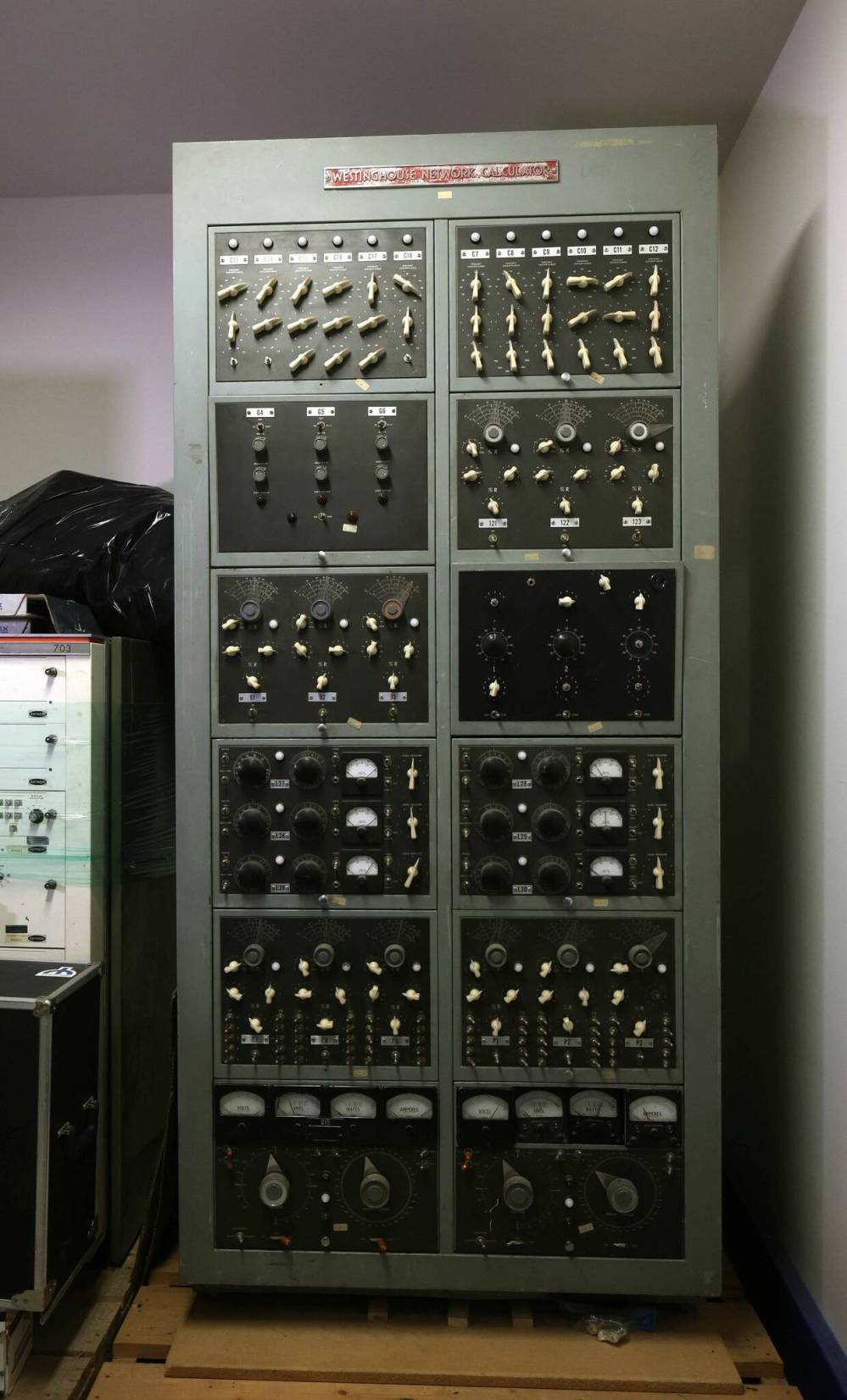
“We have between 4,000 and 5,000,” says Wayne DeJaegher, a retired Hydro engineer who began volunteering with the museum shop about 12 years ago.
“A typical museum can display about 10 per cent of their collection. For us, it’s only about seven per cent. Most of the stuff, the public never gets to see.”
Each piece in the museum’s collection — be it a light bulb, a radio, an appliance, a vehicle or a turbine — is carefully catalogued and stored, a painstaking process that can take weeks for each item, depending on the condition it is received in or what information on the product is readily available online.
“Our role is to manage the collection. That’s all part of it,” DeJaegher says, adding that he and other volunteers have spent years building a comprehensive online database of the museum’s entire collection.
“If you want to know anything about who donated this, there’s a number on there; I can tell you in a second where it comes from. That was years of work,” the retired Hydro engineer says.
While the museum was founded by Manitoba Hydro and continues to enjoy the use of the space, which Hydro owns, technically the museum is a standalone institution run by volunteers — the bulk of whom are former Hydro employees.
“We try to tell the story of the history of the electrification of Manitoba and what that means,” Strong says. “The things that were done for the good of the community and society, but also the wrong. You’ve got to tell both sides of the story.”
RUTH BONNEVILLE / FREE PRESS Large shelving units at the electrical museum are stacked with everything electric, including old toasters.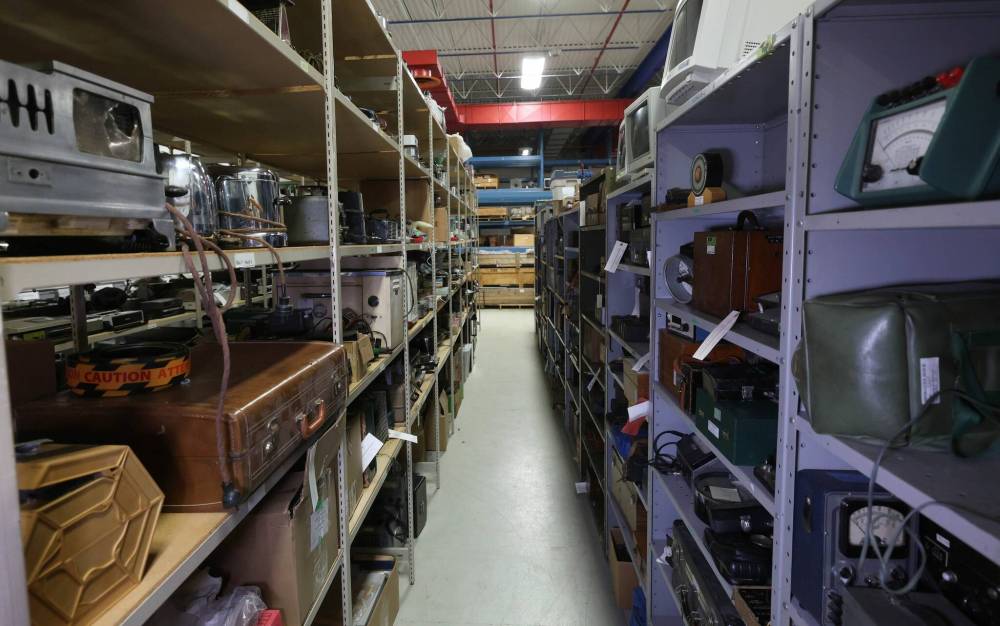
Displays at the museum are regularly switched up, with new artifacts brought in and others put back in stage.
“Since I’ve been here in November, we’ve changed one exhibit and we’re about to change another,” Strong says, adding that while some displays are permanent, the museums aims to keep things fresh.
“Right now, we have a communications display with telegraph, radio and telephones,” DeJaegher says. “We’d like to build a new one soon, on a totally different topic. That will allow us to showcase more of this stuff. We almost walk up and down the rows, to see what we have a lot of that the public might be interested in, which would then allow us to build a story around and put it up.”
RUTH BONNEVILLE / FREE PRESS The Manitoba Electrical Museum not only operates its museum on Nassau, but also a large warehouse with over 100,000 artifacts related to electrical history/power in Manitoba. 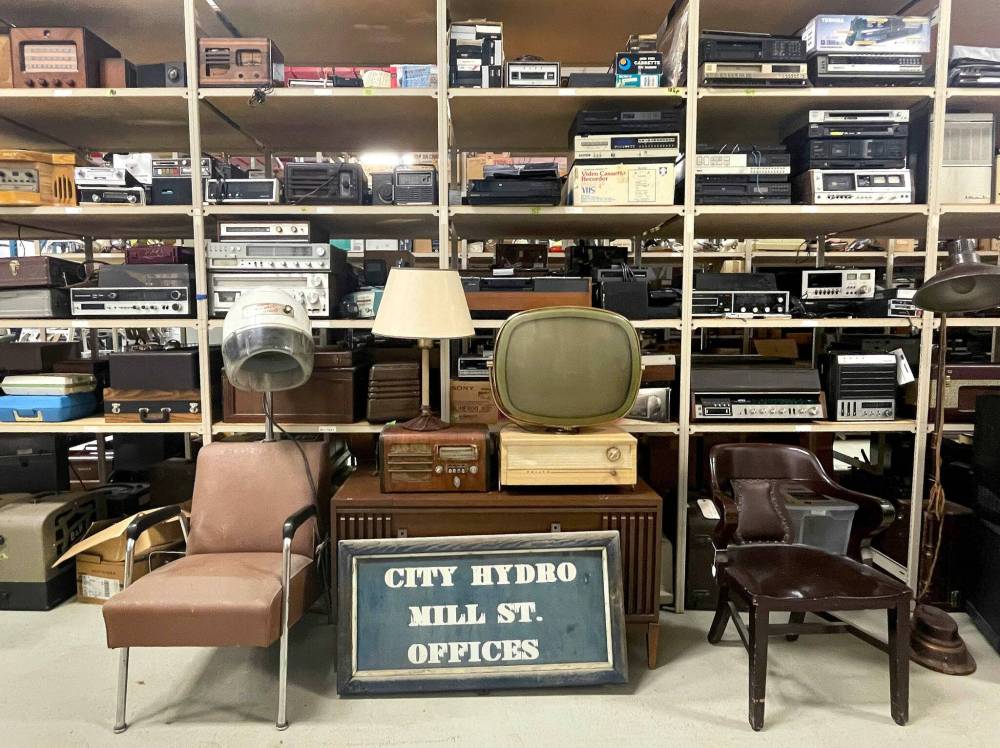
While the museum relies on donations to increase its collection, a limited amount of space to store items and time to catalogue them dictates whether or not an item will find a permanent home at the Harrow location.
“Everybody wants to get rid of their old stove or fridge. We don’t need them. We don’t have the room,” says longtime volunteer Dave White. “But we do pick the unique ones that you’ll never probably find anymore.”
RUTH BONNEVILLE / FREE PRESS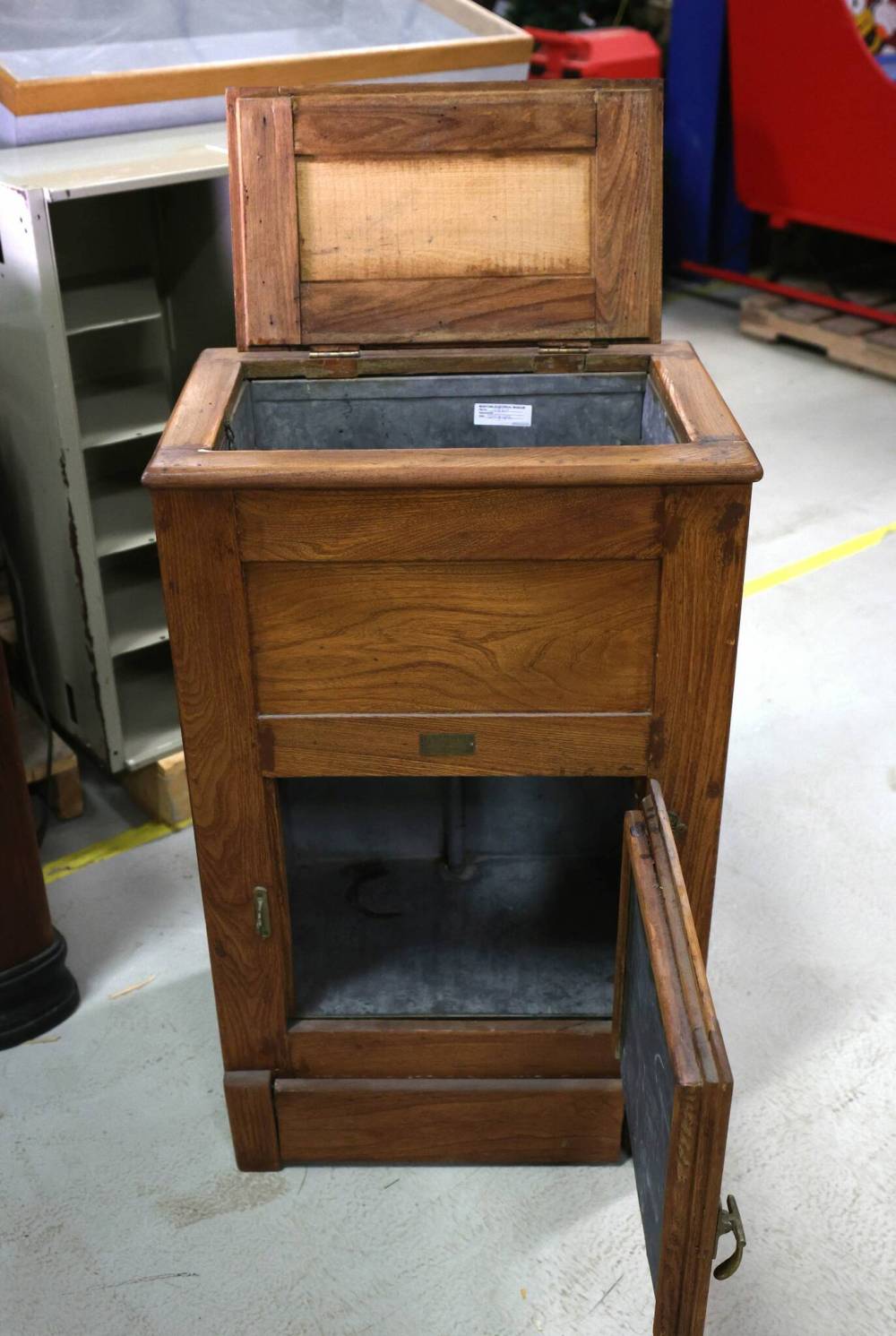
“We would love to donate an artifact to another museum and then it gets on display if we can’t display it. That’s the goal,” DeJaegher says of items that are deemed surplus. “But it never works out. Never. Because they’re all in the same boat as us with no room to place stuff and no room to store it. We keep the items that are really unique.”
One item unique to the collection is a “Chicago stove” from the 1940s; these were popular because of their compact design. The unit includes a small refrigerator on the bottom, a hotplate and sink on top, with an electrical outlet directly below the sink.
The roots of the all-in-one units go back to small Chicago apartments.
“Nothing like having plumbing and electrical all together — and the grounding back in the 1950s wasn’t all that good,” White says.
Other notable appliances in the collection include functional stoves dating back as early as the 1920s, including an old wood-electric hybrid that is still in pristine condition.
RUTH BONNEVILLE / FREE PRESS A combo wood-burning/electrical stove from the 1920s.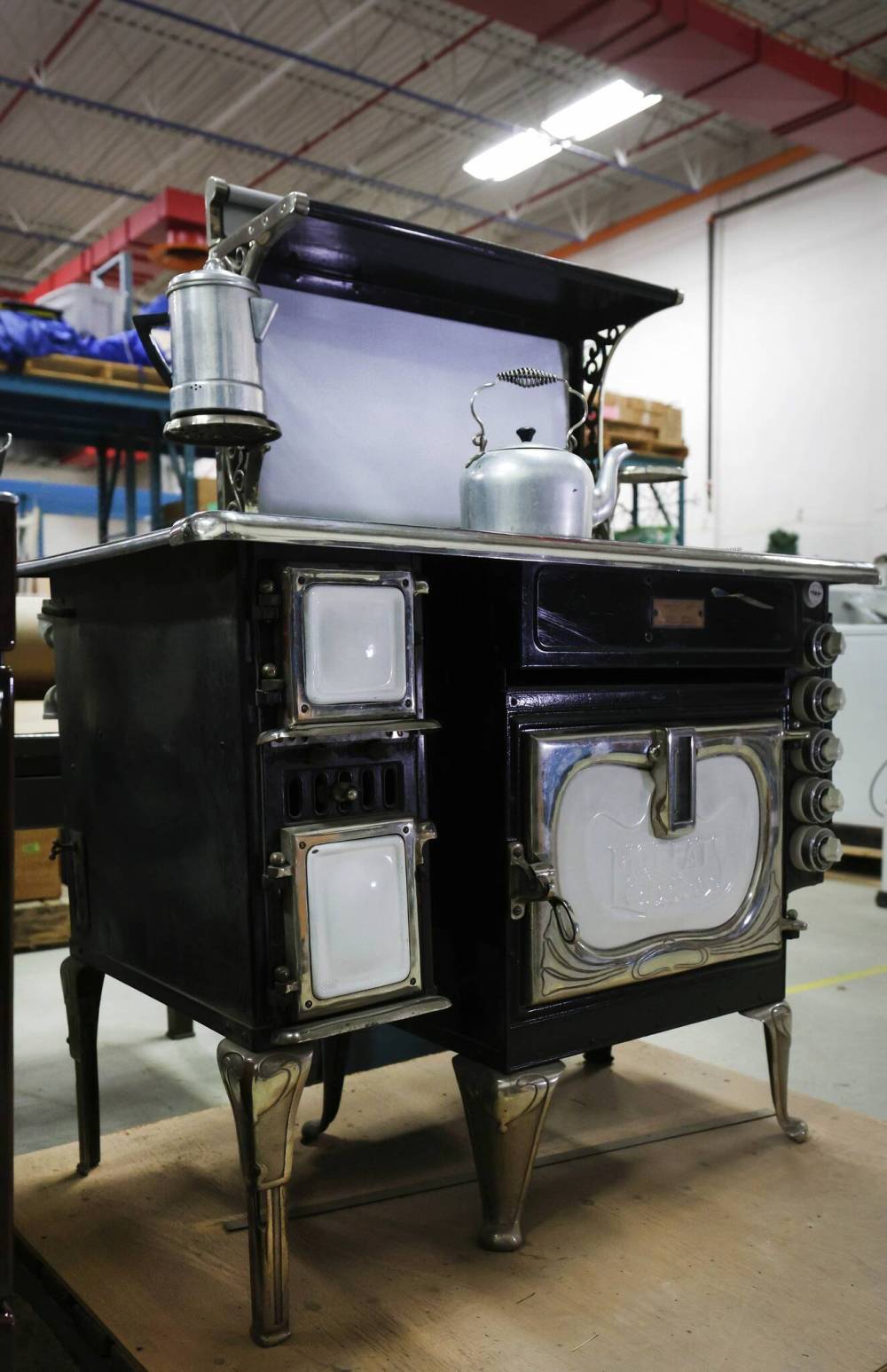
“I always joke that this, because it was on the Winnipeg Hydro side, they never had to light the stove because we were 100 per cent efficient,” says White, a retired lineman who started his career with Winnipeg Hydro in the 1969, with a laugh.
“I kind of get told where to go.”
The collection also pulls double duty with film companies renting items as period-specific props for productions filming in Manitoba.
“What they’ll do is they’ll have a set, say, between 1920 and 1925. They’ll come here and go on to our database and find everything we have from that period and they start to slowly pick away at it. This isn’t really a big part of what we do, but occasionally they’ll have a set that fits a lot of the stuff that we have,” DeJaegher explains.
“You want a toaster from the 1940s, we’re the place to go,” Strong adds.
Certain pieces of the collection have found their way into multiple productions over the years.
RUTH BONNEVILLE / FREE PRESS One of the first electric washing machines, also from the 1920s.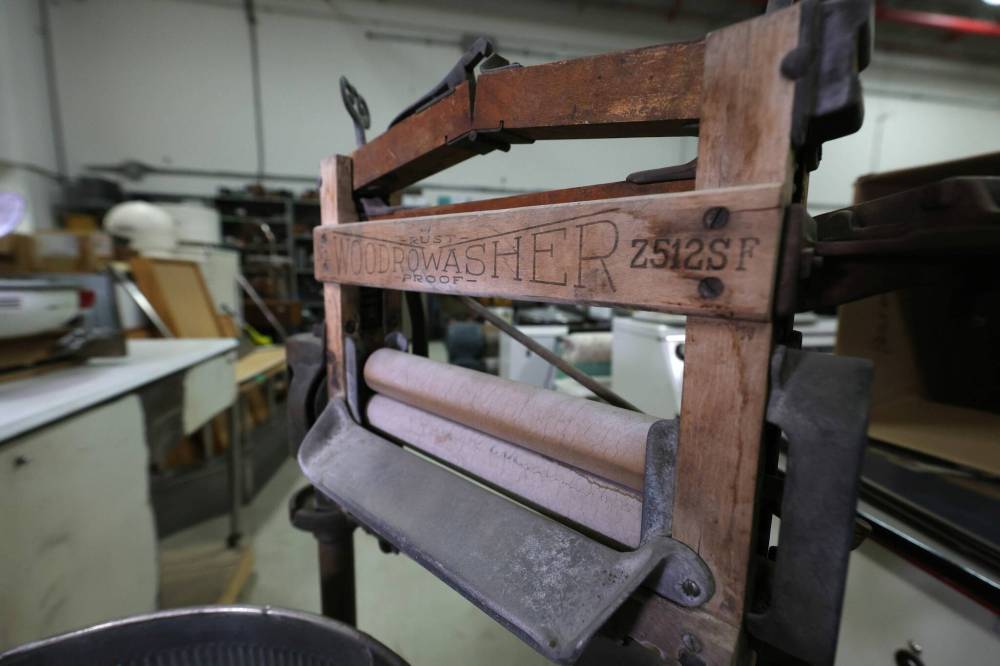
“That projection TV was sitting on the end of one of our volunteer’s driveways, for free,” DeJaegher says, waving at a beast of a unit from the early 2000s. “We’ve rented it three times! They just happen to want it.”
An old network analyzer from a Hydro workstation has also proven popular, despite its bulk.
RUTH BONNEVILLE / FREE PRESS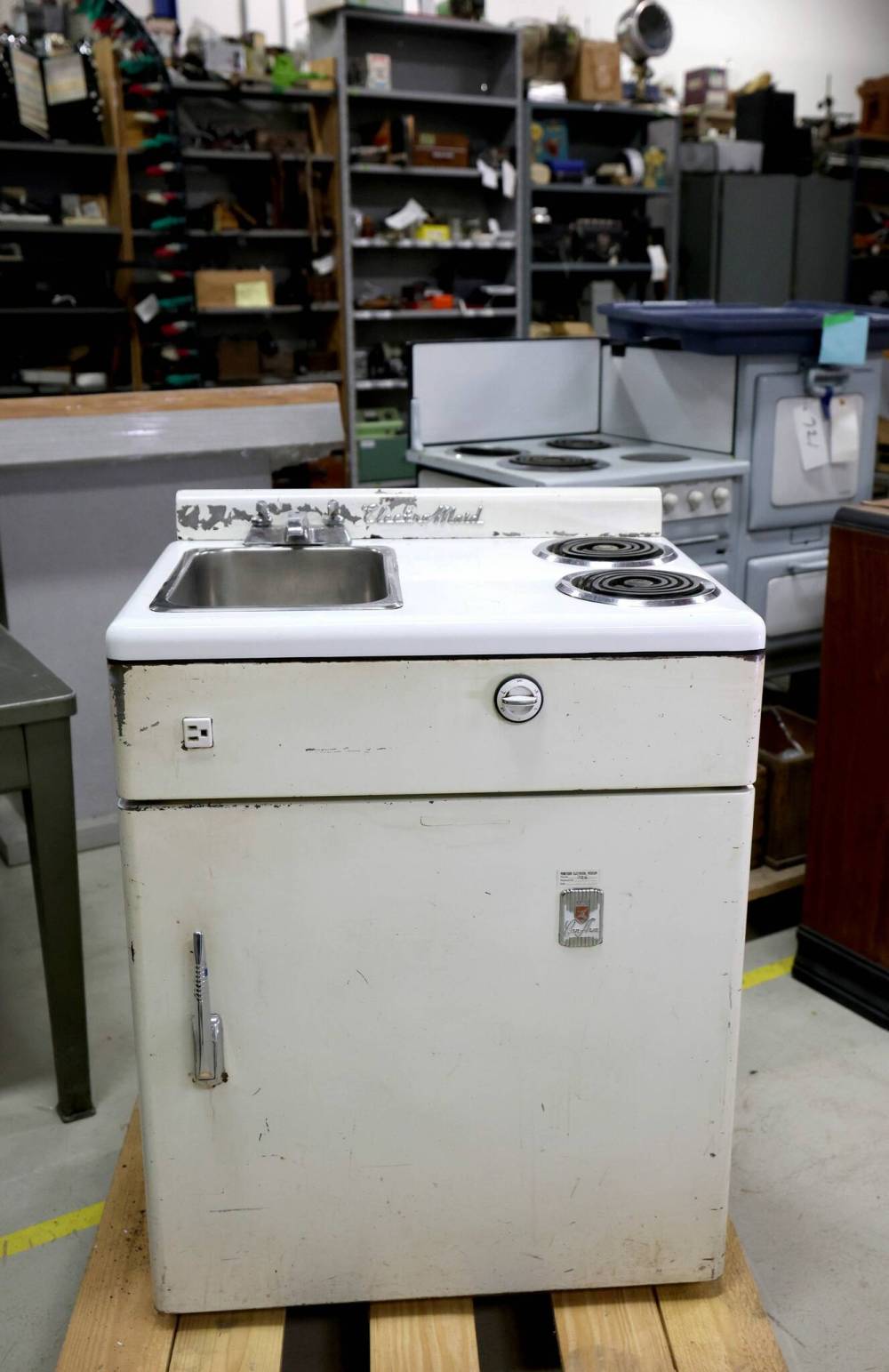
“They didn’t care if the background stuff was real or not, it just had to look old. It had gauges, it had knobs and it ended up being in the middle of their set. It must weigh well over 500 pounds, but we’ve rented it out three times now over the last dozen years,” DeJaegher says.
VCRs are another popular item and the VHS tapes to go along with the machines, as are household appliances such as toasters, hair dryers and old TVs and radios.
“Our goal is to try to show off some of these artifacts. Even with the movie rentals, at least some of our stuff is getting into the public eye,” DeJaegher says.
Most people, he adds, don’t realize the work that goes into both preserving historical artifacts and sharing the history of those items with the public, so that they are not lost in time.
“This is all just a mishmash of things unless you take the time to put a display together,” DeJaegher says, standing amid the shelves of the warehouse. “Unless you take the time to do the research, the stories are not here, only the artifacts are here. We’ve got to build a story around them and you can’t do that unless you can build a display.
“We could use a much bigger museum.”
sheldon.birnie@winnipegfreepress.com