A look at what provinces and territories have said about COVID-19 vaccine plans
Advertisement
Read this article for free:
or
Already have an account? Log in here »
To continue reading, please subscribe:

Digital Subscription
One year of digital access for only $205*
- Enjoy unlimited reading on winnipegfreepress.com
- Read the E-Edition, our digital replica newspaper
- Access News Break, our award-winning app
- Play interactive puzzles
*First annual payment billed as $205.00 + GST for one year. This annual subscription will automatically renew at $233.00 + GST every 52 weeks (10% off the regular annual price of $259.35). Offer available to new and qualified returning subscribers only. Cancel any time.
To continue reading, please subscribe:
Add Free Press access to your Brandon Sun subscription for only an additional
$1 for the first 4 weeks*
- Enjoy unlimited reading on winnipegfreepress.com
- Read the E-Edition, our digital replica newspaper
- Access News Break, our award-winning app
- Play interactive puzzles
*Your next Brandon Sun subscription payment will increase by $1.00 and you will be charged $17.95 plus GST for four weeks. After four weeks, your payment will increase to $24.95 plus GST every four weeks.
Read unlimited articles for free today:
or
Already have an account? Log in here »
Hey there, time traveller!
This article was published 08/12/2020 (2138 days ago), so information in it may no longer be current.
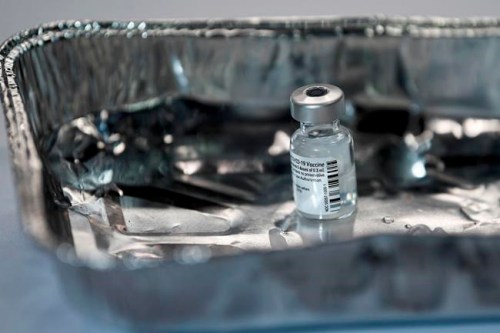
The federal government says the largest mass immunization effort in Canadian history could begin as early as next week. Prime Minister Justin Trudeau says Ottawa expects to receive up to 249,000 doses of the COVID-19 vaccine developed by pharmaceutical giant Pfizer and German partner BioNTech. Its approval is said to be imminent. The second vaccine in line for approval in Canada is from Moderna. The Canadian military will have a role to play in vaccine distribution. Various provinces have started spelling out their plans as well. Here’s a look at what they’ve said so far:
—
Newfoundland and Labrador
Premier Andrew Furey says he anticipates receiving 1,950 doses of the COVID-19 vaccine at the St. John’s receiving site next week.
The announcement comes as Furey told reporters Monday that the province would remain outside of the Atlantic “bubble,” meaning all visitors to the province must self-isolate for 14 days, regardless of whether they come from Atlantic Canada.
The province announced no new cases on Monday, but the town of Harbour Breton was on high alert as officials were still trying to chase down the source of an infection announced in the region over the weekend.
Furey says the province expects another shipment of the vaccine later in the month.
—
Prince Edward Island
Health officials on Prince Edward Island say they are ready to administer the COVID-19 vaccine when the first shipment of the vaccine arrives next week.
Chief medical officer of health Dr. Heather Morrison says the province plans to begin by administering the Pfizer vaccine to priority groups, including residents and staff of long-term care homes, health-care workers and adults in Indigenous communities.
Morrison says she expects to receive 1,950 doses in the first shipment, and the clinic will have to be held at the storage location because the Pfizer vaccine must be kept frozen.
She says the province will be able to start administering the doses the day after the vaccine arrives.
—
New Brunswick
New Brunswick health officials say the province expects to receive up to 1,950 doses of the Pfizer vaccine around Dec. 14 as part of the first of two shipments that may occur this month.
The province is working to identify the priority groups that will receive the vaccine in the first phase of vaccinations, based on recommendations from the federal government.
—
Nova Scotia
Nova Scotia will receive 1,950 doses of Pfizer’s COVID-19 vaccine for an initial test run next week.
The Health Department says the province will also be participating in a dry run this week with the federal government, Dalhousie University and the vaccine manufacturer.
Chief medical officer of health Dr. Robert Strang said last week that so far, Nova Scotia has one ultralow-temperature freezer to store the vaccine at a hospital complex in Halifax.
He said the province was also getting another freezer through Ottawa that will operate out of a central depot for vaccines at the public health office in Halifax. The province is also looking at securing freezers from the private sector.
—
Quebec
Quebec says the first doses of the COVID-19 vaccine could be administered in the province as early as next week.
Health Minister Christian Dube says the province plans to give its first doses of the Pfizer vaccine to about 2,000 people in long-term care homes.
In a technical briefing before a Monday news conference, public health experts said residents of long-term care homes and health-care workers would have first priority to receive the vaccine.
The groups next in line are people living in private seniors residences, followed by residents of isolated communities and then anyone aged 80 and over.
Dube says Quebec also expects to receive enough Pfizer vaccines between Dec. 21 and Jan. 4 to vaccinate 22,000 to 28,000 people.
—
Ontario
Premier Doug Ford says vulnerable seniors, their caregivers and health-care workers will be among the first to receive a vaccine.
Adults in Indigenous communities, residents of retirement homes and recipients of chronic home health-care will also be considered priority groups.
But it may be April before the shots are widely available to others.
Retired general Rick Hillier, who is leading Ontario’s vaccine task force, says the province should be able to vaccinate 1.2 million people during the first three months of 2021.
The province says it will also be prioritizing the rollout of the vaccine in regions with the highest rates of COVID-19 infection.
Health Minister Christine Elliott says while the vaccine is not mandatory, people who do not get the shot may face travel restrictions or may not be able to access some communal spaces.
Elliott says the province will provide proof of immunization to everyone who receives a dose
—
Manitoba
Government officials say they’ve been assembling the necessary people and equipment to set up a large-scale “super site” to deliver the vaccine as soon as it is available.
Premier Brian Pallister says the province has also purchased the necessary supplies to administer two doses of the vaccine to every person in the province.
The first freezer able to store the Pfizer vaccine at low temperatures has been delivered and installed, with another four on the way.
As the vaccine supply from the federal government expands over the coming months, the province says it will become more widely available in a larger number of sites, similar to a conventional vaccination campaign, such as the annual flu shot.
—
Saskatchewan
Premier Scott Moe says Saskatchewan is ready to receive doses of the Pfizer COVID-19 vaccine, with the province set to reveal its distribution plan later today.
Moe says the province has an ultra-low-temperature freezer required to store the product.
Vaccinations will happen in a staggered approach, with the plan being to inoculate health-care workers and vulnerable residents, such as seniors living in long-term care homes.
—
Alberta
Premier Jason Kenney says Alberta expects to start getting COVID-19 vaccines in the first week of January.
High-risk patients and health workers will get them first.
Kenney says his government has struck an interdepartmental team to roll out the vaccines from 30 different locations in the province.
Dr. Deena Hinshaw, Alberta’s chief medical officer of health, has said the province is expected to receive 680,000 doses of COVID-19 vaccine early in the new year, a figure not yet confirmed by the federal government.
—
British Columbia
Premier John Horgan says about 4,000 high-risk people will be immunized by end of next week.
The first doses will go to health-care workers and elders living in long-term care, provincial health officer Dr. Bonnie Henry says.
Provincial officials are expected to provide more information about the rollout of the vaccine on Wednesday.
—
Nunavut
Nunavut’s chief public health officer says the territory will look to get the Moderna vaccine once it’s available in Canada.
Dr. Michael Patterson, says Moderna’s vaccine is preferred because Pfizer’s requires cold storage and shipping would be too difficult in Nunavut.
Patterson says Iqaluit is the only community where it would be possible to store the Pfizer vaccine.
Patterson says the territory’s focus for vaccine rollout will be higher risk groups, such as elders. He says the rollout depends on how many doses Nunavut gets, which is still unknown.
Lorne Kusugak, Nunavut’s health minister, says he’s been lobbying the federal government to make Nunavut a high priority to receive COVID-19 vaccines.
__
Yukon
Premier Sandy Silver says he is meeting with the Prime Minister and his fellow premiers later this week to discuss plans for vaccine rollout.

He says the goal will be to provide vaccines to elderly people and health-care providers.
Silver says rural and remote communities should also get priority status in northern regions, a fact he says he’s emphasized with federal authorities.
The premier says he has joined the other provincial and territorial leaders in pushing for a national strategy to distribute the vaccine.
Silver says the Pfizer vaccine could cause logistical problems for remote communities because of its cold-storage requirements, but those issues may not apply to other vaccines under development.
This report by The Canadian Press was first published Dec. 8, 2020.
Related Articles
First vaccines to be given right at delivery sites

Advertisement Advertise With Us
Advertisement Advertise With Us