Pfizer vaccine moves closer to getting the OK in the US

Advertisement

Advertise with us

WASHINGTON - U.S. regulators Tuesday released their first scientific evaluation of Pfizer’s COVID-19 vaccine and confirmed it offers strong protection, setting the stage for the government to green light the biggest vaccination effort in the nation’s history.

Read this article for free:


or

Already have an account? Log in here »

To continue reading, please subscribe:

Subscribe and receive a limited-edition Free Press branded hat or tote.

Digital Subscription

One year of digital access for only $205*

  • Enjoy unlimited reading on winnipegfreepress.com
  • Read the E-Edition, our digital replica newspaper
  • Access News Break, our award-winning app
  • Play interactive puzzles

*First annual payment billed as $205.00 + GST for one year. This annual subscription will automatically renew at $233.00 + GST every 52 weeks (10% off the regular annual price of $259.35). Offer available to new and qualified returning subscribers only. Cancel any time.

To continue reading, please subscribe:

Add Free Press access to your Brandon Sun subscription for only an additional

$1 for the first 4 weeks*

  • Enjoy unlimited reading on winnipegfreepress.com
  • Read the E-Edition, our digital replica newspaper
  • Access News Break, our award-winning app
  • Play interactive puzzles
Start now

*Your next Brandon Sun subscription payment will increase by $1.00 and you will be charged $17.95 plus GST for four weeks. After four weeks, your payment will increase to $24.95 plus GST every four weeks.

Hey there, time traveller!
This article was published 08/12/2020 (2075 days ago), so information in it may no longer be current.

WASHINGTON – U.S. regulators Tuesday released their first scientific evaluation of Pfizer’s COVID-19 vaccine and confirmed it offers strong protection, setting the stage for the government to green light the biggest vaccination effort in the nation’s history.

The analysis by Food and Drug Administration scientists comes ahead of a Thursday meeting where the agency’s independent advisers will debate if the evidence is strong enough to recommend vaccinating millions of Americans. A final FDA decision and the first shots could follow within just days.

They are among a whirlwind of developments that are expected to make multiple vaccines available by early next year, in the U.S. and beyond.
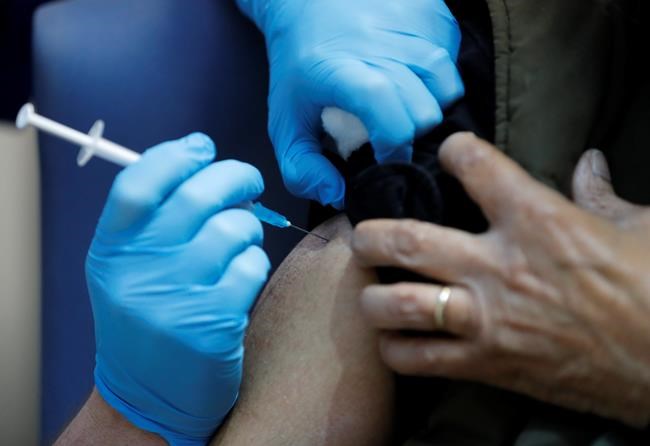
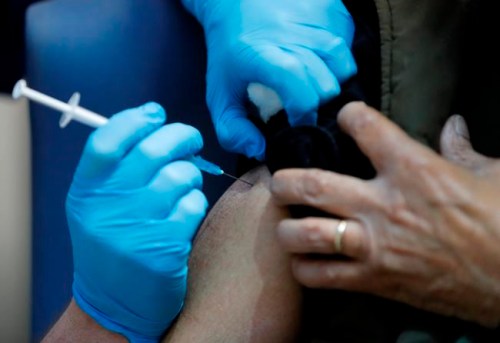
A nurse administers the Pfizer-BioNTech COVID-19 vaccine at Guy's Hospital in London, Tuesday, Dec. 8, 2020. U.K. health authorities rolled out the first doses of a widely tested and independently reviewed COVID-19 vaccine Tuesday, starting a global immunization program that is expected to gain momentum as more serums win approval. (AP Photo/Frank Augstein, Pool)

Britain on Tuesday began vaccinations with the shot made by Pfizer and German partner BioNTech. The FDA later this month will consider one developed by Moderna. Also Tuesday, a medical journal published early data suggesting a third vaccine candidate, AstraZeneca’s, also protects people, though not as much as the two other frontrunners.

The vaccines emerged from an all-out worldwide race and are reaching the market less than a year after the virus was even identified — a remarkable scientific achievement that shaved years off the usual process.

The encouraging developments come as the coronavirus continues surging across much of the world. The scourge has claimed more than 1.5 million lives, including over 285,000 in the U.S., the highest toll of any country.

FDA scientists reanalyzed data from Pfizer’s huge, still-unfinished study and found that so far, the vaccine appears safe and more than 90% effective across patients of different ages, races and underlying health conditions. The FDA specifically confirmed it works well in older people, who are especially vulnerable to the virus.

Thursday’s public meeting will be closely watched by health authorities around the world and is considered key to bolstering confidence in the shots amid skepticism about vaccine safety among many Americans.

“We want people to see this discussion, to see the issues that are brought up, and have a vigorous discussion of the data elements by the outside experts,” FDA Commissioner Stephen Hahn said in an interview. “That will be an important part of showing what goes into our decision making.”

The FDA is expected to follow its committee ’s advice, and first in line once vaccinations begin would be health care workers and nursing home residents.

Pfizer CEO Albert Bourla declined to predict how quickly FDA might issue a decision.

“They need to take as much time as they need to feel comfortable. It’s very important for the trust of the vaccine from the people,” he said.

Pfizer and BioNTech previously reported the shots appeared 95% effective at preventing mild to severe COVID-19 disease, based on the first 170 infections confirmed after participants’ second dose. Only eight of the infections were among volunteers who had been given the real vaccine; the rest were among those who had gotten a dummy shot.

Moderna has reported nearly identical protection in tests of its vaccine, which was developed with the U.S. National Institutes of Health.

A third option, from AstraZeneca and Oxford University, appears safe and about 70% effective, according to early test results from Britain and Brazil. But that report, in the medical journal Lancet, showed that questions remain about how well it helps protect those over 55.

Still, British regulators are considering emergency use of that vaccine, too, and if it pans out, it could become the vaccine of choice in the developing world because it doesn’t need to be kept in the deep freeze like Pfizer’s formula.

A big question for all the coming vaccines is how long protection lasts.

FDA said partial protection appears two weeks after the first dose of the Pfizer shot, and greater protection seems to last at least two months after the second and final dose.

As for safety, the FDA found no serious side effects among the more than 37,000 volunteers who have been tracked for at least two months after their last dose, the period when vaccination problems typically appear.

The main side effects were injection-site pain or flu-like reactions that tend to last a day or two: More than half of adults under 55 experienced fatigue or headache, about a third reported chills or muscle pain, and 16% had a fever. Older adults were less likely to experience those reactions.

Once mass vaccinations get underway, the government intends to conduct unprecedented monitoring of recipients to watch for any side effects that didn’t show up during testing. Even studies of tens of thousands of people can’t spot a complication that strikes, say, 1 in a million.

Among the additional questions ahead of Thursday’s meeting:

–Were the shots adequately tested in Black, Hispanic and other communities hard hit by the pandemic?

–Does the vaccine protect against infection with no symptoms, or could the vaccinated still unknowingly spread the virus?

–What should pregnant women be told about vaccination, since they weren’t tested in Pfizer’s study?

Studies in children as young as 12 are just beginning.

Answering some of those questions may require keeping Pfizer’s 44,000-person study going even after vaccinations begin. Health authorities are wrestling with how to do so in a way that’s fair to participants who got a dummy shot but would want the real thing now.

___

Associated Press writers Jamey Keaten in Geneva and Marilynn Marchione in Milwaukee contributed to this report.

___

The Associated Press Health and Science Department receives support from the Howard Hughes Medical Institute’s Department of Science Education. The AP is solely responsible for all content.

Report Error Submit a Tip

More Stories

‘Disrespectful’: residents frustrated after Wyatt arrives hour late to committee meeting

Joyanne Pursaga 3 minute read Preview

‘Disrespectful’: residents frustrated after Wyatt arrives hour late to committee meeting

Joyanne Pursaga 3 minute read Yesterday at 4:37 PM CDT

Several Winnipeggers attending a city development hearing on Thursday expressed frustration that one councillor arrived about an hour late, delaying the matter from being heard.

Coun. Russ Wyatt, who continues to attend city hall while facing criminal charges, began participating in the 9:30 a.m. East Kildonan-Transcona community committee meeting at 10:35 a.m.

A resident who hoped to speak at the meeting about a development plan in south Transcona noted the tardiness led the committee to bump the topic down on its agenda, while dozens waited to speak on it.

Christina Pyra eventually opted to leave city hall instead of waiting for her turn to make a presentation, to avoid missing a work commitment.

Read
Yesterday at 4:37 PM CDT

Manitoba supports MAID delay: Asagwara

Carol Sanders 5 minute read Preview

Manitoba supports MAID delay: Asagwara

Carol Sanders 5 minute read 2:00 AM CDT

The number of Manitobans receiving medical assistance in dying in 2026 is on track with previous years while the plan to extend it to those suffering from mental illness is delayed indefinitely by the federal government — a move Manitoba’s health minister supports.

“There’s so much more work that needs to be done,” Uzoma Asagwara said.

The parliamentary committee that issued its recommendation in June was the third special committee of Parliament struck to assess the eligibility of people with mental illness since 2021, when MAID eligibility was expanded to include people who were not at the end of their lives.

A key condition for MAID eligibility is that a patient must be suffering from a grievous and irremediable medical condition.

Read
2:00 AM CDT

Three security guards charged with assault after Sea Bears star injured outside nightclub

Nicole Buffie 3 minute read Preview

Three security guards charged with assault after Sea Bears star injured outside nightclub

Nicole Buffie 3 minute read Updated: Yesterday at 12:50 PM CDT

Three security guards are facing assault charges, accused of injuring a Winnipeg Sea Bears player at a nightclub earlier this month.

Read
Updated: Yesterday at 12:50 PM CDT

Wyatt vows to ‘absolutely’ continue serving as city councillor despite latest sex-crime charges

Joyanne Pursaga 5 minute read Preview

Wyatt vows to ‘absolutely’ continue serving as city councillor despite latest sex-crime charges

Joyanne Pursaga 5 minute read Updated: Yesterday at 5:35 PM CDT

Transcona Coun. Russ Wyatt vowed Thursday to continue doing his job after more criminal charges were laid against him this week, while the mayor called for “better tools” to address elected officials who face serious allegations.

Wyatt, 56, was charged Monday with sexual assault and administering a noxious substance in an October 2023 incident. He was previously charged with sexual assault and administering a noxious substance in March, based on allegations tied to a 2025 gathering.

On Thursday, Wyatt arrived at city hall and quickly walked to his office at 10:20 a.m., nearly an hour after the East Kildonan-Transcona community committee meeting he planned to attend was scheduled to begin.

He answered few questions from reporters.

Read
Updated: Yesterday at 5:35 PM CDT

Moving rail lines outside city would make Winnipeg ‘major transportation hub’

Carol Sanders 6 minute read Preview

Moving rail lines outside city would make Winnipeg ‘major transportation hub’

Carol Sanders 6 minute read Wednesday, Aug. 12, 2026

After decades of calls to move rail traffic to the outskirts of Winnipeg, a plan that would benefit residents, railways and taxpayers is now on track, says the former Winnipegger leading the way.

A rail line bypass south of the city, using Crown-owned land and the Manitoba Hydro corridor, would take 20 years to complete, remove 120 railway crossings that are a safety risk and free up about 250 acres of Winnipeg land over time for development, Lloyd Axworthy said Wednesday.

“The visions that we have have to be implemented,” Axworthy said at a news conference announcing the launch of a 90-day feasibility study to move freight rail traffic out of Winnipeg’s urban core along Manitoba Hydro’s southern transmission corridor, connecting east to west along the Perimeter Highway.

The former federal transport minister and Manitoba MP was tasked by Premier Wab Kinew in October 2024 to lead a two-year rail relocation feasibility study.

Read
Wednesday, Aug. 12, 2026

A message to Mark: Don’t. Back. Down.

Judy Waytiuk 5 minute read Preview

A message to Mark: Don’t. Back. Down.

Judy Waytiuk 5 minute read 2:00 AM CDT

When is a leak really a trial balloon? While Mark Carney currently enjoys huge favourability in Canada, there are nine federal byelections pending. If he stumbles on his pledge of “Elbows up’ against the U.S., votes could go against the Liberals; millions of Canadians have utterly lost patience with Trump’s madness — and with Carney appearing to pander to it.

Now we lift the booze bans? Meddle with our supply management dairy system? So say “sources” in the Carney camp. But journalists can be manipulated — a galling truth. Set up a leak from a couple of sources. Two is standard; what’s often forgotten is that those sources, especially if the story’s a hot one, should be verifiably unconnected.

If a story is really hot, more sources must be scraped up, but the temptation to run with it regardless of that is enormous. Many a drool-worthy story I ran across in my early days at the Free Press and later at CBC TV news was spiked because those standards could not be met. These days, it’s almost impossible to meet that bar. Everybody’s connected.

Well, appeasement doesn’t work; we all know it. We dropped the digital services tax. That achieved nothing. American trade envoy Jameson Greer noted we don’t get credit for lifting something Trump resented from the get-go. The digital giants who imposed news-sharing bans on Canada in retaliation for the tax did not lift those bans. We still can’t share news links on Meta platforms in Canada, and we have not a penny in digital tax to show for it.

Read
2:00 AM CDT