WEATHER ALERT

A chilling childhood

Agony and trauma of early years profoundly shaped Plymale's own experience as a mother

Advertisement

Advertise with us

American Daughter is a difficult book to read and must have been unimaginably painful to write. It is also impossible to put down.

Read this article for free:

or

Already have an account? Log in here »

To continue reading, please subscribe:

Subscribe and receive a limited-edition Free Press branded hat or tote.

Digital Subscription

One year of digital access for only $205*

  • Enjoy unlimited reading on winnipegfreepress.com
  • Read the E-Edition, our digital replica newspaper
  • Access News Break, our award-winning app
  • Play interactive puzzles

*First annual payment billed as $205.00 + GST for one year. This annual subscription will automatically renew at $233.00 + GST every 52 weeks (10% off the regular annual price of $259.35). Offer available to new and qualified returning subscribers only. Cancel any time.

To continue reading, please subscribe:

Add Free Press access to your Brandon Sun subscription for only an additional

$1 for the first 4 weeks*

  • Enjoy unlimited reading on winnipegfreepress.com
  • Read the E-Edition, our digital replica newspaper
  • Access News Break, our award-winning app
  • Play interactive puzzles
Start now

*Your next Brandon Sun subscription payment will increase by $1.00 and you will be charged $17.95 plus GST for four weeks. After four weeks, your payment will increase to $24.95 plus GST every four weeks.

Hey there, time traveller!
This article was published 23/01/2021 (2011 days ago), so information in it may no longer be current.

American Daughter is a difficult book to read and must have been unimaginably painful to write. It is also impossible to put down.

The memoir focuses on author Stephanie Thornton Plymale’s horrific childhood in 1970s California, her fraught relationship with her severely mentally ill, drug-addicted mother Florence and her obsessive search to comprehend the source of her mother’s neglect, abuse and illness.

Plymale, who wrote the book with the assistance of Elissa Wald, is a first-time author. She is better known as a much-in-demand interior designer and the founder and CEO of the Heritage School for Interior Design in Portland, Ore., where she resides.

But shortly after her mother’s recent death, Plymale felt compelled to put pen to paper. She wanted to make sense of her childhood suffering, demonstrate that it is possible to move past trauma and to better understand — and, perhaps, forgive — her mother for all the hurt and grief that she caused.

Plymale’s prose is unembellished, honest and direct. It is also dignified and deferential. She is careful to respect the privacy of her five siblings, who suffered with her every step of the way, and generally resists oversharing just for the sake of oversharing, as so many memoirists do. And yet there is so much wrenching agony and injury entrenched in the details that she does choose to share.

When Plymale was six years old, her family lived in a car parked along the ocean in Mendocino Headlands State Park. When her mother found temporary work at a nearby motel, she left her young children alone on the beach each day to fend for themselves.

Breakfast and lunch was usually seaweed plucked from the ocean coves, and no one went to school. In fact, Plymale was truant so often that she didn’t learn to read until she was almost 10.

Shortly after moving to Mendocino, Florence had kicked out her husband Louie, the father of three of her five children, and replaced him with a heroin-addicted grifter named Rick. When Louie died by suicide, Florence had a major psychotic breakdown. She was institutionalized and her children were split up and taken into state care, for the first of many times. Each time that they were returned to her — often from abusive foster situations — Florence reverted to the same patterns of neglect and violence.

On one occasion, Florence refused to take Plymale to the hospital after she shattered her arm in a fall from a jungle gym. On another occasion she instructed Plymale, who was covered head to foot with infected poison oak, to bathe in laundry detergent. And yet no matter what Florence did, and no matter the consequences, Plymale writes, her mother never showed remorse.

“She did not take stock of how far she had fallen. She did not seek to make amends to anyone. She didn’t try to get clean. She never recognized the harm she inflicted on her children. She never despaired and she never apologized.”

Plymale eventually distanced herself from her mother, married young and had her own children. But years later she was drawn back into her mother’s destructive orbit; it was only then that she started to ask questions and started to look into her mother’s background. She made significant and shocking discoveries, and writes with forthrightness and unsentimentality about them, including the reason why her mother’s fall from grace was so profound and irreversible.

Supplied
After the death of her mother, author Stephanie Thornton Plymale felt compelled to try to make sense of her childhood suffering through telling her story.
Supplied After the death of her mother, author Stephanie Thornton Plymale felt compelled to try to make sense of her childhood suffering through telling her story.

If there is any misstep in this narrative, it is in Plymale devoting too many pages to a near dalliance she had with a client during a difficult few months she and her husband Jim were going through, while she was in the midst of researching her mother’s life. The sharing of that marriage hiccup comes across as gratuitous, and does nothing to enhance the mesmerizing story that Plymale is telling. In fact, it is a distraction.

It is inevitable that readers will compare this memoir to Jeanette Wells’ The Glass Castle or Tara Westover’s Educated. But it is also likely that they will be shocked to learn that Wells and Westover’s childhood experiences paled in comparison to what Plymale endured.

Suffering, of course, should not be a contest, and trauma, as has been well documented, affects everyone differently. Florence’s own trauma made it impossible for her to parent, to love, to think clearly, to show compassion, or to take care of herself or anyone else.

Plymale’s childhood trauma did the opposite. It inflicted in her a deep desire to succeed, to parent well, to love thoroughly, to be supportive and to forgive — even the mother who caused her so much pain.

Sharon Chisvin is a Winnipeg writer.
Report Error Submit a Tip

More Stories

Trailblazer Kati Tabin brings PWHL championship trophy home to share success, inspire next generation

Grace Penner 6 minute read Preview

Trailblazer Kati Tabin brings PWHL championship trophy home to share success, inspire next generation

Grace Penner 6 minute read Saturday, Jul. 25, 2026

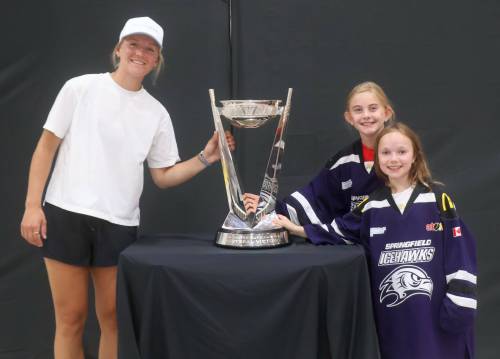
Starstruck kids and fans zigzagged throughout the rink, anxiously waiting to get an autograph from Kati Tabin and to see their role model on the same side of the glass.

Tabin, Montreal Victoire defender and Team Canada silver medallist, on Saturday came home to the rink where it all began, the Oakbank Community Club. She brought the PWHL championship trophy, the Walter Cup, won in her third season with the club, as well as her 2026 Milan Cortina Olympic medal.

The arena was packed to the brim with fans from all over coming to see Tabin — the local player who made history in women’s hockey. Hundreds of enthusiasts of all ages lined up with their Victoire or Team Canada merchandise, some waiting over two hours to see their idol.

Eight-year-old Loxley Cierzan came with her mother, Ainsley, and other family members to meet the one and only Tabin. Cierzan has loved seeing other girls grace the ice and play the competitive sport she adores. When the PWHL takeover stopped in Winnipeg in March, she not only got to watch the game but also a practice beforehand where Tabin signed her Victoire hat.

Read
Saturday, Jul. 25, 2026

Man accused of breaking into Kingsway homes, high school

1 minute read Updated: Yesterday at 9:50 PM CDT

A 35-year-old man has been accused of breaking into six Crescentwood homes and a nearby high school on Saturday morning, causing damage estimated at $25,000.

At about 6:30 a.m. July 25, Winnipeg police got several 911 calls about an unknown man breaking into homes in the 100 block of Kingsway after throwing bricks and rocks through windows and glass doors. In some cases, a man confronted and threatened residents and stole their belongings, the Winnipeg Police Service said in a news release Sunday.

One of the victims flagged down officers when police arrived on scene, pointing out a man walking down the street armed with a broken liquor bottle. The suspect dropped the bottle and police arrested him.

No one was injured and the Major Crimes Unit took on the investigation.

A small step among troubling signs

Editorial 4 minute read Preview

A small step among troubling signs

Editorial 4 minute read Updated: 8:02 AM CDT

There’s no getting around the fact — to many people, downtown Winnipeg is unsafe. Period.

Read
Updated: 8:02 AM CDT

Manitoba Hydro’s energy plan set to be scrutinized

Chris Kitching 6 minute read Preview

Manitoba Hydro’s energy plan set to be scrutinized

Chris Kitching 6 minute read 6:00 AM CDT

Manitoba Hydro is set to face questions and concerns over its plan for the province’s future energy needs, which includes proposed natural gas-powered turbines in Brandon and Indigenous-owned wind farms.

The Public Utilities Board, an arm’s-length regulator, will begin six weeks of hearings Monday into the 10-year blueprint and potential ways to satisfy electricity demand, while Hydro grapples with a projected energy shortfall, debt of $25 billion and aging infrastructure.

“The development plan reflects the best available information and analysis of how Manitoba Hydro can meet growing energy demand, while balancing factors we know are important to our customers, including cost, reliability and the environment,” Peter Chura, a spokesman for the Crown corporation, told the Free Press.

“We are confident in our analysis and that we’ve appropriately balanced reliability, affordability, safety and risk.”

Read
6:00 AM CDT

Dropping the gloves to make the point

Editorial 4 minute read Preview

Dropping the gloves to make the point

Editorial 4 minute read Saturday, Jul. 25, 2026

In hockey parlance, it’s called “shedding,” the moment in a game when you are forced to deal with an instigator by dropping (shedding) your gloves for an all-out brawl.

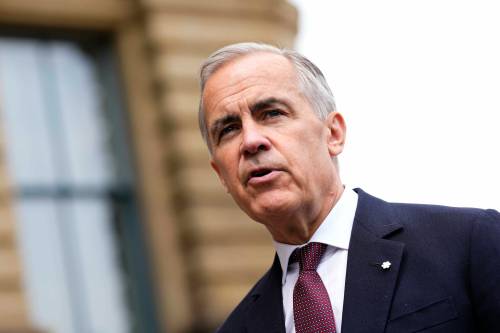
That term is a deep cut from hockey culture that Prime Minister Mark Carney — he of the “elbows up” phenomenon — may need to not only embrace but practise more often in the face of yet another round of overly punitive tariffs imposed by United States President Donald Trump.

To be fair, under Carney’s leadership, Canada has not exactly rolled over in the face of Trump’s bully-boy tactics.

Yes, Canada has made concessions to placate Trump to further a new continental trade agreement: investing more money to combat the cross-border flow of fentanyl that isn’t actually happening, stalling efforts to tax streaming companies as most European countries already do, and — most recently — giving Trump a cut of profits from the Canadian-made, Canadian-paid Gordie Howe bridge between Windsor and Detroit.

Read
Saturday, Jul. 25, 2026

City has plenty of frozen dessert oases to discover

AV Kitching 6 minute read Preview

City has plenty of frozen dessert oases to discover

AV Kitching 6 minute read Updated: 11:23 AM CDT

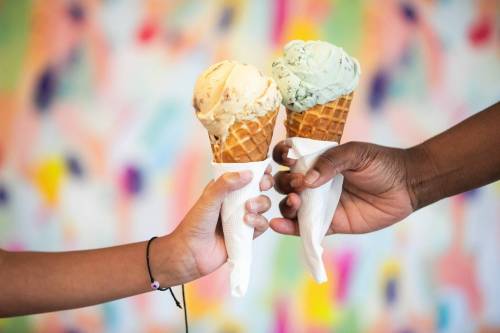
No matter the weather, ice cream is always a welcome addition to the day.

It’s a rite of passage as, at the slightest hint of a thaw, Winnipeggers descend in droves, heeding the siren call of institutions such as Sargent Sundae (2053 Portage Ave.) and Bridge Drive-In (766 Jubilee Ave. and 1680 Main St.) that slide open their shutters any time from late March to early April, ready to welcome dedicated connoisseurs seeking their first taste of the season.

We’re blessed with an abundance of ice cream joints in this city, ranging from brick-and-mortar storefronts to mobile carts and pop-up stalls, all serving generous scoops of childhood faves alongside rather more innovative flavours.

With so many dairy bars and frozen dessert parlours dotted around, there’s no need to choose just one spot to satisfy your sweet tooth.

Read
Updated: 11:23 AM CDT