

Keeyask development came at a cost
Advertisement
Read this article for free:
or
Already have an account? Log in here »
To continue reading, please subscribe:
Digital Subscription
One year of digital access for only $1.44 a week*
- Enjoy unlimited reading on winnipegfreepress.com
- Read the E-Edition, our digital replica newspaper
- Access News Break, our award-winning app
- Play interactive puzzles
*Billed as $5.77 plus GST every four weeks. After 52 weeks, price increases to the regular rate of $19.95 plus GST every four weeks. Offer available to new and qualified returning subscribers only. Cancel any time.
To continue reading, please subscribe:
Add Free Press access to your Brandon Sun subscription for only an additional
$1 for the first 4 weeks*
- Enjoy unlimited reading on winnipegfreepress.com
- Read the E-Edition, our digital replica newspaper
- Access News Break, our award-winning app
- Play interactive puzzles
*Your next Brandon Sun subscription payment will increase by $1.00 and you will be charged $17.95 plus GST for four weeks. After four weeks, your payment will increase to $24.95 plus GST every four weeks.
Read unlimited articles for free today:
or
Already have an account? Log in here »
Hey there, time traveller!
This article was published 20/02/2021 (1929 days ago), so information in it may no longer be current.
This week marked a significant development in Manitoba that needs to be recognized, and a story that needs to be told. The first turbine at the Keeyask Generation Project has gone into commercial service to provide clean renewable energy for Manitobans. This is a success story, but it comes with environmental and human costs that need acknowledgement.
Many Manitobans may read about this milestone and briefly note its significance, but for the members of Fox Lake Cree Nation, it is much more than that.
The news from Manitoba Hydro’s press release issued on Feb. 18, announcing that Keeyask has started producing power, missed some key elements. Recently a “First Power Ceremony” was attended by members of the four Keeyask Cree Nation members working at the site. While the blessing of this milestone event was smaller than originally planned due to COVID-19 restrictions, we feel it’s important to recognize the contributions of the Keeyask Cree Nation communities as the original stewards of the land within our territories.
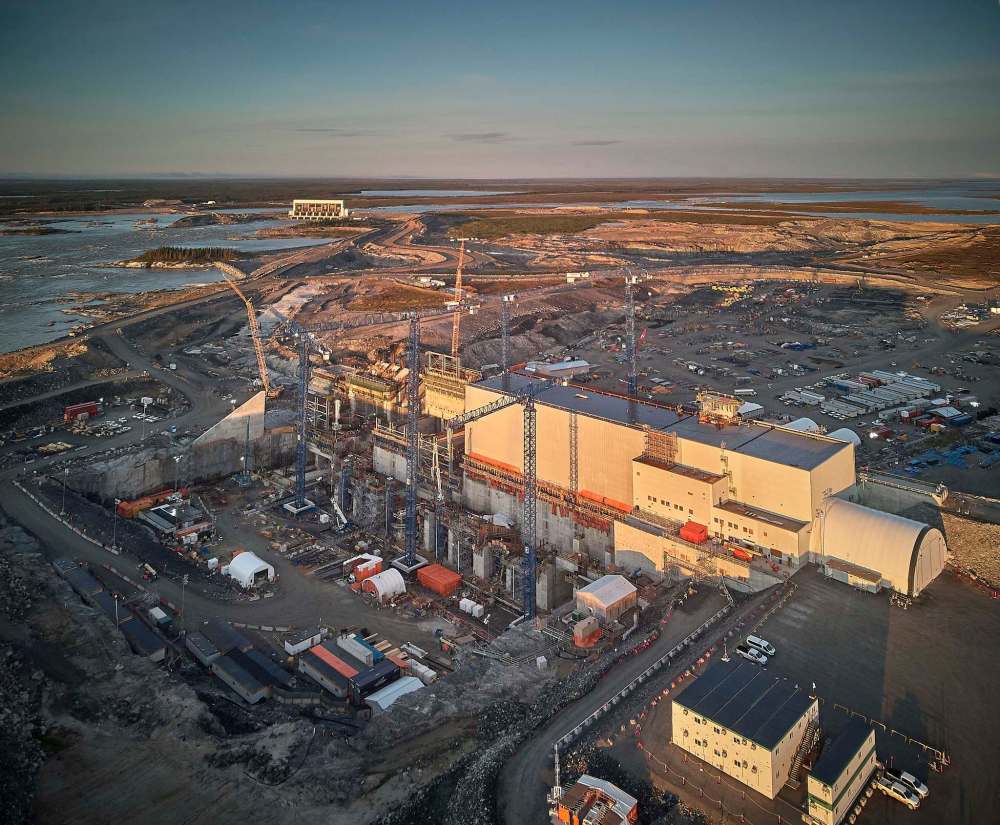
Our community is no stranger to Hydro development. Since the 1960s, our people have had to live amongst the construction of three, and now four, major dams, the largest in Manitoba, as well as several massive converter stations and all the related Hydro infrastructure to transport this power down south for Manitobans to enjoy.
Keeyask is another Hydro “neighbour” that has moved into our backyard. Each development has brought new impacts, restricted our traditional use of our lands and has had a lasting effect on our people. As Keeyask continues to come online, we believe it’s important that our voices, and those of all Keeyask Cree Nations, be a part of the story.
We remember how during the initial blasting of the Keeyask Dam, a face revealed itself in the rock. To many, this was an omen. We held ceremonies to honour this revelation, but ultimately the face was covered with concrete and construction went on. The face continues to be commemorated through paintings created by artists from the four Keeyask Cree Nation communities.
We believe this face was both a warning and a reminder that when we take from the land for our own use, we need to acknowledge what is being sacrificed in the name of development. Investment in projects such as this is usually calculated in dollars, but investment is also in the sacrifices that are and will continue to be made by the land, the plants, the animals and the people that have lived here from time immemorial. That investment needs to be recognized and honoured.
We acknowledge that the construction of the Keeyask Dam has proceeded in a way that was different than in the past. The four Keeyask Cree Nations of Tataskweyak Cree Nation, War Lake First Nation, York Factory First Nation and Fox Lake Cree Nation are partners in this project, and it has brought training, jobs and opportunities for our members. We’ve established successful joint ventures, and built our own construction capacity, creating important own-source revenues that allow us to invest in our community.
We want to recognize and honour the positive outcomes of this project, and the benefits it has provided. However, the partnership has also been tested multiple times by unilateral Manitoba Hydro and government decisions, and we continue to wait for a true partnership to develop in the spirit of reconciliation.

Every one of these large developments, with its influx of workers, has brought a sense of caution to our community. In many ways, we breathe a sigh of relief as we see an end to the construction of Keeyask. Too many of our members are still living with the traumas from past developments that have impacted generations. We are still dealing with these historical grievances as we work with governments to recognize these damages and the role they played.
We also know that this may not be the last project and, going forward, we call on Manitoba Hydro to continue to commit itself to do better.
While the Keeyask Dam begins to produce power for Manitoba Hydro to use and export, the work must turn to building true relationships, partnerships and reconciliation with all the Keeyask Cree Nation partners. For Fox Lake, the land and the people are one, and there is a lot of work left to do to recognize that.
Ekosi.
Morris Beardy lives in Gillam and is chief of Fox Lake Cree Nation. He was born and raised in Bird Manitoba (Fox Lake). An electrician by trade, he has worked on several Hydro-related infrastructure projects, starting at the Limestone Generating Station more than 30 years ago.