Hard time

Account of 1971 Kingston prison riot highlights dehumanizing conditions, many of which persist

Advertisement

Advertise with us

Prisons not only handcuff the body, they derail the mind.

Read this article for free:


or

Already have an account? Log in here »

To continue reading, please subscribe:

Subscribe and receive a limited-edition Free Press branded hat or tote.

Digital Subscription

One year of digital access for only $205*

  • Enjoy unlimited reading on winnipegfreepress.com
  • Read the E-Edition, our digital replica newspaper
  • Access News Break, our award-winning app
  • Play interactive puzzles

*First annual payment billed as $205.00 + GST for one year. This annual subscription will automatically renew at $233.00 + GST every 52 weeks (10% off the regular annual price of $259.35). Offer available to new and qualified returning subscribers only. Cancel any time.

To continue reading, please subscribe:

Add Free Press access to your Brandon Sun subscription for only an additional

$1 for the first 4 weeks*

  • Enjoy unlimited reading on winnipegfreepress.com
  • Read the E-Edition, our digital replica newspaper
  • Access News Break, our award-winning app
  • Play interactive puzzles
Start now

*Your next Brandon Sun subscription payment will increase by $1.00 and you will be charged $17.95 plus GST for four weeks. After four weeks, your payment will increase to $24.95 plus GST every four weeks.

Hey there, time traveller!
This article was published 27/03/2021 (1961 days ago), so information in it may no longer be current.

Prisons not only handcuff the body, they derail the mind.

Take the delicious luxury of choice: to sleep in, to eat hamburgers for dinner just because, to wear what we like, to turn the lights off or on, to disagree with authority, to go elsewhere. These are among the everyday freedoms disallowed behind bars, necessary prohibitions that nevertheless dehumanize the people caged there.

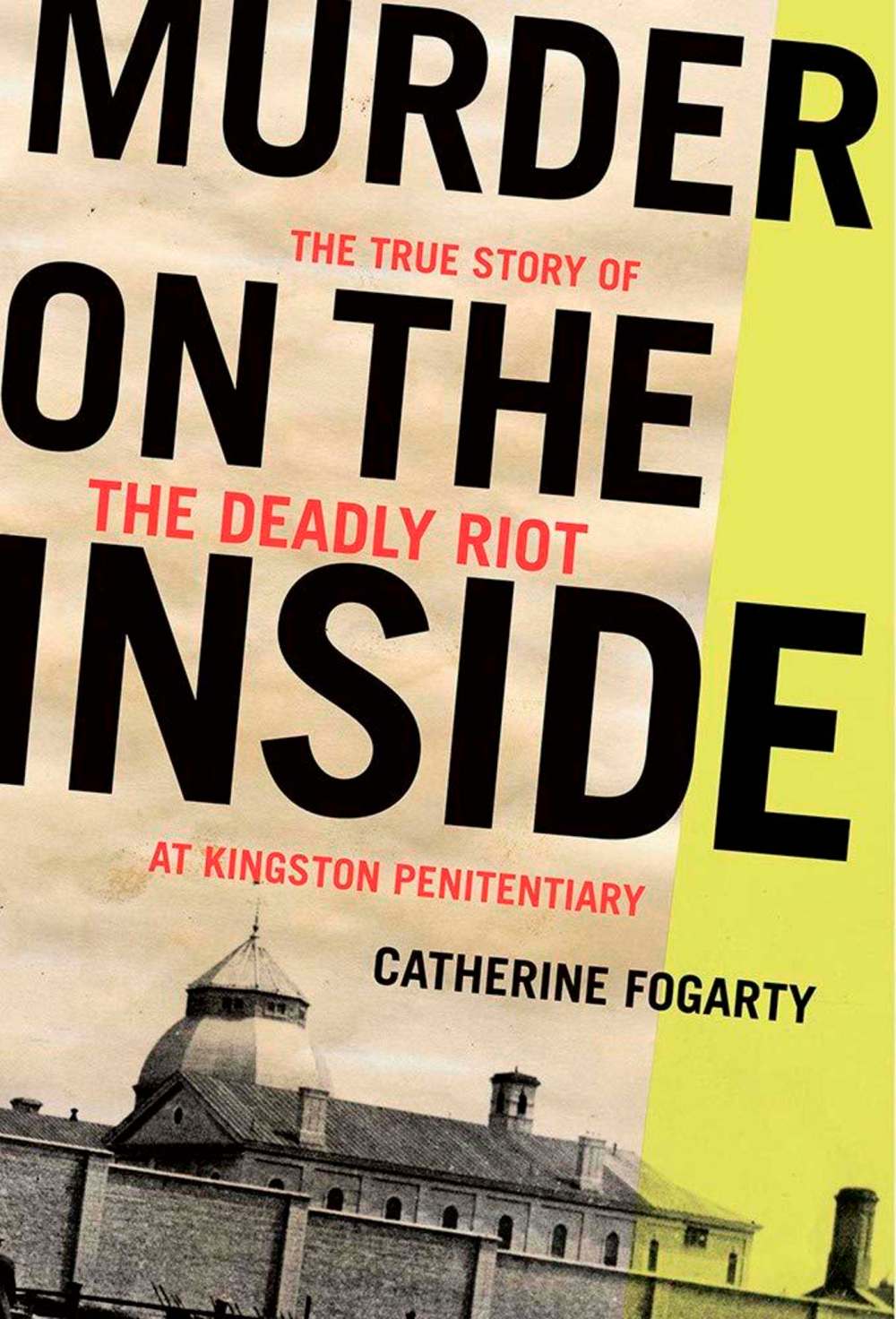
But the most important observation author Catherine Fogarty makes in this her first book (and a good one) is not about the notorious riot in 1971 in Kingston Penitentiary (KP) that she examines, but her conclusion that Canada’s prisons are still much better at housing and hurting people than helping them.

Fogarty writes that Canada’s Correctional Service is a secretive and untrusting organization that opposes change more than it introduces or accepts it and, as a result, pretty well rejects anything that would really humanize conditions in our prisons and make life in them less hopeless, rehabilitation a little more likely.

Fogarty’s latest information on our penal system is that inmate assaults on each other and staff are increasing, suicides are on the up and prison murders are at their highest in a decade.

Fogarty is founder of the Toronto-based TV production company Big Coat Media. March is the 50th anniversary of the bloody and savage riot at Kingston Pen, a prison so old it opened before Canada became a nation. KP closed for good in 2013 and was replaced, notes Fogarty, by a new and even more repressive human zoo named Millhaven.

The flagrant overuse of solitary confinement explained by Fogarty shockingly illustrates how much Canada’s prisons and jails continue to think punitively.

Peter Bregg / The Canadian Press files
Canadian Armed Forces troops arrive at the Kingston penitentiary on April 15, 1971, to help prison officials after inmates took control of the main cell block. The riot ended three days later and left two inmates dead.
Peter Bregg / The Canadian Press files Canadian Armed Forces troops arrive at the Kingston penitentiary on April 15, 1971, to help prison officials after inmates took control of the main cell block. The riot ended three days later and left two inmates dead.

Only six years ago, a federal prisoner spent 41/2 years in solitary under full 24-hour lighting. Eleven years ago, in 2010, a prisoner died in solitary after 162 days. Fifteen years ago, a provincial prisoner self-strangulated in solitary after almost three years there. (The United Nations believes that anything more than 15 consecutive days in solitary is torture.)

The famous writer Charles Dickens visited Kingston Pen some years after it opened in 1835 and described its solitary “as like being buried alive.”

It seems, as documented in Murder on the Inside, glaciers move faster in Canada than prison reform, and changes wanted by prisoners in federal lockups back in the 1970s sound eerily like the complaints being voiced today in one federal institution or another — lack of meaningful work, overcrowding, manhandling of prisoners by guards, the dehumanizing and degrading nature of life in a pen and the lack of preparation for freedom.

Fogarty’s chronicle of the KP riot is a comprehensive and action-packed explanation of what went right and wrong when 500 prisoners in the worn-out and under-staffed pen went rogue, kidnapped six guards, took control of a huge part of the institution for four agonizing days and did a million dollars in damage. And in a frenzy of frustration, a nasty cabal of prisoners savagely assaulted 16 fellow prisoners they hated: segregated sex offenders they chained together and nearly beat to death (one did later die, as did a second inmate).

Murder on the Inside is a shocking tale of sickening savagery and unrewarded heroics, and Fogarty details with growing confidence the unhealthy, sadistic straight-jacket life inside Kingston’s notorious maximum security prison 50 years ago, where the food was lousy, prisoners were locked in tiny cells for 16 hours a day, showered once a week, stood at attention when a guard addressed them (calling him “sir”) and never spoke without permission — if they did, it was off to solitary confinement. Fogarty saw that every day prisoners’ lives were so regimented, so predictable, so the same. Some grew violent, some retreated within as they felt their humanness slipping away.

The rioting prisoners didn’t get what they wanted. Canada’s solicitor-general, according to Fogarty, talked out of both sides of his mouth during negotiations with the prisoners and almost got the hostage guards killed. Guards at the Millhaven maximum security prison that had just opened took the rioting prisoners in after they surrendered — and allegedly beat them with clubs. For the first time in the history of Canada’s penal system, guards were charged with assaulting prisoners. They got off.

Prisoners at the time of the KP riot had a unique use of library books: they stacked them on the lid of their toilets so the rats couldn’t get up into their cells.

In 1973, Barry Craig spent time at the federal Prison for Women and the Collins Bay pen in Kingston while studying at Queen’s University on a fellowship in law awarded to him as a journalist.

Report Error Submit a Tip

More Stories

Jefferson, face of the Bombers defensive line, shares game day routine

Taylor Allen 8 minute read Preview

Jefferson, face of the Bombers defensive line, shares game day routine

Taylor Allen 8 minute read Yesterday at 5:48 PM CDT

Clearly, Willie Jefferson’s game-day routine works wonders.

The future Hall of Famer is still as dominant as ever at age 35 and is currently tied for the CFL lead with six sacks.

But what does the lead-up to kickoff at Princess Auto Stadium typically look like for the face of the Winnipeg Blue Bombers’ defence?

The Free Press had a lengthy chat with the defensive end before the bye week to find out.

Read
Yesterday at 5:48 PM CDT

Family hopes police alert will bring missing woman home

Morgan Modjeski 3 minute read Preview

Family hopes police alert will bring missing woman home

Morgan Modjeski 3 minute read Thursday, Aug. 6, 2026

The family of Ashley Arason has made a desperate plea for her to come home.

The 41-year-old last had contact with her family on April 6, 2019, which was her 34th birthday.

“I’ve got a place for her,” said her older sister, Pamela Arason, through tears on Thursday. “She has a place to go, a home to come to.”

On Thursday, Winnipeg Police Service renewed the call for help from the public to solve the missing person case.

Read
Thursday, Aug. 6, 2026

$60M, six-storey Harbourview Terrace due to open in June 2028

Aaron Epp 4 minute read Preview

$60M, six-storey Harbourview Terrace due to open in June 2028

Aaron Epp 4 minute read Yesterday at 7:24 PM CDT

They donned high-vis vests and brandished shovels with gold-coloured blades Friday morning at the ceremonial groundbreaking for a multi-family residential development in northeast Winnipeg.

Concord Projects has started construction of Harbourview Terrace, the inaugural development by two-year-old real estate company Foxhill Properties. Located in North Kildonan at 1820 De Vries Ave., the $60-million, six-storey apartment building will contain 179 units.

Founder and president Frank Koch-Schulte, who runs the company with his wife Alisha, said Foxhill wants to develop and manage properties with integrity.

“This is kind of like my opportunity to try to do things our way, which I feel is a way that keeps tenants in mind,” Koch-Schulte said. “We live in this neighbourhood. We’re very much invested in seeing quality housing go here.”

Read
Yesterday at 7:24 PM CDT

Hard time

Reviewed by Barry Craig 5 minute read Preview

Hard time

Reviewed by Barry Craig 5 minute read Saturday, Mar. 27, 2021

Prisons not only handcuff the body, they derail the mind.

Take the delicious luxury of choice: to sleep in, to eat hamburgers for dinner just because, to wear what we like, to turn the lights off or on, to disagree with authority, to go elsewhere. These are among the everyday freedoms disallowed behind bars, necessary prohibitions that nevertheless dehumanize the people caged there.

But the most important observation author Catherine Fogarty makes in this her first book (and a good one) is not about the notorious riot in 1971 in Kingston Penitentiary (KP) that she examines, but her conclusion that Canada’s prisons are still much better at housing and hurting people than helping them.

Fogarty writes that Canada’s Correctional Service is a secretive and untrusting organization that opposes change more than it introduces or accepts it and, as a result, pretty well rejects anything that would really humanize conditions in our prisons and make life in them less hopeless, rehabilitation a little more likely.

Read
Saturday, Mar. 27, 2021

Gilbert Plains Country Club closes for remainder of season due to flood damage

Ken Wiebe 6 minute read Preview

Gilbert Plains Country Club closes for remainder of season due to flood damage

Ken Wiebe 6 minute read Thursday, Aug. 6, 2026

Scott McCallum has made the trek to the Gilbert Plains Country Club clubhouse countless times.

But this was the first time the golf professional and general manager of the course required hip waders to get to his office.

Walking hand in hand with his wife Lindsay, McCallum didn’t need much time to see the devastation caused by the flash flooding in the Parkland region in late June.

“We’re on a river and it’s a beautiful golf course, but anytime you’re on a body of water you know that you’re taking a chance of events like this happening,” McCallum said in a telephone interview. “To this magnitude, we’ve never seen anything like it before. So, this is new to us.

Read
Thursday, Aug. 6, 2026

Winnipeggers hoping for shorter waits in rural ERs delay care for all, Selkirk nurse says

Nicole Buffie 5 minute read Preview

Winnipeggers hoping for shorter waits in rural ERs delay care for all, Selkirk nurse says

Nicole Buffie 5 minute read Thursday, Aug. 6, 2026

Nurses and union leaders say Winnipeggers — who are frustrated with wait times at city hospitals — head to rural emergency rooms instead, but the facilities don’t have enough staff to meet the extra demand.

As a result, patients in the Selkirk Regional Health Centre emergency department have waited up to 18 hours during peak times, said one nurse who works there.

The nurse, who spoke to the Free Press on the condition of anonymity, said in recent years they have noted more Winnipeg patients who’ve driven the 25 kilometres north to Selkirk’s ER, believing the wait for treatment would be shorter than in the three emergency departments inside the Perimeter.

“They’re all trying to access health care, right? And everybody deserves health care. And I feel bad, because people have to come out here thinking that the wait times are less,” the nurse said. “I can’t blame people for wanting to seek care, and they’re desperate to see someone.”

Read
Thursday, Aug. 6, 2026