

Working as COVID nurse changes Brazilian referee’s outlook
Advertisement
Read this article for free:
or
Already have an account? Log in here »
To continue reading, please subscribe:

Digital Subscription
One year of digital access for only $205*
- Enjoy unlimited reading on winnipegfreepress.com
- Read the E-Edition, our digital replica newspaper
- Access News Break, our award-winning app
- Play interactive puzzles
*First annual payment billed as $205.00 + GST for one year. This annual subscription will automatically renew at $233.00 + GST every 52 weeks (10% off the regular annual price of $259.35). Offer available to new and qualified returning subscribers only. Cancel any time.
To continue reading, please subscribe:
Add Free Press access to your Brandon Sun subscription for only an additional
$1 for the first 4 weeks*
- Enjoy unlimited reading on winnipegfreepress.com
- Read the E-Edition, our digital replica newspaper
- Access News Break, our award-winning app
- Play interactive puzzles
*Your next Brandon Sun subscription payment will increase by $1.00 and you will be charged $17.95 plus GST for four weeks. After four weeks, your payment will increase to $24.95 plus GST every four weeks.
Read unlimited articles for free today:
or
Already have an account? Log in here »
Hey there, time traveller!
This article was published 26/03/2021 (2012 days ago), so information in it may no longer be current.
SAO PAULO – When the coronavirus pandemic forced Brazilian soccer to take a break, referee Igor Benevenuto faced an uncertain future with less income.
So Benevenuto took one of the few jobs that were still in high demand in his countryside city of Sete Lagoas — as a nurse at a public hospital filled with COVID-19 patients.
Benevenuto, 40, graduated nursing school in 2012 but opted to work as a soccer referee as his main career. But because Brazilian referees are paid by the match and most are only semi-professional, he also held a job as a parliamentary aide at the Belo Horizonte city council.
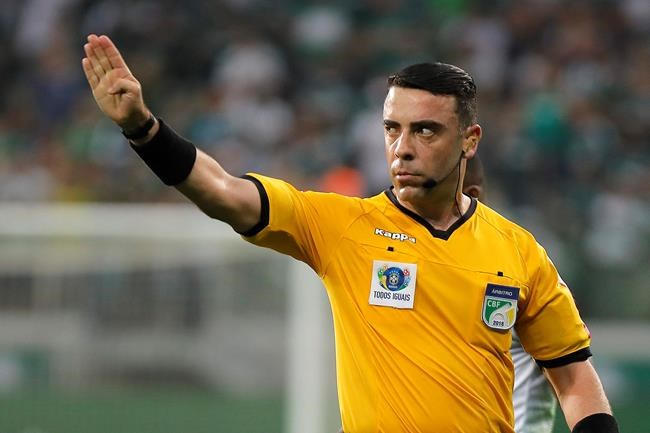
When the pandemic hit, Benevenuto quit his daytime job and applied for a position at the coronavirus wing of a small hospital, working there between April and October last year.
He went from making decisions on the soccer pitch that could affect the outcome of a game, to making decisions on the night shift that were about life or death.
“It was a desperate scene every day,” Benevenuto told The Associated Press in a recent interview. “People were desperate to breathe. We pumped the oxygen and often it didn’t work at all. We did the intubation and then patients went into cardiac arrest. Then we had to do the manoeuvr to resurrect, some came back, others didn’t. Anguished families all over. It was a milestone in my life.”
So far more than 300,000 people have died of COVID-19 in Brazil, with part of the country’s health care system in collapse since last week. Benevenuto saw first hand how hospitals have struggled to deal with the flood of patients.
“I saw a 17-year-old asthmatic that died within minutes. It was so shocking,” Benevenuto said. “There was also the young man that came with his grandmother. He didn’t bring her earlier because she didn’t want to come. She arrived dead, we couldn’t do anything. I was raised by my grandmother, so I cried along (with him).”
After Brazilian soccer was halted last March, some professional leagues resumed in June as the pandemic waned. Though conflicted about it, Benevenuto returned to refereeing but kept working as a nurse for another 90 days, holding two jobs. His work as a VAR assistant in the Brazilian championship was good enough to earn him a FIFA badge in December.
For the three months he kept both jobs, Benevenuto had to stay by himself in hotels, hold pre-match meetings with his colleagues by video and arrive home after games ready to go to another shift at the hospital. After every trip, he took a COVID-19 test.
In November, shortly after he refereed a 1-1 draw between Goiás and Vasco da Gama in the Brazilian championship, his test came back positive.
“I was very scared, the first four days (with the virus) were horrible. I could barely get out of bed, speak more than four words,” Benevenuto said. “I couldn’t walk around the block with my dog. … I couldn’t handle training. How could I handle a match?”
Benevenuto says his mental strength helped him recover. But his first match back on Dec. 13, a second-division game between Brasil de Pelotas and Guarani, was grueling. Still, he covered 7.5 miles (12 kilometres) during the game, more than many players. By then he was no longer working as a nurse, but the experience had changed him as a referee.
“Today I am more understanding of the players, more tolerant,” he said. “I know how to speak to them. Before I was more aggressive, harsh. That changed completely, and people noticed. I am lighter. I enjoy that moment of the match, because I don’t know what tomorrow will bring.”
Benevenuto misses his 61-year-old mother Maria da Graça, who travelled to New Zealand last March to help his then pregnant sister and will stay there until October.

“What matters is that she is in a country where COVID-19 is under control. If she were here she would have gotten the virus,” Benevenuto said.
For the referee, the pandemic also put into perspective how little appreciation and admiration the key health care workers get in comparison to the super-star soccer players.
“I always thought people overestimate footballers, as if they were idols. I never liked that,” he said. “What changed for me was to give more value to those people that save lives, the cleaning lady at the hospital carrying infected material. These are the people that should be better rewarded.”
___
More AP soccer: https://apnews.com/hub/soccer and https://twitter.com/AP_Sports
Related Articles
Canada's World Cup qualifying game postponed










Advertisement Advertise With Us
Advertisement Advertise With Us