

Calling for a basic income guarantee for artists
Advertisement
Read this article for free:
or
Already have an account? Log in here »
To continue reading, please subscribe:
Digital Subscription
One year of digital access for only $1.44 a week*
- Enjoy unlimited reading on winnipegfreepress.com
- Read the E-Edition, our digital replica newspaper
- Access News Break, our award-winning app
- Play interactive puzzles
*Billed as $5.77 plus GST every four weeks. After 52 weeks, price increases to the regular rate of $19.95 plus GST every four weeks. Offer available to new and qualified returning subscribers only. Cancel any time.
To continue reading, please subscribe:
Add Free Press access to your Brandon Sun subscription for only an additional
$1 for the first 4 weeks*
- Enjoy unlimited reading on winnipegfreepress.com
- Read the E-Edition, our digital replica newspaper
- Access News Break, our award-winning app
- Play interactive puzzles
*Your next Brandon Sun subscription payment will increase by $1.00 and you will be charged $17.95 plus GST for four weeks. After four weeks, your payment will increase to $24.95 plus GST every four weeks.
Read unlimited articles for free today:
or
Already have an account? Log in here »
Hey there, time traveller!
This article was published 31/03/2021 (1888 days ago), so information in it may no longer be current.
When the federal government launched its COVID-19 relief benefit programs last spring, the supports became critical lifelines for nearly nine million Canadians ravaged by the global pandemic. The Canada Emergency Response Benefit, or CERB, also created a “model for the future,” according to an A-list of five top Canadian arts council executives advocating for a basic income guarantee for artists.
The Globe and Mail recently published an editorial signed by Claire Hopkinson, director and CEO of the Toronto Arts Council; Nathalie Maillé, executive director of the Conseil des Arts de Montréal; Patti Pon, president and CEO of Calgary Arts Development; Sanjay Shahani, executive director of the Edmonton Arts Council; and Carol Phillips, executive director of the Winnipeg Arts Council. The joint statement sounded the call for long-overdue, seismic change to the country’s arts landscape.
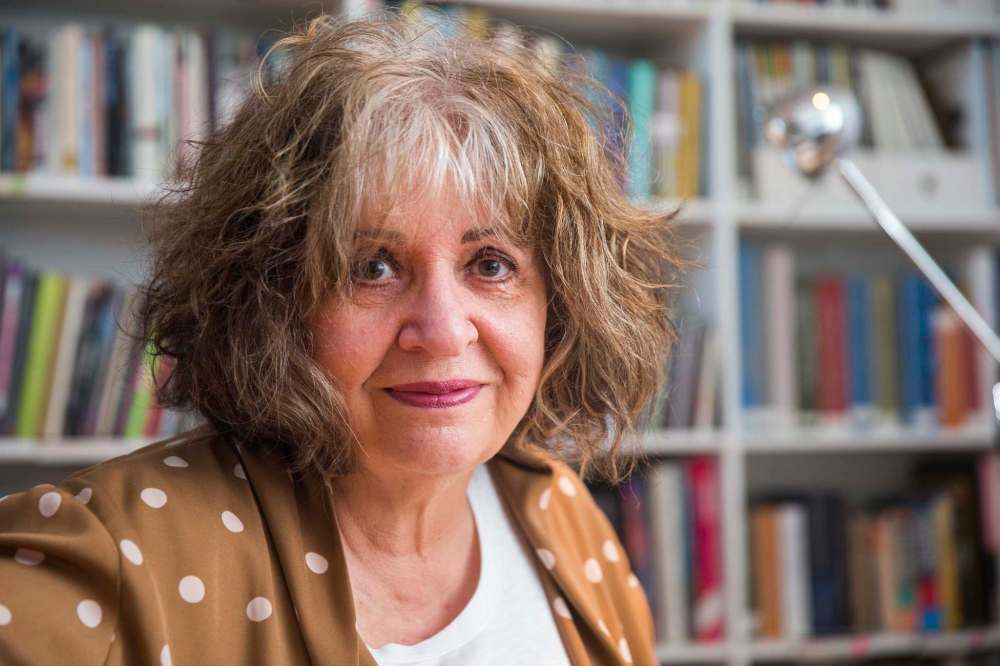
“Our artists are precious beyond belief,” Phillips told the Free Press during a phone interview. “But I also want to be clear that they are a group amongst all those workers that are most vulnerable in our society. We’re not asking for something exceptional for all artists; we’re only asking that attention be paid to a precarious and unfair situation that has really come to the fore during the pandemic.”
The idea of a basic income guarantee gained significant traction after the Trudeau government created its COVID-19 support programs last spring, with a monthly taxable benefit of $2,000 allowing Canadians to keep a roof over their heads, put food on their tables and take care of their families. The Canada Recovery Benefit (CRB) transition program that launched early in October had originally been slated to end this month; it has been extended to Sept. 25. All bets are off the table once that program ultimately wraps up, and the global arts community continues to battle back after the abrupt cancellation of entire arts seasons and shuttering of performance venues.
The numbers don’t lie. According to the Globe article, the GDP of the entire arts sector has dropped by 62 per cent in the last year. The number of clocked hours of work in the arts, entertainment and recreation sector dropped by 36.6 per cent in 2020, representing a decrease of 60 per cent.
In a wider context, demographical data from Statistics Canada’s 2016 long-form census also shows that 158,100 Canadians identified as artists, described as spending either all or most of their working hours in nine different occupations, ranging from author to visual artist. That same figure is also just shy of one per cent of the Canadian labour force, or one in 116 Canadian workers — more than the number of workers in either the auto manufacturing (146,200) or utilities sectors (136,300) — with artists’ median income of $24,300 weighing in at 44 per cent less than the national average of $43,500, as noted back in May 2016.
Despite all this, artists have continued to provide moments of joy as a salve for a pandemic-weary world over these past 12 months, taking crash courses in new digital technologies, harnessing the power of their imaginations to create everything from al fresco porch concerts to livestreamed concerts, or doing distanced outdoor performances for isolated seniors and exhausted frontline workers.
Phillips underscores that a basic income guarantee is not intended as a “reward system” for artists, but rather to create a more equitable system for all, while also acknowledging the toils of their creative labours.
“Artists are workers, and being an artist is choosing to have a profession. They deserve the same programs, benefits and returns that any other professional does,” she says, refuting the notion that cultural workers (whose public status as “artists” is easily determined via carefully vetted, clearly established and stated criteria on all municipal, federal and national arts funding bodies’ websites) are merely entertainers, whiling away their hours on gratuitous hobbies instead of getting a “real job.”
There’s another belief that government funding is plenty, and will help keep Canada’s arts community thriving into a post-pandemic era. In Manitoba last Thursday, Premier Brian Pallister announced that new funding to the tune of $6 million would be allocated to Manitoba’s still-struggling arts and culture sector.
Though these life supports are a boon to larger arts organizations, they often don’t benefit many individual artists, who fall through the cracks without access to typical company benefits and safety nets, including Employment Insurance, health and dental care, sick day coverage and life insurance benefits enjoyed by other workers.

“While artists may be hired on a short-term contract basis with larger arts organizations, they are not employed continuously and securely,” Phillips explains of the challenging dichotomy. “And of course, many musicians, performers and visual artists are forever self-employed, so those are the people for whom we want to create a level of security and stability in the near future and beyond.”
Shifting the paradigm of how society views, values and ultimately validates its artists takes time and a combined effort. However, Phillips and her colleagues are resolutely optimistic that change is possible, and will eventually happen for the betterment of all. The same way that the floodlights of COVID-19 have illuminated the systemic, inherent weaknesses in Canada’s long-term personal care homes, a timely window of opportunity has been created for a radical overhaul in governing policy by the powers-that-be.
“There is always work to do, but there is interest amongst federal decision-makers for this and I think eventually it will happen for all that deserve support. A basic income guarantee program will be of enormous assistance to address the volatility of those either working on contract, or as a gig worker,” Phillips says. “Everyone deserves dignity and security, and this is just one small means towards that end.”
holly.harris@shaw.ca
Holly Harris writes about music for the Free Press Arts & Life department.
Our newsroom depends on a growing audience of readers to power our journalism. If you are not a paid reader, please consider becoming a subscriber.
Our newsroom depends on its audience of readers to power our journalism. Thank you for your support.