Online platform helps keep Quebec’s sugar shack tradition alive during pandemic
Advertisement
Read this article for free:
or
Already have an account? Log in here »
To continue reading, please subscribe:

Digital Subscription
One year of digital access for only $205*
- Enjoy unlimited reading on winnipegfreepress.com
- Read the E-Edition, our digital replica newspaper
- Access News Break, our award-winning app
- Play interactive puzzles
*First annual payment billed as $205.00 + GST for one year. This annual subscription will automatically renew at $233.00 + GST every 52 weeks (10% off the regular annual price of $259.35). Offer available to new and qualified returning subscribers only. Cancel any time.
To continue reading, please subscribe:
Add Free Press access to your Brandon Sun subscription for only an additional
$1 for the first 4 weeks*
- Enjoy unlimited reading on winnipegfreepress.com
- Read the E-Edition, our digital replica newspaper
- Access News Break, our award-winning app
- Play interactive puzzles
*Your next Brandon Sun subscription payment will increase by $1.00 and you will be charged $17.95 plus GST for four weeks. After four weeks, your payment will increase to $24.95 plus GST every four weeks.
Read unlimited articles for free today:
or
Already have an account? Log in here »
Hey there, time traveller!
This article was published 07/04/2021 (1986 days ago), so information in it may no longer be current.
MONTREAL – Stephanie Laurin slept next to a colossal, simmering pot every night over the last week, supervising the production cycle of pea soup at Chalet des Erables sugar shack, north of Montreal.
Laurin hasn’t welcomed a single diner into her business since 2019 because of the pandemic, and yet she spent hours cooking and shipping hundreds of Easter packages across the region, filled with pea soup, meat pies, baked beans, omelettes, maple syrup and a recipe for maple taffy.
Chalet des Erables and more than 70 other sugar shacks across Quebec are taking advantage of an online platform created by their industry association to keep a beloved tradition alive and their businesses afloat during difficult times.
“We will soon reach more than 2,000,000 visits on our platform,” said Laurin, who is also the chair of the association that represents the province’s sugar shacks, called Association des salles de reception et erablieres du Quebec.
“It’s unbelievable,” she said in a recent interview, “considering the fact that we are eight million people in Quebec and that the website didn’t exist a few weeks ago.”
The website, called Ma Cabane a la Maison (my sugar shack at home), was launched Feb. 22 as a way to reinvent the sugar shack experience and prevent more businesses from closing. The COVID-19 pandemic has led to the closure of one-quarter of Quebec’s 200 sugar shacks.
Instead of sitting shoulder to shoulder along a cafeteria-style table eating sticky, calorie-loaded meals, Quebecers can bring the experience home — and they ordered from the platform in droves ahead of the Easter weekend.
“Without Ma Cabane, less than 50 sugar shacks would still be standing,” Laurin said. “It was a plague, what was happening to the industry.”
The province’s centuries-old love affair with maple syrup usually generates more than $300 million in annual revenues for sugar shacks, according to Laurin’s industry association. The industry suffered a drop in income of more than 90 per cent in 2020 because of the pandemic.
The industry association estimates that the online platform will produce $10 million in revenues for participating companies over a period of eight weeks. The platform offers Quebecers a choice between a variety of menus from 70 sugar shacks; the meals can be picked up at one of 196 participating Metro grocery stores.
Laurin said she was initially unsure of the project but was overwhelmed by how quickly people modified their sugar shack tradition.
“When people go to a sugar shack, it’s for the experience, to enjoy a day with your family, we see our uncles, aunts, grandchildren and we all share a meal,” Laurin said. “But Quebecers understood the message that if we want to reopen sugar shacks one day, we need to order online this year.”
For Eve Masse and her family, Easter typically involves a reservation at a sugar shack. In previous years, the family from Quebec’s Monteregie region drove sometimes hours away to spend the day eating and laughing at a “cabane a sucre.”
With Ma Cabane a la Maison, the family, like thousands of other Quebecers, was able to satisfy its craving while staying at home — minus the all-you-can-eat option of a standard sugar shack.
“It tasted delicious,” Masse said, despite admitting she missed the festive folklore ambience. “If the sugar shacks are still closed next year, of course, we will order again!”
Laurin reported that the Easter weekend was by far the most successful period since the initiative was launched. By April 10, Ma Cabane a la Maison will have collected 100,000 online orders, with an average of three meals per order, Laurin estimated.
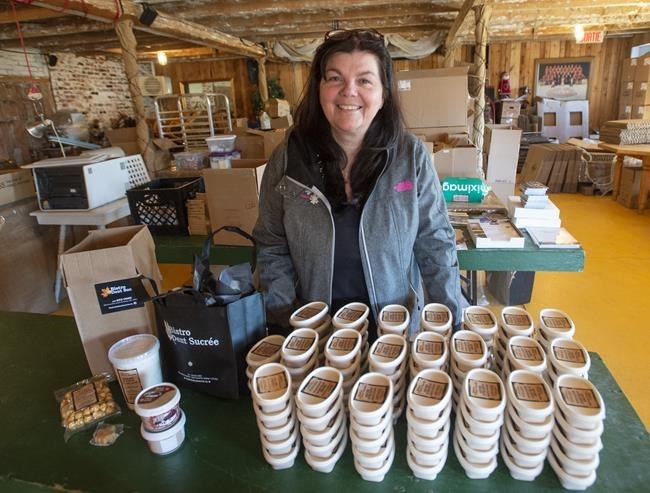
Ma Cabane a la Maison has been especially lucrative for owners of smaller businesses, who have found themselves preparing more orders this year than they normally would for in-person dining. Patricia Daoust, owner of Bistro La Dent Sucree, a sugar shack west of Montreal, said she’s finding a second wind with the initiative.
Before the pandemic, Daoust’s bistro could sit no more than 100 people per evening, but for the Easter holiday, Daoust and her staff produced more than 300 boxes of a gastronomic, gluten-free feast.

“It brings tears to my eyes to see the support,” Daoust said. “We were about to lose a Quebec tradition and we needed this initiative to move forward.”
For Denise Gregoire, owner of Constantin Gregoire’s sugar shack, east of Montreal, the amount of meals produced for Easter this year doesn’t compare to the 1,200 clients the business normally welcomes each day of the holiday weekend. But the platform, she said, has given her motivation to keep going.
“Last year, we had to shut our doors,” Gregoire said. “So last weekend, we didn’t expect to prepare that many meals. It was crazy!”
After April 18, Metro grocery stores will stop stocking the meals, but Quebecers will be able to pick up Ma Cabane a la Maison’s orders directly from the sugar shacks or have them delivered.
This report by The Canadian Press was first published on April 7, 2021.