Pallister’s tax rebate puts $4,000 into his own pocket
Read this article for free:
or
Already have an account? Log in here »
To continue reading, please subscribe:

Digital Subscription
One year of digital access for only $205*
- Enjoy unlimited reading on winnipegfreepress.com
- Read the E-Edition, our digital replica newspaper
- Access News Break, our award-winning app
- Play interactive puzzles
*First annual payment billed as $205.00 + GST for one year. This annual subscription will automatically renew at $233.00 + GST every 52 weeks (10% off the regular annual price of $259.35). Offer available to new and qualified returning subscribers only. Cancel any time.
To continue reading, please subscribe:
Add Free Press access to your Brandon Sun subscription for only an additional
$1 for the first 4 weeks*
- Enjoy unlimited reading on winnipegfreepress.com
- Read the E-Edition, our digital replica newspaper
- Access News Break, our award-winning app
- Play interactive puzzles
*Your next Brandon Sun subscription payment will increase by $1.00 and you will be charged $17.95 plus GST for four weeks. After four weeks, your payment will increase to $24.95 plus GST every four weeks.
Read unlimited articles for free today:
or
Already have an account? Log in here »
Hey there, time traveller!
This article was published 08/04/2021 (1947 days ago), so information in it may no longer be current.
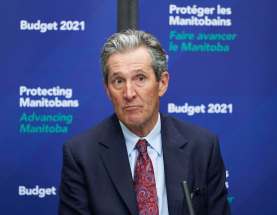
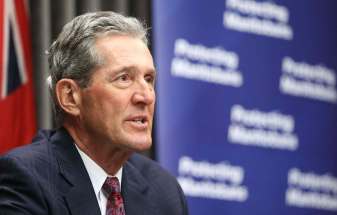
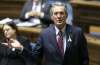
Premier Brian Pallister promised that the 2021 provincial budget would leave more money on the kitchen tables of Manitobans, and it will — including more than $4,000 on his own.
The premier will receive $4,011, thanks to the education property tax rebate announced in Wednesday’s budget.

The tony home that he and his wife Esther (who is listed as owner) share on Wellington Crescent is assessed by the city at $2,445,000. The amount of education property tax they pay works out to $16,044 a year. Thanks to the 25 per cent rebate in this year’s budget, they’ll receive a $4,011 rebate.
Related Articles
Farmers ready to reap rebates

The pricier the property, the fatter the cheque — whether you own a Winnipeg mansion or a giant grain farm — under the pandemic budget perk that helps property owners and riles those who advocate for renters, and the opposition.
“The education property tax cuts disproportionately benefit property owners, particularly wealthy property owners who have the money to pay their fair share for public services like a quality school system,” said Molly McCracken, Manitoba director of the Canadian Centre for Policy Alternatives.
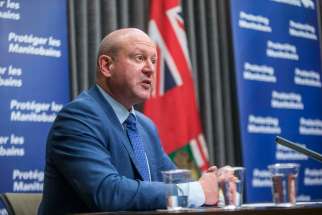
The Pallister government’s big education tax reduction for property owners leaves renters behind, NDP finance critic Mark Wasyliw said. On Thursday, he estimated the premier would receive a $4,000 education property tax rebate this year.
“We won’t be dignifying Mr. Wasyliw’s latest personal attack with a response,” a spokesman for the premier said when asked to comment.
While the government has promised to set the annual rent increase guideline at zero per cent in 2022 and 2023, landlords frequently apply for increases that exceed the guideline, and are invariably successful, said Wasyliw.
“We know there’s lots of companies that will make small improvements, then jack up rent quite a bit,” said Michael Barkman, chairman of Make Poverty History Manitoba.
“All the money from the province is going to property owners.” – NDP finance critic Mark Wasyliw
Budget 2021, meanwhile, contains a provision that will phase out the income tax deduction for renters, noted Wasyliw.
“All the money from the province is going to property owners,” said the NDP MLA.
Residential and small business renters will be the losers, said Wasyliw who represents Fort Garry. Half of his constituents are renters, he said. Women, newcomers and youth, who are disproportionately renters, have been among those hardest hit by COVID-19, he said.
Most small business owners rent space as opposed to owning their buildings, he said. The tax rebate, though, will go to their landlords.
“The larger the landlord you are, the more properties you have, the more you’re going to benefit from this,” Wasyliw said of the government’s rebate program.

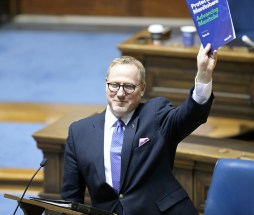
Finance Minister Scott Fielding defended the rebate, saying the average Winnipeg homeowner stands to receive a $480 rebate cheque this year. The government is also increasing its Rent Assist program grants to help low-income renters, he noted.
The finance minister said tenants will also benefit from two years of government-imposed rent freezes. The province’s Residential Tenancies Branch will be instructed to consider tax rebates to landlords when considering requests from them to levy above-guideline rent increases, said Fielding.
The rebate is being introduced as the province phases out education taxes on property. Residential property owners will automatically receive a 25 per cent rebate this year and another 25 per cent rebate next year. Owners of other properties will receive a 10 per cent rebate of both the school division special levy and the educational support levy.
“The changes to what Manitobans are paying in taxes in Budget 2021, particularly the education property tax (rebate), will primarily help higher income earners,” said Barkman.
“Changes to the basic personal amount on income taxes will only put enough for a meal or two back in the wallets of low-income Manitobans, while equally applying to even the wealthiest earners,” said Barkman.
“If you wanted to really address income inequality, the government would bring in tax brackets on the highest earners.” – Chairman of Make Poverty History Manitoba Michael Barkman,
Manitoba’s basic personal amount and income tax brackets are tied to the rate of inflation, but do nothing to address income inequality, he said. For example, someone who earns $75,000 a year is still being taxed at the same rate (17.4 per cent) as someone whose income is $500,000 a year.
“If you wanted to really address income inequality, the government would bring in tax brackets on the highest earners,” Barkman said.
“Some much-needed, significant investments in housing, social assistance, child care, and meaningful employment supports would have been a better use of public resources to help people made even more vulnerable by the pandemic, and support the entire province’s economic and social recovery from COVID-19,” said the anti-poverty advocate.
carol.sanders@freepress.mb.ca
larry.kusch@freepress.mb.ca

Carol Sanders
Legislature reporter
Carol Sanders is a reporter at the Free Press legislature bureau. The former general assignment reporter and copy editor joined the paper in 1997. Read more about Carol.
Every piece of reporting Carol produces is reviewed by an editing team before it is posted online or published in print — part of the Free Press‘s tradition, since 1872, of producing reliable independent journalism. Read more about Free Press’s history and mandate, and learn how our newsroom operates.
Our newsroom depends on a growing audience of readers to power our journalism. If you are not a paid reader, please consider becoming a subscriber.
Our newsroom depends on its audience of readers to power our journalism. Thank you for your support.