Worship and wallets
Pandemic creates new challenges for church fundraising

Advertisement
Read this article for free:
or
Already have an account? Log in here »
To continue reading, please subscribe:

Digital Subscription
One year of digital access for only $205*
- Enjoy unlimited reading on winnipegfreepress.com
- Read the E-Edition, our digital replica newspaper
- Access News Break, our award-winning app
- Play interactive puzzles
*First annual payment billed as $205.00 + GST for one year. This annual subscription will automatically renew at $233.00 + GST every 52 weeks (10% off the regular annual price of $259.35). Offer available to new and qualified returning subscribers only. Cancel any time.
To continue reading, please subscribe:
Add Free Press access to your Brandon Sun subscription for only an additional
$1 for the first 4 weeks*
- Enjoy unlimited reading on winnipegfreepress.com
- Read the E-Edition, our digital replica newspaper
- Access News Break, our award-winning app
- Play interactive puzzles
*Your next Brandon Sun subscription payment will increase by $1.00 and you will be charged $17.95 plus GST for four weeks. After four weeks, your payment will increase to $24.95 plus GST every four weeks.
Read unlimited articles for free today:
or
Already have an account? Log in here »
Hey there, time traveller!
This article was published 24/04/2021 (1960 days ago), so information in it may no longer be current.
As treasurers at places of worship know, 2020 was a trying year.
From having to pivot to online or other forms of giving to worrying if the money would come in, there were likely a lot of sleepless nights for those who look after the finances for religious groups.
They were right to be anxious; according to a recent survey there was a $1.5-billion drop in giving just to churches and Christian ministries alone in Canada last year.
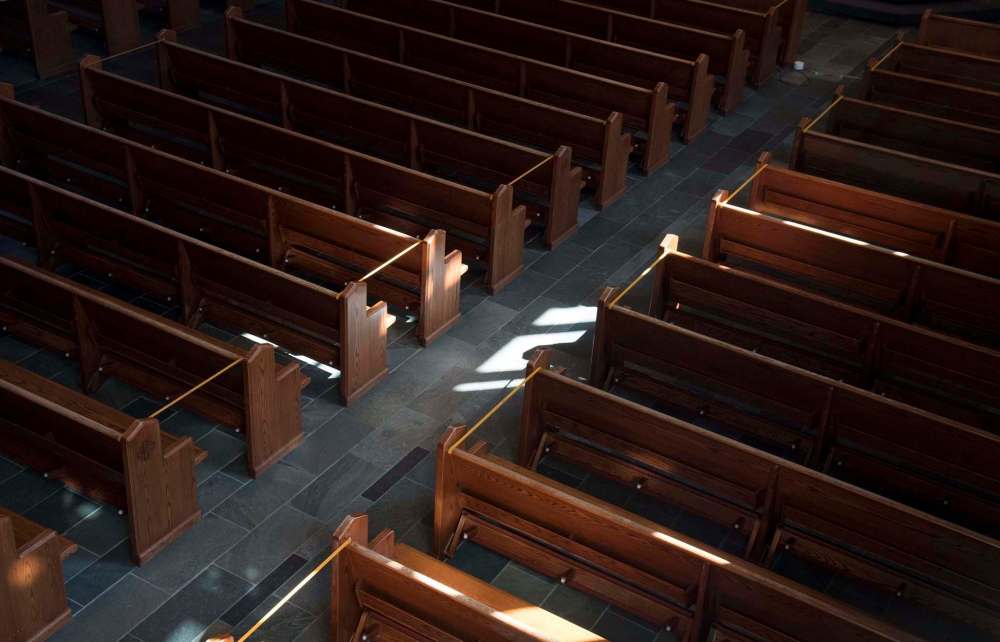
That figure comes from a recent survey of evangelical, mainline, Catholic and Orthodox churches and ministries by Waybase, an organization in Burlington, Ont., that aims to help Christian ministries work together more effectively.
According to Waybase, everyone was impacted in some way.
“Some churches and ministries are doing OK, some are treading water, some are below water,” said Waybase national engagement director Tim Day. “Some were hit cataclysmically hard.”
And yet there was some more positive news, too.
“2020 was not as bad as we feared it would be,” said John Pellowe, CEO of the Canadian Council for Christian Charities, which represents over 3,300 churches, schools and ministries.
At the start of the pandemic there was a lot of fear, he said, but things are better now.
“It’s not quite business as usual,” he said, but many groups were able to “unleash a wave of creativity” that should help them in the future.
While acknowledging how difficult the pandemic has been for many faith groups, he also sees opportunity in it.
“God can redeem this terrible situation and bring some good out of it,” he said, noting that one benefit of the pandemic for churches and other charities is it has “brought us out of our usual way of doing things… there are fewer sacred cows now.”
Churches and other groups are “pivoting into new ways of serving,” he went on to say, adding “I think the church will come out of this stronger than before.”
One person who is trying to help churches be stronger when it comes to giving and fundraising is Lori Guenther Reesor of Mississauga, Ont.
“One of my favourite sayings is ‘Jesus talks about money, we can too,’” said Guenther Reesor, author of the new book Growing a Generous Church.
While glad the pandemic put a new focus on giving due to the panic it caused about finances, the self-described “theology and fundraising geek” believes churches can do a much better job of helping people become more generous.
“There’s a code of privacy and secrecy around giving in churches,” she said, noting discussions about giving are discouraged in many groups.
“If we can’t talk about being generous, how are people going to learn?” she asked. “We need to be able to talk about giving.”
For her, the best way to do that is by inviting people to tell stories about being generous.
“It’s so important to hear stories of how people learned to give, to hear about a lifetime of faithful living and giving,” she said, adding such stories “are better than a thousand stewardship sermons.”
By asking people to tell stories about how they learned to give, churches and other groups can encourage others to follow their example, she said.
She also thinks churches should talk about giving the same way they talk about prayer, Bible study and service — as an expression of discipleship.
“Giving isn’t just a budgetary thing,” she said. “We need to put giving in the realm of faith, not just about how it funds the things faith does.”
For her, being generous is an act of faith, “a way of showing we are not afraid, that our trust is in God, a recognition that everything we have is a gift from God. When we are grateful for what we receive, it is easier to be generous.”
Accountability and transparency are also important, she said. But for many people financial reports are “a black hole . . . there are just so many numbers.”

Those reports are important, “but that’s not the only way to talk about what you are doing with the money people give,” she said.
For her, this means not just saying how much money was spent to keep the lights on, “but what happens at the church when the lights are on. It’s not just how much was spent on pastor salaries, but what the pastors did each week.”
It also means treating donors less like cows and more like horses.
“Don’t treat donors like cows who are expected to give without knowing why they should give,” she said. “Instead, treat them like horses with whom you need to cultivate a relationship and point towards the finish line of a common goal.”
faith@freepress.mb.ca
The Free Press is committed to covering faith in Manitoba through our Religion in the News project. This reporting continues because readers like you step forward to fund it.
Donate now to support our reporting on religion.
Your donation is eligible for a charitable tax receipt.
BECOME A FAITH JOURNALISM SUPPORTER
Our newsroom depends on a growing audience of readers to power our journalism. If you are not a paid reader, please consider becoming a subscriber.
Our newsroom depends on its audience of readers to power our journalism. Thank you for your support.
The Free Press is committed to covering faith in Manitoba through our Religion in the News project. This reporting continues because readers like you step forward to fund it.
Donate now to support our reporting on religion.
Your donation is eligible for a charitable tax receipt.
BECOME A FAITH JOURNALISM SUPPORTER
Our newsroom depends on a growing audience of readers to power our journalism. If you are not a paid reader, please consider becoming a subscriber.
Our newsroom depends on its audience of readers to power our journalism. Thank you for your support.
Advertisement Advertise With Us
Advertisement Advertise With Us
The Free Press acknowledges the financial support it receives from members of the city’s faith community, which makes our coverage of religion possible.