Ontario nursing homes badly prepared for COVID-19 pandemic, auditor general says
Advertisement
Read this article for free:
or
Already have an account? Log in here »
To continue reading, please subscribe:

Digital Subscription
One year of digital access for only $205*
- Enjoy unlimited reading on winnipegfreepress.com
- Read the E-Edition, our digital replica newspaper
- Access News Break, our award-winning app
- Play interactive puzzles
*First annual payment billed as $205.00 + GST for one year. This annual subscription will automatically renew at $233.00 + GST every 52 weeks (10% off the regular annual price of $259.35). Offer available to new and qualified returning subscribers only. Cancel any time.
To continue reading, please subscribe:
Add Free Press access to your Brandon Sun subscription for only an additional
$1 for the first 4 weeks*
- Enjoy unlimited reading on winnipegfreepress.com
- Read the E-Edition, our digital replica newspaper
- Access News Break, our award-winning app
- Play interactive puzzles
*Your next Brandon Sun subscription payment will increase by $1.00 and you will be charged $17.95 plus GST for four weeks. After four weeks, your payment will increase to $24.95 plus GST every four weeks.
Read unlimited articles for free today:
or
Already have an account? Log in here »
Hey there, time traveller!
This article was published 28/04/2021 (1943 days ago), so information in it may no longer be current.
TORONTO – Ontario’s nursing homes were woefully unprepared for the onslaught of COVID-19 — the culmination of years of neglect and failure to address known problems, the province’s auditor general said on Wednesday.
In a special report, Bonnie Lysyk took aim at overcrowding, poor ministry oversight, and a severe staffing shortage that existed before the pandemic struck.
Both the provincial government and nursing-home sector had failed to heed lessons learned from the SARS epidemic, while concerns raised repeatedly for years went unaddressed, her report said.
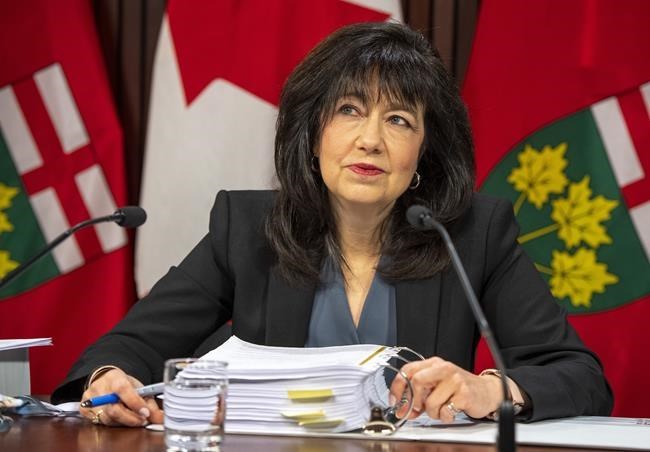
“Long-standing systemic problems in the sector were quickly and starkly amplified at the onset and during the first and second waves of the pandemic,” Lysyk said.
“Neither the Ministry of Long-Term Care nor the long-term-care sector was sufficiently positioned, prepared or equipped to respond to the issues.”
COVID-19 ravaged Ontario’s long-term care homes last spring. In all, the disease has killed at least 3,756 residents and 11 staff. At one point, the military had to help the worst-hit homes.
While vaccinations have now blunted the impact of COVID-19, the sector remains vulnerable, Lysyk said.
Opposition parties were quick to blame the Progressive Conservative government under Premier Doug Ford for failing to address the deeply rooted problems.
“The Ford government knew the system was a disaster waiting to happen — and they chose to let it happen,” said NDP Leader Andrea Horwath, adding the Ford government had made “dangerous” choices during the pandemic.
Merrilee Fullerton, minister of long-term care, blamed the previous Liberal government for a nasty legacy of inaction. She compared the “horrible” situation last spring to firefighters rushing to a raging fire.
“I didn’t start the fire,” Fullerton said.
“They may not have started the fire, but they did pour gasoline on it,” Green Party Leader Mike Schreiner retorted.
Donna Duncan, CEO of the Ontario Long-Term Care Association, called for quick action to implement “historic commitments” to end the sector’s staffing crisis and rebuild old and overcrowded homes.
Crowding was among key factors contributing to the devastation between March 19 and Aug. 31 last year, Lysyk found. Almost two-thirds of residents were living three or four to a room in homes where more than 30 per cent of residents were infected at the same time.
However, neither the ministry nor local health agencies responsible for placing residents knew how many people were in three- or four-bed wards.
The report noted 761 patients — an unusually large number — were transferred from hospitals to already bulging and chronically understaffed nursing homes in March 2020.
“The staffing shortage peaked in late April, when 36 homes — ranging from a small 56-bed home to a large 300-bed home — reported critical shortages to the ministry on the same day,” the report said.
The report also noted 13 of the 15 homes with the most COVID-19 deaths were operated by for-profit entities. The 15 homes had only 4.4 per cent of all beds but accounted for 28 per cent of resident deaths.
Lysyk’s 16 recommendations – which the Ontario Nurses Association said it supported – included requiring operators to renovate and upgrade homes more quickly, and devising a strategy to address “root causes” of staff shortfalls. It also urged development of a pandemic plan for the sector.
“There should be no surprises in the content and recommendations,” Lysyk said. “Many of the issues and recommendations have either been highlighted or recommended previously.”
The report noted ministry inspections cited hundreds of incidents of non-compliance related to infection prevention and controls at about two-thirds of homes between January 2015 and December 2019.
At the same time, enforcement was “problematic,” culminating in the government scrapping comprehensive inspections in the fall of 2018. Instead, inspectors focused on a massive and growing backlog of critical incidents and complaints by issuing more compliance orders.
“Despite this increase, the ministry still had not implemented our 2015 recommendations aimed at addressing the issue of repeated non-compliance,” the report stated.
Restrictions that barred relatives from visiting loved ones in nursing homes “eliminated a valuable source of resident care providers,” the report said. While the measures were aimed at controlling outbreaks, residents and families suffered.
“This lack of contact took an emotional and physical toll on residents and their families, in many cases resulting in a deterioration in residents’ physical and mental condition.”
To avoid the problem in future, the report called on the province to find ways for relatives and paid caregivers to provide care to residents.
It urged regulation of personal support workers, something the government this week took steps to implement.
Residents’ health-care problems have become more complex in the last decade. About one-third have severely impaired cognitive abilities, and 64 per cent have dementia. More than 85 per cent of residents need extensive or 24/7 help.
This report by The Canadian Press was first published April 28, 2021.