Ohio’s million-dollar idea: Lottery prizes for vaccinations
Advertisement
Read this article for free:
or
Already have an account? Log in here »
To continue reading, please subscribe:

Digital Subscription
One year of digital access for only $205*
- Enjoy unlimited reading on winnipegfreepress.com
- Read the E-Edition, our digital replica newspaper
- Access News Break, our award-winning app
- Play interactive puzzles
*First annual payment billed as $205.00 + GST for one year. This annual subscription will automatically renew at $233.00 + GST every 52 weeks (10% off the regular annual price of $259.35). Offer available to new and qualified returning subscribers only. Cancel any time.
To continue reading, please subscribe:
Add Free Press access to your Brandon Sun subscription for only an additional
$1 for the first 4 weeks*
- Enjoy unlimited reading on winnipegfreepress.com
- Read the E-Edition, our digital replica newspaper
- Access News Break, our award-winning app
- Play interactive puzzles
*Your next Brandon Sun subscription payment will increase by $1.00 and you will be charged $17.95 plus GST for four weeks. After four weeks, your payment will increase to $24.95 plus GST every four weeks.
Read unlimited articles for free today:
or
Already have an account? Log in here »
Hey there, time traveller!
This article was published 12/05/2021 (1955 days ago), so information in it may no longer be current.
COLUMBUS, Ohio (AP) — Ohio Gov. Mike DeWine unveiled a lottery system Wednesday to entice people to get COVID-19 shots, offering a weekly $1 million prize and full-ride college scholarships in a creative bid to overcome the vaccine hesitancy that remains a stubborn problem across the nation.
creative incentives to get more shots in arms, including insider access to NFL locker rooms and an Indianapolis 500 garage, cash incentives, various other promotions.
With three weeks to go before most state restrictions lift, DeWine rolled out the big-ticket incentives during a prime-time address. Beginning May 26, adults who have received at least one vaccine dose may enter a lottery that will provide a $1 million prize each Wednesday for five weeks. In random drawings, the state will also provide five full four-year scholarships to an Ohio public university — including tuition, room-and-board, and books — to vaccinated Ohioans under 18.
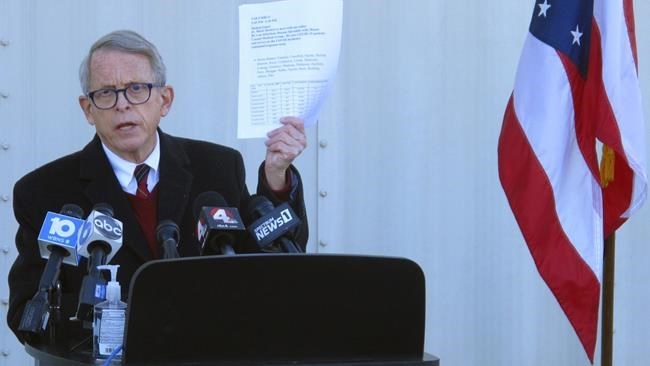
The money will come from existing federal pandemic relief dollars, DeWine said, and the Ohio Lottery will conduct the drawings.
State Rep. Emilia Sykes, the top House Democrat, questioned the use of federal funds.
“Using millions of dollars in relief funds in a drawing is a grave misuse of money that could be going to respond to this ongoing crisis,” she said.
DeWine acknowledged the unusual nature of the financial incentives.
“I know that some may say, ‘DeWine, you’re crazy! This million-dollar drawing idea of yours is a waste of money,’” he said. But the real waste, when the vaccine is now readily available, “is a life lost to COVID-19,” the governor said.
The White House and Treasury Department had no immediate comment on the governor’s plan.
All Ohio’s COVID-19 orders except those applying to nursing homes and other long-term care facilities will end June 2, the Republican also announced during the address. However, DeWine noted that stores and businesses still may require customers to be masked.
In announcing the mandates’ end, the governor cited the sharp drop in the numbers of COVID-19 cases and hospitalizations and the high vaccination rates among people 65 and older. He also said the vaccine is a “tested and proven weapon” that all Ohioans 12 and older can now avail themselves of.
“It’s time to end the health orders. It’s been a year. You’ve followed the protocols,” DeWine said. “You’ve done what we’ve asked. You’ve bravely fought this virus.”
The seven-day rolling average of daily new cases in Ohio did not increase over the past two weeks, going from about 1,522 new cases per day on April 26 to 1,207 new cases per day on May 10, according to data collected by the Johns Hopkins University Center for Systems Science and Engineering.
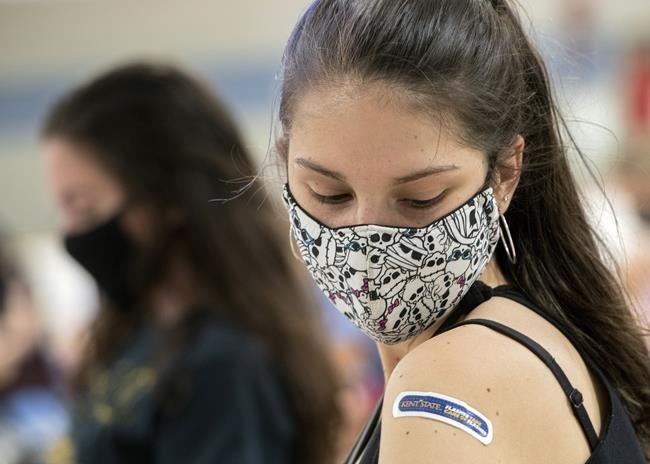
More than 4.2 million Ohioans — about 36% of the population — had completed the vaccination process as of Tuesday. But the number of people seeking vaccines has dropped in recent weeks, with an average of about 16,500 starting the process last week, down from figures above 80,000 in April. About 42% of Ohioans have received at least one dose.
“There comes a time when individual responsibility simply must take over,” DeWine said.
Business groups uniformly praised the decision. The news “is the logical next step in fully reopening our state for Ohio’s businesses and families,” said John Barker, president and CEO of the Ohio Restaurant Association.
“Removing these barriers comes at the right time and will assist the efforts of Ohio’s business community to restore Ohio’s economy,” said Andrew Doehrel, Ohio Chamber of Commerce CEO and president.
Dr. Lisa Egbert, president of the Ohio State Medical Association, said the organization supported the announcement but urged all eligible Ohioans to be vaccinated as soon as possible.
In a March 4 primetime address, the governor had said he would lift remaining mandates once the state hit 50 coronavirus cases per 100,000 people for two weeks. At the time, the figure was 179 cases per 100,000 people; it had dropped to 123 cases as of this week.
over the governor’s veto. That legislation takes effect June 23. House Republicans had signaled their intention to introduce a resolution Wednesday in preparation for a June 23 vote.
“There’s a strong sentiment that the health orders need to be dissolved,” House Speaker Bob Cupp, a Lima Republican, said earlier Wednesday.
Senate President Matt Huffman, another Lima Republican, also said Wednesday it was time for the end of mandates.
“Ohioans care about getting their businesses open and doing other things that will allow some freedom,” Huffman said.
Also Wednesday, DeWine spokesperson Dan Tierney confirmed that employees of executive branch agencies — who have been working almost exclusively from home — would return to their offices in stages, beginning July 6.
mandatory mask order in April 2020 that he rescinded just a day later under intense criticism that the directive was “one government mandate too far.”

July 15.
request for a temporary order preventing U.S. Treasury Secretary Janet Yellen from enforcing a provision of the American Rescue Plan Act that says states can’t use their recovery dollars to offset tax cuts or credits.
Judge Douglas Cole said Ohio has a strong chance of proving the tax rule unconstitutionally ambiguous. But the judge also found that granting the order against Yellen wouldn’t provide Ohio the relief it seeks, because Treasury’s rules for the money are still being worked out, the state hasn’t yet received its money and Yellen has not yet tried to recoup anything.
___
Associated Press writers Julie Carr Smyth and Kantele Franko contributed to this report.