WEATHER ALERT

On the job

History and future of work in Canada chronicled

Advertisement

Advertise with us

In 1949, a two-masted schooner named the Amanda, carrying 31 Latvian refugees fleeing the Soviet Union, ran into serious trouble.

Read this article for free:

or

Already have an account? Log in here »

To continue reading, please subscribe:

Subscribe and receive a limited-edition Free Press branded hat or tote.

Digital Subscription

One year of digital access for only $205*

  • Enjoy unlimited reading on winnipegfreepress.com
  • Read the E-Edition, our digital replica newspaper
  • Access News Break, our award-winning app
  • Play interactive puzzles

*First annual payment billed as $205.00 + GST for one year. This annual subscription will automatically renew at $233.00 + GST every 52 weeks (10% off the regular annual price of $259.35). Offer available to new and qualified returning subscribers only. Cancel any time.

To continue reading, please subscribe:

Add Free Press access to your Brandon Sun subscription for only an additional

$1 for the first 4 weeks*

  • Enjoy unlimited reading on winnipegfreepress.com
  • Read the E-Edition, our digital replica newspaper
  • Access News Break, our award-winning app
  • Play interactive puzzles
Start now

*Your next Brandon Sun subscription payment will increase by $1.00 and you will be charged $17.95 plus GST for four weeks. After four weeks, your payment will increase to $24.95 plus GST every four weeks.

Hey there, time traveller!
This article was published 15/05/2021 (1892 days ago), so information in it may no longer be current.

In 1949, a two-masted schooner named the Amanda, carrying 31 Latvian refugees fleeing the Soviet Union, ran into serious trouble.

Its sails were shredded in an Atlantic gale and its engine failed. The ship and its passengers were rescued by U.S. and Canadian ships.

The Liepins family aboard the Amanda settled in Canada. The father made a good living with his carpentry skills, and the three children became professionals.

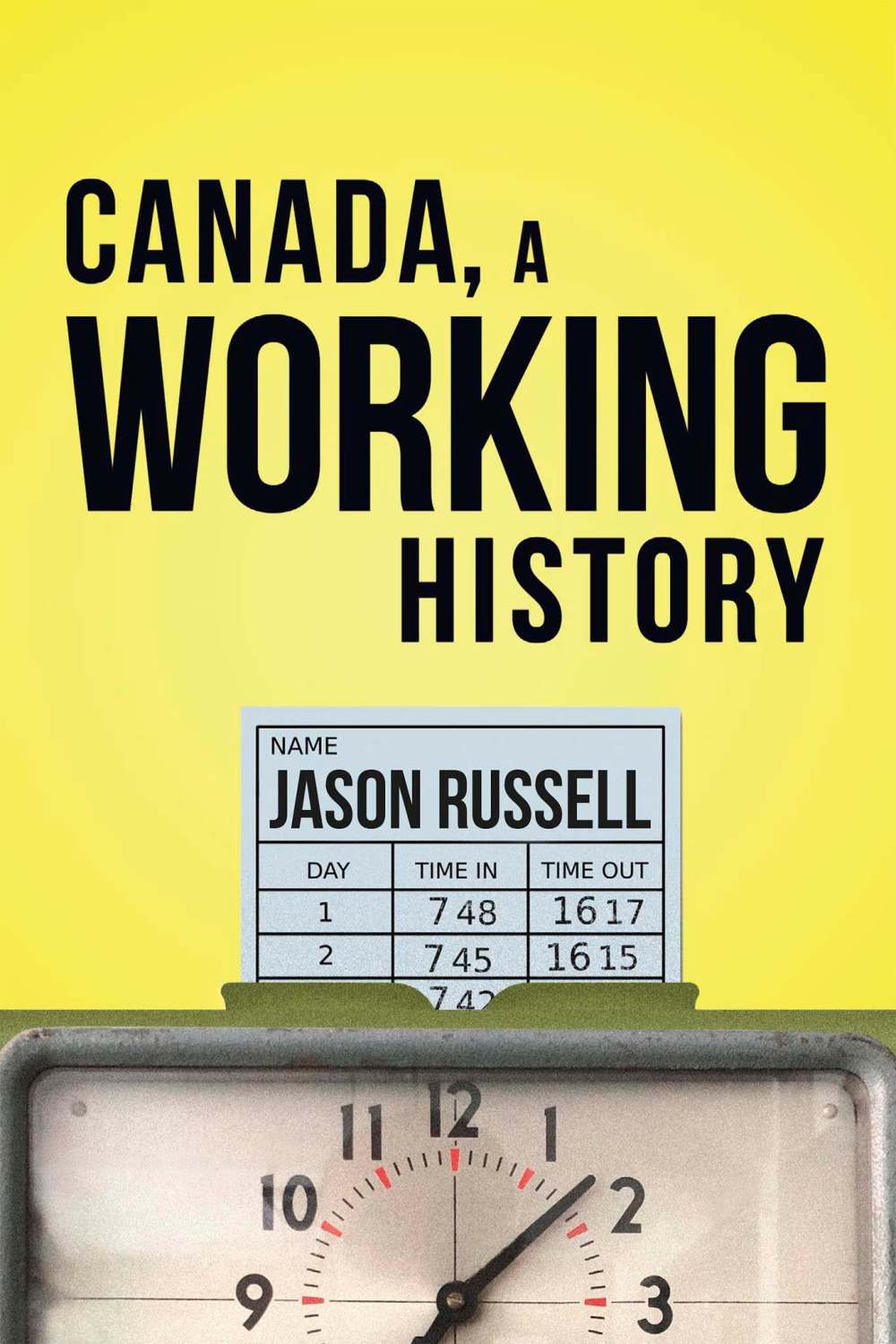
Canada, A Working History chronicles the changing nature of work and those who performed it from pre-Confederation times to now.

Jerry S. Mendoza / The Associated Press files
Robots such the ones seen here on an automotive assembly line have replaced many factory work jobs.
Jerry S. Mendoza / The Associated Press files Robots such the ones seen here on an automotive assembly line have replaced many factory work jobs.

Author Jason Russell tells the story of the Liepins family as an example of how immigrants and refugees changed the nature and composition of the Canadian workforce after the Second World War.

Russell has a Ph.D. in history from York University and is a professor at State University of New York in Buffalo. In this book, Russell clearly draws on the research he developed for his four previous books on Canadian business, labour and education issues.

His anecdote about the Liepins family is notable for its detail and human scale in a book that has few other such stories. The book is dedicated to the author’s son, who has Liepins as his middle name, perhaps explaining the source of the information.

The book has almost no other anecdotes in which we see or hear a specific person being affected by the history Russell is recounting.

Even events such as the Winnipeg General Strike, which the author acknowledges as a seminal moment in Canadian labour history, rate no more than passing mention.

Having said that, Russell does provide some good macro-economic details, including the average salaries for most eras. He diligently points out the wage gap between men and women that has existed in every era and continues to this day.

The book would be even stronger with some additional detail about what life was like for Canadian workers in different eras. What did those average salaries buy in terms of housing and food?

Russell does discuss how being able to afford automobiles, radio, movies and TV improved the living standard of working-class families, while the portrayals of their lives in the new media influenced how they thought of themselves and their place in society.

The author tries his best to balance the many American influences in popular culture with some Canadian content. A paragraph about Archie Bunker and All in the Family is followed by one about Relic and The Beachcombers.

Some of Russell’s best work comes in the final section of the book, when he looks at current trends and what they might portend for the future of work in Canada.

Canadians are already used to seeing jobs disappear due to automation, such as robots replacing factory workers on assembly lines or self-checkouts reducing the number of cashiers in grocery stores.
But that is just the tip of the iceberg, Russell warns.

Technology, the gig economy and heartless employers are combining to create the “precariat” — a term coined in 2011 by author Guy Standing to describe workers whose employment is precarious.

Their working conditions — low wages and no job security — preclude the kind of happy social compact Russell outlines in which previous generations of workers could afford to buy houses, vehicles and vacation homes.

Russell agrees with Standing that the creation of an unstable, hungry working class could lead to populist revolts, citing the election of Donald Trump and the advent of Brexit as prime examples.

“Populists have not stormed the gates of power in Canada, as they have in America and Britain,” Russell wrote, before the January 6 insurrection that saw the U.S. Capitol under attack by an unruly mob.

Just as previous governments introduced universal health care, the Canada Pension Plan and Old Age Security to take the rough edges off capitalism, Russell concludes that the time is now to implement a basic income.

“A basic income provides dignity and also confers citizenship rights in a society in which being able to consume is valued,” he says.

Ensuring that all Canadians have a decent place to live and nutritious food to eat would be the best chapter to write next in Canada’s working history.

Donald Benham is a freelance writer and educator and a board member of Basic Income Manitoba.

Marc Gallant / Winnipeg Free Press files
Self-checkout lanes are now commonplace at grocery stores, big box retailers and beyond.
Marc Gallant / Winnipeg Free Press files Self-checkout lanes are now commonplace at grocery stores, big box retailers and beyond.
Report Error Submit a Tip

More Stories

Lightning strikes again as Canada picks up second rugby win in Winnipeg in 33 years

Joshua Frey-Sam 8 minute read Preview

Lightning strikes again as Canada picks up second rugby win in Winnipeg in 33 years

Joshua Frey-Sam 8 minute read Saturday, Jul. 18, 2026

The Canadian men’s rugby union touched down in Winnipeg for the first time in 33 years on Saturday and delivered a memory that will last a lifetime for its local supporters.

The world-ranked No. 25 Canadians earned a hard-fought 23-19 victory over No. 24 Zimbabwe in pool play of the inaugural World Rugby Nations Cup before 6,712 fans at Princess Auto Stadium, including a small but boisterous contingent of Zimbabwe supporters.

Canada’s last appearance in the provincial capital also brought a triumph over the United States in 1993, and if those in attendance made one thing clear on this evening, it’s that the city’s hunger for international rugby has only grown since then.

“A lovely bit of history,” said Canada’s head coach Stephen Meehan. “First time in 33 years, to come here to win, to beat Zimbabwe in our first-ever international between the two countries — so we’re on the right side of the history books.

Read
Saturday, Jul. 18, 2026

Mosque’s restorative justice program helps newcomers find their way

Josiah Neufeld 10 minute read Preview

Mosque’s restorative justice program helps newcomers find their way

Josiah Neufeld 10 minute read Yesterday at 10:13 AM CDT

The Masjid Bilal is a chunky grey building just off Logan Avenue surrounded by warehouses and railyards. It looks more like a bunker than a mosque.

But on a summer Friday afternoon, its green-and-white carpeted interior is humming with activity. Two men in white robes and flat woolen caps are seated on the carpet poring over a copy of the Qur’an. A few young boys dodge through hallways, poking curious noses into open doors. At the back, next to a table piled with prayer mats, two girls in hijabs share schoolyard gossip. In the kitchen, women are cooking up pots of rice and chicken for people who will soon arrive for Friday prayers.

The Masjid Bilal is a community hub for members of Winnipeg’s African diaspora as well as Muslims from many other countries.

It’s also home to the Bilal Community and Family Centre, an innovative, community-centred nonprofit that is meeting vital needs for newcomers in this city.

Read
Yesterday at 10:13 AM CDT

Fringe reviews #10: Ready Player One

Free Press review team 9 minute read Preview

Fringe reviews #10: Ready Player One

Free Press review team 9 minute read Saturday, Jul. 18, 2026

Andrew Silverwood, Bullheaded, Captain Ted, Eleanor's Story, Eleven Please, Finding Rem Lezar, Hayden Maines, Jimmy Hogg, Jon Bennett, Now Don't Get Upset.

Read
Saturday, Jul. 18, 2026

Outreach centre rife with drug use, needles, but daycare, community members say safety concerns go unheard

Scott Billeck 7 minute read Preview

Outreach centre rife with drug use, needles, but daycare, community members say safety concerns go unheard

Scott Billeck 7 minute read Friday, Jul. 17, 2026

Children at an Osborne Village daycare are routinely exposed to discarded needles, human feces and drug use, prompting growing safety concerns from parents, residents and business owners.

The concerns centre on Augustine Centre at River Avenue and Osborne Street, where SPLASH Child Care shares the building with Oak Table, a drop-in operated by 1JustCity that provides meals, wellness and addiction supports, along with programs that help people build skills, and secure housing and employment.

The daycare looks after 132 children, from just a few months old to age 12.

Lesley Massey, executive director of the daycare, said parents fear for their children’s safety.

Read
Friday, Jul. 17, 2026

Fringe reviews #9: Farming for fringe gold

Free Press review team 9 minute read Preview

Fringe reviews #9: Farming for fringe gold

Free Press review team 9 minute read Saturday, Jul. 18, 2026

Celine & Cher, The Commensality Project, Couch Surfers, False Profits, Martin Dockerty, The Game of Bluff, How Much Can you Change, Human$, The Mistress of Wholesome, Winnipeg is a Lie.

Read
Saturday, Jul. 18, 2026

Local fans feel ‘Spanish euphoria’

Morgan Modjeski 4 minute read Preview

Local fans feel ‘Spanish euphoria’

Morgan Modjeski 4 minute read Yesterday at 9:18 PM CDT

Chants of “Olé, Olé, Olé, Olé” and “where is Messi?” could be heard echoing through Winnipeg’s downtown as Spain defeated Argentina in extra time to become World Cup Champions on Sunday.

What one World Cup announcer dubbed “Spanish euphoria,” was certainly on full display at True North Square on Hargrave Street where more than 500 people gathered to take in the tournament’s conclusion and celebrate the sport, which is quickly becoming Canada’s new game.

“Go Spain,” Cole Lacap, yelled at the top of his lungs after he watched Ferran Torres’ score the goal that would take Spain to a 1 - 0 victory over Argentina and send Spanish fans in Winnipeg into a frenzy.

“It was amazing. Spain definitely deserved that,” said Lacap, who had the red and yellow Spanish flag gripped tightly for much of the game.

Read
Yesterday at 9:18 PM CDT