Another side of Bob Dylan
Biographer dives deep into the archives for details of folk singer's early years

Advertisement
Read this article for free:
or
Already have an account? Log in here »
To continue reading, please subscribe:

Digital Subscription
One year of digital access for only $205*
- Enjoy unlimited reading on winnipegfreepress.com
- Read the E-Edition, our digital replica newspaper
- Access News Break, our award-winning app
- Play interactive puzzles
*First annual payment billed as $205.00 + GST for one year. This annual subscription will automatically renew at $233.00 + GST every 52 weeks (10% off the regular annual price of $259.35). Offer available to new and qualified returning subscribers only. Cancel any time.
To continue reading, please subscribe:
Add Free Press access to your Brandon Sun subscription for only an additional
$1 for the first 4 weeks*
- Enjoy unlimited reading on winnipegfreepress.com
- Read the E-Edition, our digital replica newspaper
- Access News Break, our award-winning app
- Play interactive puzzles
*Your next Brandon Sun subscription payment will increase by $1.00 and you will be charged $17.95 plus GST for four weeks. After four weeks, your payment will increase to $24.95 plus GST every four weeks.
Read unlimited articles for free today:
or
Already have an account? Log in here »
Hey there, time traveller!
This article was published 22/05/2021 (1927 days ago), so information in it may no longer be current.
Bob Dylan biographer Clinton Heylin is considered the most thorough of Dylanologists.
He is also the most punctual.
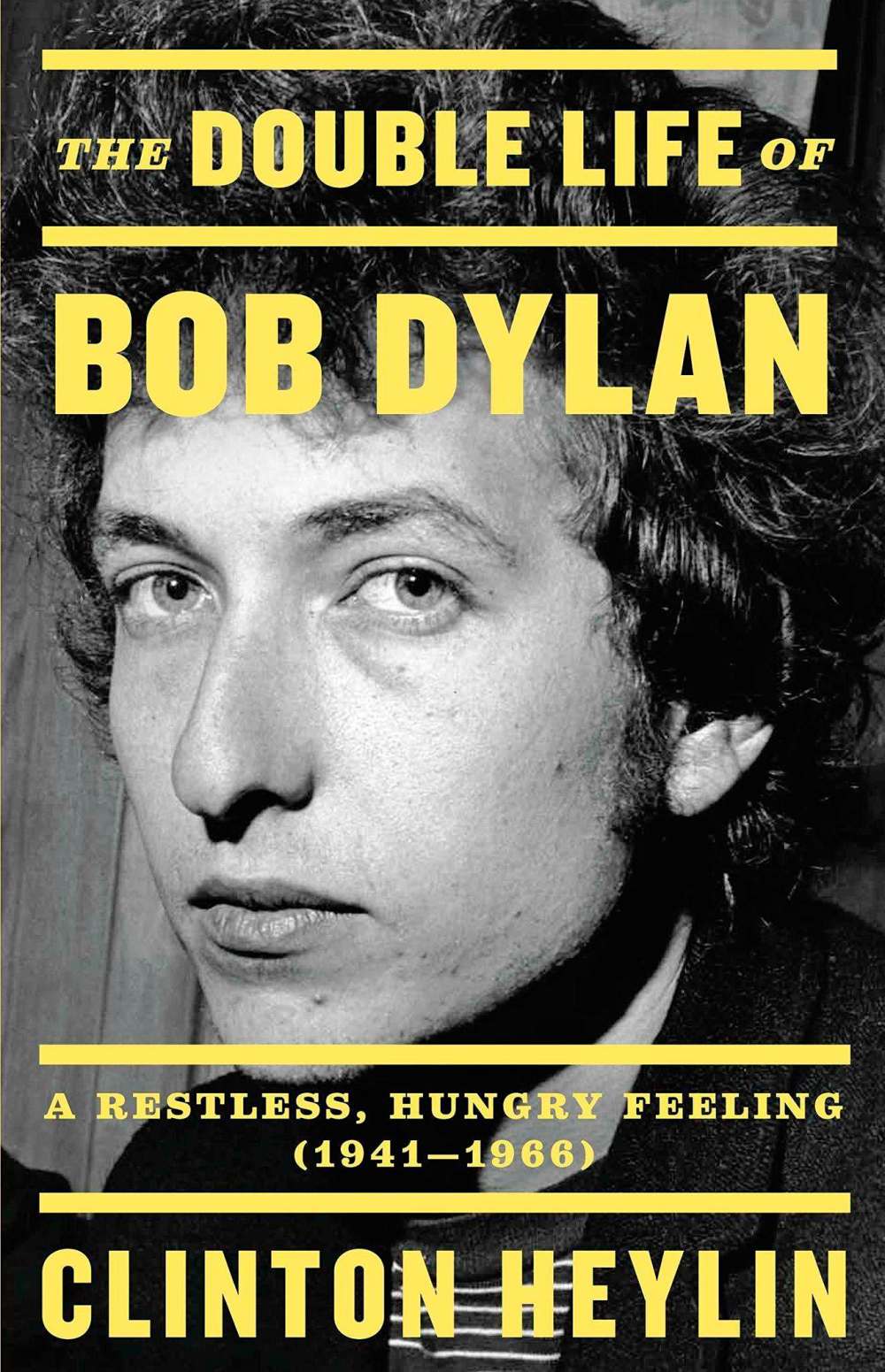
Heylin, right on time for Dylan’s 80th birthday on Monday, releases The Double Life of Bob Dylan, which is a revamped version of his 1991 Bard of Hibbing bio Behind the Shades — which came out for Dylan’s 50th — and received an update 10 years later (Behind the Shades Revisited) when 60 candles were on Dylan’s cake.
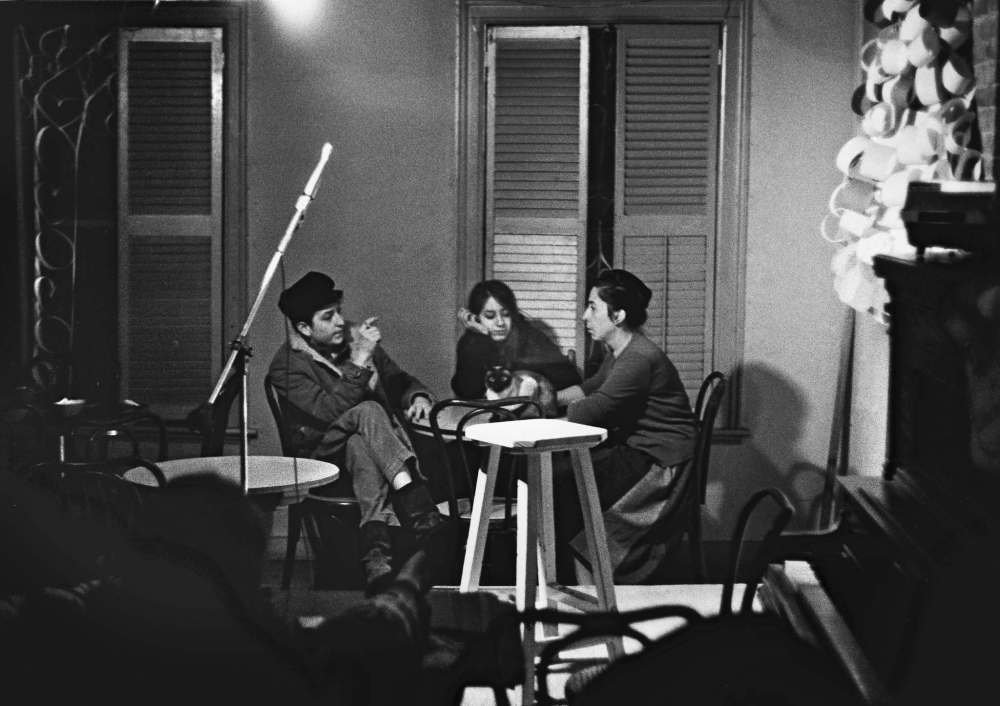
Behind the Shades: The 20th Anniversary Collection, marked two decades of Heylin’s research and Dylan’s 70th simultaneously in 2011.
The big difference in The Double Life of Bob Dylan, Heylin says, are additions and revisions that come from the Bob Dylan Archive — boxes and boxes of manuscripts, film footage, notebooks, draft lyrics and other ephemera that Dylan sold for US$22 million to the University of Tulsa. They will form the crux of the Bob Dylan Center that is scheduled to open in the Oklahoma city a year from now.
When Heylin, who lives in Somerset, England, found out the scope of what Dylan had collected since his famous motorcycle crash in 1966, he was off to Oklahoma faster than country legend Bob Wills could sing Take Me Back to Tulsa.
His access to and sleuthing through the 100,000 items creates a fascinating, yet sometimes tedious, deep dive into the most explored era of Dylandom.
Heylin focuses on Dylan’s early years, growing up in and trying to escape from Hibbing, Minn., meeting fellow folkies at Greenwich Village coffeehouses in New York, and finally entering the recording studios where his first seven albums, which include the classics songs Blowin’ in the Wind, The Times They Are A-Changin’ and Like a Rolling Stone, were recorded.
Those early recording sessions — their entirety preserved in the Dylan archive — provide some of Heylin’s best new stuff. He details the rocky relationship between Dylan and John Hammond, the famed Columbia Records talent scout who helped launch the careers of Benny Goodman, Billie Holiday, Aretha Franklin, Bruce Springsteen and, of course, Dylan.
Legend has it that Hammond was the only one at Columbia who knew the ugly-duckling folk singer was a golden goose in shabby clothing. Dylan was dubbed “Hammond’s folly” by Hammond’s fellow record executives for the way he stuck with the green folkie after his uneven self-titled debut album sold poorly.
Heylin flips the script, writing that Columbia knew full well of Dylan’s talent and potential. He says tapes from those first recording sessions portray Hammond’s talent was in making money rather than making music — so much so that Columbia fought Dylan’s new manager, Albert Grossman, over the onerous and invalid record deal Hammond got the eager Dylan to sign when he was still a minor.
Dylan would get a new deal that would give him — mostly Grossman, actually — more control and more money.
The buildup to those first recording sessions is a slow one, though. Heylin takes almost the first 100 pages of a 520-page book to support the book’s title, beginning with Robert Zimmerman’s childhood in Hibbing, a kid who idolizes Buddy Holly and Little Richard, and following his transformation into an aloof, couch-surfing teenager with a gift for absorbing songs, guitar licks and music history like a sponge, but with little regard for those who help and befriend him along the way.
But after a chapter with recognizable names and songs, and details of Dylan’s second album, The Freewheelin’ Bob Dylan to come, Heylin sends us back to Minnesota again.
It’s a huge downer, but it does help introduce a new Heylin source, Tony Glover. Glover was a musician, critic and, more famously, Dylan’s Minneapolis pal who recorded several booze-fuelled singing-and-chatting sessions with Dylan that offer a look past a persona that the songwriter has carefully cultivated for six decades.
Memories from aging rock stars and their hangers-on are notoriously sketchy, and details, truthful or not, fade with age. Heylin, who describes the 2004 autobiography Dylan’s Chronicles Vol. 1 as more fiction than memoir, says Glover’s material (which sold for US$495,000 at auction last October) and the recording session tapes are far more reliable.
“Tapes, on the other hand, do not lie,” he writes in the book’s introduction.
The Double Life of Bob Dylan eventually revs into full gear with details culled from cutting-room-floor footage from Dont Look Back, the D. A. Pennebaker cinema verité documentary of Dylan’s 1965 acoustic tour of England.
The reading fun continues with his electric turnabout at the Newport Folk Festival later that year, and the off-the-wall worldwide tour in 1966 where fans howled at Dylan and his backup band, the Band, and their loud and proud rock ’n’ roll set.
The book’s incredible detail — it includes a source list 34 pages long — can be a slog, but nevertheless it pairs well with those first seven Dylan records, which provide ideal background music while revisiting one of music’s most important periods.
Do what Dylan did, and plug in.
Alan Small is an arts and life reporter with the Free Press who has attended 38 Bob Dylan concerts in Canada, the U.S. and Europe.
Alan Small
Reporter
Alan Small was a journalist at the Free Press for more than 22 years in a variety of roles, the last being a reporter in the Arts and Life section.
Our newsroom depends on a growing audience of readers to power our journalism. If you are not a paid reader, please consider becoming a subscriber.
Our newsroom depends on its audience of readers to power our journalism. Thank you for your support.
Book review
The Double Life of Bob Dylan: A Restless, Hungry Feeling (1941-1966)
By Clinton Heylin
Little, Brown and Company, 520 pages, $38
Alan Small
Reporter
Alan Small was a journalist at the Free Press for more than 22 years in a variety of roles, the last being a reporter in the Arts and Life section.
Our newsroom depends on a growing audience of readers to power our journalism. If you are not a paid reader, please consider becoming a subscriber.
Our newsroom depends on its audience of readers to power our journalism. Thank you for your support.
Advertisement Advertise With Us
Advertisement Advertise With Us