A for Quebec, F for Alberta: Study rates Canadian governments on conservation

Advertisement

Advertise with us

A new report grades Canadian governments in how they responded to the country's international promise to conserve at least 17 per cent of its land mass and 10 per cent of its oceans by 2020.

Read this article for free:


or

Already have an account? Log in here »

To continue reading, please subscribe:

Subscribe and receive a limited-edition Free Press branded hat or tote.

Digital Subscription

One year of digital access for only $205*

  • Enjoy unlimited reading on winnipegfreepress.com
  • Read the E-Edition, our digital replica newspaper
  • Access News Break, our award-winning app
  • Play interactive puzzles

*First annual payment billed as $205.00 + GST for one year. This annual subscription will automatically renew at $233.00 + GST every 52 weeks (10% off the regular annual price of $259.35). Offer available to new and qualified returning subscribers only. Cancel any time.

To continue reading, please subscribe:

Add Free Press access to your Brandon Sun subscription for only an additional

$1 for the first 4 weeks*

  • Enjoy unlimited reading on winnipegfreepress.com
  • Read the E-Edition, our digital replica newspaper
  • Access News Break, our award-winning app
  • Play interactive puzzles
Start now

*Your next Brandon Sun subscription payment will increase by $1.00 and you will be charged $17.95 plus GST for four weeks. After four weeks, your payment will increase to $24.95 plus GST every four weeks.

Hey there, time traveller!
This article was published 22/06/2021 (1895 days ago), so information in it may no longer be current.

A new report grades Canadian governments in how they responded to the country’s international promise to conserve at least 17 per cent of its land mass and 10 per cent of its oceans by 2020.

The report, released today by the Canadian Parks and Wilderness Society, says Quebec and the federal government are the only jurisdictions to come close to meeting the 17 per cent conservation target.

The society says Alberta performed the worst, cancelling previously planned protections, delisting parks and attempting to open the Rocky Mountains for open-pit coal mining.
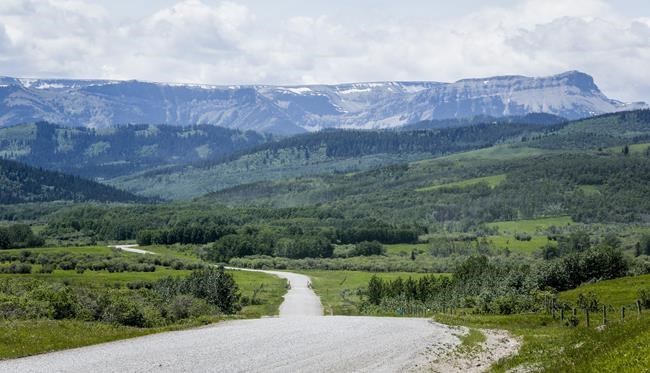
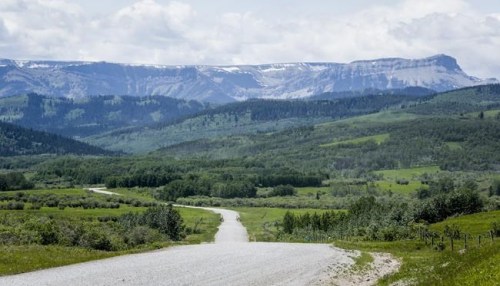
A section of the eastern slopes south west of Longview, Alta., Wednesday, June 16, 2021. A new report finds big differences in how different governments have responded to Canada's promise to increase the amount of land it protects. THE CANADIAN PRESS/Jeff McIntosh

“A lot of it has to do with political will,” said society spokeswoman Alison Woodley.

The group chose to examine how close different Canadian jurisdictions came to meeting its Aichi targets, an international agreement signed by Canada in 2010. The idea, said Woodley, was to learn how to better meet the next set of conservation goals — 30 per cent of land and oceans by 2030.

The report used internationally recognized standards of what constitutes protection and federal data on the amount of land covered.

Nationally, Canada met and exceeded its 2020 ocean goals, but fell short by more than three percentage points on land. That was good enough for a B-plus and an A-minus respectively, the report says.

The report credits funding — the 2021 federal budget included $2.3 billion for conservation — as well as a willingness to work with Indigenous groups for Ottawa’s progress.

Quebec nearly met its land conservation goals, conserving 16.7 per cent of its territory.

“The province worked with communities and First Nations to identify and deliver on new protected areas,” said Woodley.

Alberta, not so much. Although the province has more than 15 per cent of its land mass protected, the report points out Alberta has attempted to delist parks, open its Rocky Mountains to coal mining and walked away from plans that would have created some of the biggest new protected areas in the country.

“It’s not just about areas of protections,” said report author Anna Pidgorna. “Alberta’s going backwards in many ways.”

Alberta Environmentdid not immediately respond to a request to outline conservation measures taken by the United Conservative government.

Ontario and Newfoundland share Alberta’s F grade. Ontario has protected less than one per cent of its lands over the last decade, with a similar story in Newfoundland and Labrador, where the percentage of protected land is among the lowest in Canada.

The rest of the country is a mix, said Woodley.

Saskatchewan is criticized for having protected less than 10 per cent of its land and weakening protections on native grasslands, but praised for working with Indigenous groups and granting interim protection to one new area. Manitoba made early progress, the report says, but has lately discussed selling off park land.

British Columbia has almost 20 per cent of its land under protection. But the province is criticized for no recent progress and underfunding the parks it does have.

The Northwest Territories get a B-plus for creating large new protected areas and working with Indigenous groups to define and manage them.

Woodley said the study shows that funding makes a big difference to creating protected areas. So does time and patience.

“Conservation takes time,” she said.

“A major barrier to delivering on the 17-per-cent target was a lack of time. If we’re going to meet the 30-per-cent target, we need to start now.”

Woodley said conserving land is the best way to address the loss of species and shrinking biodiversity around the world.

“Habitat loss is the primary driver of nature’s decline. Protecting habitat has to be a core part of the solution.”

This report by The Canadian Press was first published June 22, 2021.

— Follow Bob Weber on Twitter at @row1960
Report Error Submit a Tip

More Stories

Motion seeks to remove longtime head of Southern Chiefs’ Organization due to ‘behaviour’ concerns

Carol Sanders 4 minute read Preview

Motion seeks to remove longtime head of Southern Chiefs’ Organization due to ‘behaviour’ concerns

Carol Sanders 4 minute read Wednesday, Aug. 26, 2026

For the second time in a year, the leadership of Southern Chiefs’ Organization Grand Chief Jerry Daniels is being called into question.

A motion obtained by the Free Press calls “immediately” for a special summit of the 33 SCO chiefs to consider removing Daniels, who’s been at the helm since 2017.

The Aug. 17 motion, put forward by Lake Manitoba First Nation Chief Cornell McLean and Bloodvein First Nation Chief Lisa Young, cites concerns about “governance, leadership, accountability, transparency, organizational decision-making and confidence of member Nations in the current leadership of the organization.”

McLean would not provide specific examples Wednesday but said the “behaviour” of Daniels is a concern.

Read
Wednesday, Aug. 26, 2026

Puzzles Palace

1 minute read Monday, Jul. 27, 2026

To solve our puzzles, please subscribe with this special offer: |

Advocate assembles gift bundles for Trans Day of Remembrance

Janine LeGal 6 minute read Preview

Advocate assembles gift bundles for Trans Day of Remembrance

Janine LeGal 6 minute read 7:00 AM CDT

In a world rife with chaos and division, there’s never been a better time for kindness, joy… and a cookie.

Kalyn Falk is on a mission to provide all three.

Falk founded the Trans Day of Remembrance Care Package Project in 2020 as a way to mourn those lost and to ensure that trans and non-binary people in the community feel valued, seen and cared for.

Trans Day of Remembrance is observed every year on Nov. 20 to honour the memory of transgender, two-spirit and non-binary people who lost their lives to acts of anti-transgender violence and systemic oppression.

Read
7:00 AM CDT

Study rates Canadian governments on conservation

Bob Weber, The Canadian Press 4 minute read Preview

Study rates Canadian governments on conservation

Bob Weber, The Canadian Press 4 minute read Tuesday, Jun. 22, 2021

A new report grades Canadian governments in how they responded to the country's international promise to conserve at least 17 per cent of its land mass and 10 per cent of its oceans by 2020.

The report, released today by the Canadian Parks and Wilderness Society, says Quebec and the federal government are the only jurisdictions to come close to meeting the 17 per cent conservation target.

The society says Alberta performed the worst, cancelling previously planned protections, delisting parks and attempting to open the Rocky Mountains for open-pit coal mining.

"A lot of it has to do with political will," said society spokeswoman Alison Woodley.

Read
Tuesday, Jun. 22, 2021

Of frogs, roses, kings and a Great Lake

Editorial 4 minute read Preview

Of frogs, roses, kings and a Great Lake

Editorial 4 minute read 2:01 AM CDT

A rose by any other name would smell as sweet, as the saying goes. Basically, if you change something’s name, you don’t actually change the nature of the thing.

That being said, if even 15 years ago an American president had called an entire news conference to announce he was renaming one of the Great Lakes by writing on a map with a red pen and issuing an executive order purporting to rename Lake Ontario as “Lake America,” all and sundry would question his mental health.

Maybe, after witnessing so much from Donald Trump, we’ve all just been hardened off and the foolish is now expected daily. Perhaps it’s the political equivalent of the fable of the boiling frog.

As the fable goes, drop a frog into a pot of boiling water and it will jump right out. But put the frog in room temperature water and bring the pot to a boil, the frog will stay until its death. (It’s unlikely the frog would actually wait.)

Read
2:01 AM CDT

Five exceptional Manitobans reflect on what it means to be Canadian while bracing against Trump’s vitriol and economic upheaval

Aaron Epp and Gabrielle Piché 11 minute read Preview

Five exceptional Manitobans reflect on what it means to be Canadian while bracing against Trump’s vitriol and economic upheaval

Aaron Epp and Gabrielle Piché 11 minute read Yesterday at 1:35 PM CDT

Canadians have been trying to make sense of a new reality since Canada-United States trade talks broke down on Aug. 21.

The following day, President Donald Trump’s administration imposed 50 per cent tariffs on US$20 billion worth of Canadian exports to the U.S.

The federal government responded in kind a few days later, rolling out tariffs on $27.6 billion worth of imports from the U.S.

The Free Press contacted five Manitobans who have been appointed to the Order of Canada and asked them for their thoughts on the status of Canada-U.S. relations and what is means to be a Canadian today. Their responses have been edited for length and clarity.

Read
Yesterday at 1:35 PM CDT